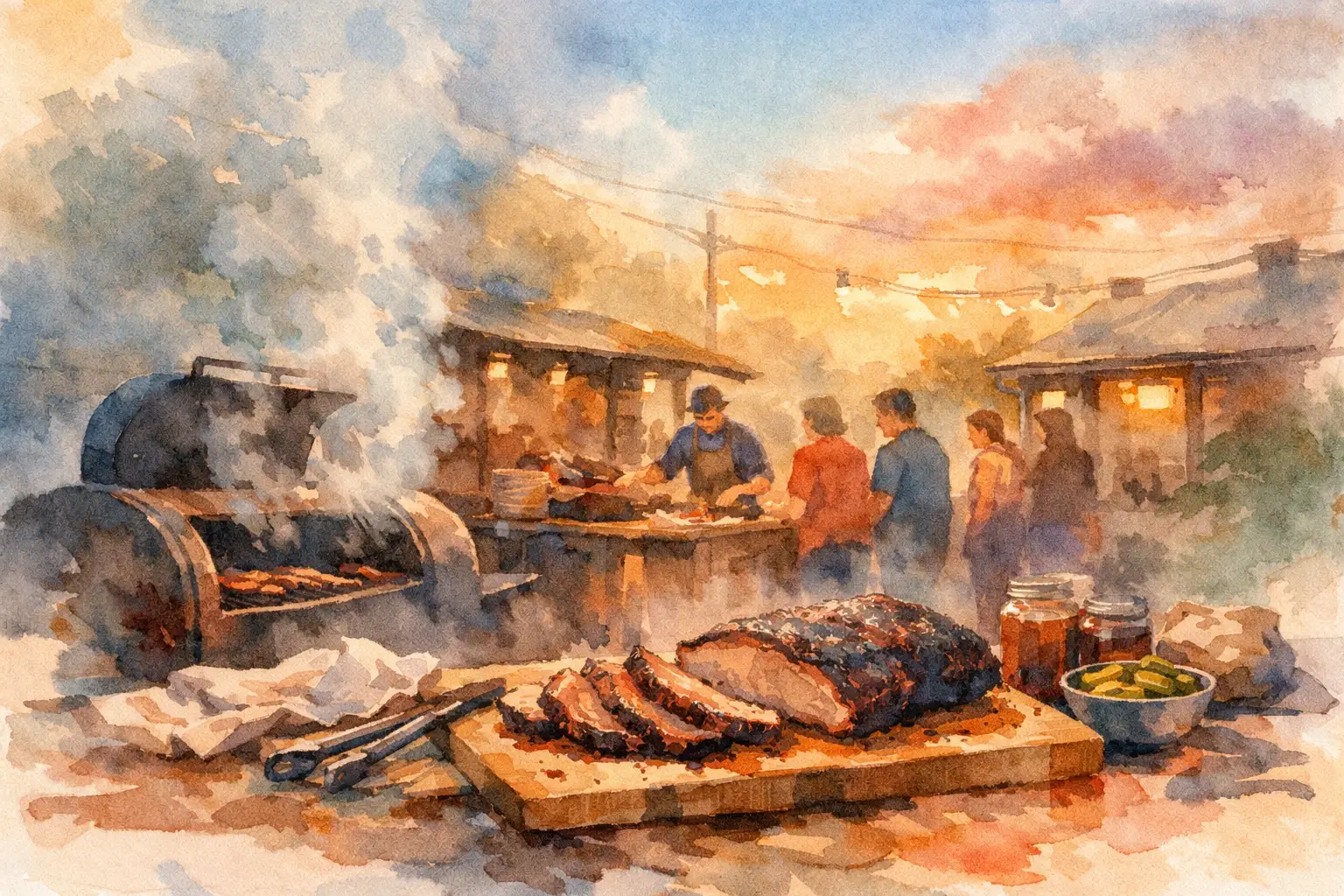
A full brisket does not come out of a smoker ready for a late rush. If you have ever asked, “why does brisket sell out?”, the short answer is time, yield and a refusal to cut corners. Proper brisket takes most of a day to smoke, time to rest, and a careful hand at the slicing board. When the last slice is gone, that is it for the day.
At Brisket & Briyani, the brisket is smoked for 12 hours, then served fresh alongside proper Chennai-style briyani. That combination moves quickly for a reason. You are not getting meat reheated from a bulk batch. You are getting the day’s cook, while it is at its best.
Why does brisket sell out? The cook starts long before service
Brisket is one of the least forgiving cuts in barbecue. It comes from a hardworking part of the animal, which means it is full of connective tissue. Cook it quickly and it stays tough. Cook it low and slow, with steady heat and enough patience, and that connective tissue breaks down into the rich, tender texture people line up for.
That is why brisket cannot simply be topped up when demand kicks off. The process starts well before opening. The meat is trimmed, seasoned and smoked slowly over many hours. Even when it reaches temperature, it is not ready to rush straight onto a board. Resting matters. It allows the juices to settle through the meat instead of spilling out when it is sliced.
A brisket that has been hurried can look the part but eat dry, tight or chewy. We would rather sell out than serve that.
One raw brisket does not equal endless portions
There is another part of the answer that is easy to miss: brisket shrinks.
Before it reaches the smoker, brisket needs trimming. During a long cook, it loses moisture and fat. Some parts are kept for flavour and tenderness, while other parts cannot make it into a clean, generous serve. By the time a whole brisket is cooked, rested and sliced, the final yield is much smaller than the raw weight suggests.
That is not wasteful cooking. It is the cost of serving brisket properly. The fat needs to render, the bark needs to develop, and the meat needs enough time to become tender without being steamed, boiled or rushed.
It also means every slice matters. The point end is rich and soft, while the flat is leaner with a firmer bite. Both can be excellent when cut correctly across the grain, but there is only so much of each on a brisket. The right slice is not something that can be manufactured at the end of the night.
Freshness has a daily limit
There are plenty of ways a kitchen could avoid a sell-out sign. It could cook far more than it expects to need. It could hold brisket for too long. It could reheat yesterday’s slices and hope the sauce covers the difference.
That is not the standard.
Fresh smoked brisket has a window where it is genuinely special: the bark has character, the fat is rendered, the smoke is present without taking over, and the meat is juicy enough to sit proudly in a briyani box or over loaded chips. Hold it too long and the texture changes. Slice it too early and it loses the juiciness that took 12 hours to build.
Limited batches protect that window. They give the kitchen a clear amount to cook, rest and serve at the quality customers expect. Some days that amount lines up neatly with demand. Other days, especially busy weekends, it disappears sooner than expected.
That is not a marketing trick. It is what happens when a slow-cooked product meets a fast-moving takeaway service.
The brisket is not competing with one dish
Brisket can sell out faster because it appears in more than one kind of order. One customer wants it paired with fragrant briyani and cooling raita. Another is after a loaded Humdinger Snack Pack with chips, meat and mystery sauce. A family may choose a smoked brisket pack for a shared dinner. Delivery orders can add another burst of demand at exactly the same time.
A few larger orders can make a real dent in a day’s brisket allocation. That is especially true when groups order early, or when hungry customers turn up after seeing a sliced brisket video on their feed. The visible smoke ring, glossy slices and generous boxes do not stay secret for long.
There is also a simple appetite factor. Brisket has a loyal following because it delivers a flavour that is hard to fake: peppery bark, deep smoke, rendered fat and tender beef in every bite. Add fresh briyani made with whole spices and long-grain basmati, and it gives people two strong reasons to order in the one box.
High demand is useful only when the food stays right
Selling out is exciting for customers who got in early, but it is never a reason to be careless. A good brisket operation has to balance demand against consistency. Cook too little and people miss out. Cook too much and the quality suffers, or food is left sitting around longer than it should.
The right amount changes with the day. Weather, school holidays, local events, foot traffic, delivery demand and family orders can all shift the numbers. A quiet Friday can turn into a packed service. A wet afternoon can push more people towards Uber Eats. A Saturday night can bring a rush for brisket HSPs just when the final slices are being served.
Forecasting helps, but barbecue is not an exact factory process. Every brisket is different. Thickness, fat coverage and how it cooks on the day all affect the final result. The team can plan carefully, but it cannot turn one brisket into two without compromising the portions that made people come back.
What to do if brisket is your order
If smoked brisket is the reason you are coming in, earlier is the safer move. Do not leave it until the last part of service and assume it will be waiting. Brisket is often at its best before the late rush has picked through the day’s supply.
Ordering for a group? Make brisket part of the plan early, especially if you want a family pack. It is also worth having a back-up appetite in mind. Chicken 43 brings a crisp, juicy hit. Mexican pork has its own bold flavour. A mixed meat box gives you more range when brisket portions are running low.
That said, there is no need to panic-order every time. Sell-out times vary. The point is simply to treat brisket like what it is: a limited daily cook, not a permanent stock item sitting in the background.
When we sell out, we sell out
There is a difference between limited availability and scarcity for show. Brisket sells out because making it properly puts a real limit on how much can be served that day. It needs the right cut, a long smoke, a proper rest and enough care at the end to make every portion worth ordering.
The sell-out sign is not the goal. A tender slice with real bark, served fresh with a box of briyani, is the goal. If that means getting in a little earlier, it is a fair trade for food that has not been rushed to make one more sale.
Ready to try it? We cook fresh every week.
Chennai-style briyani and 12-hour smoked brisket. Sunnybank, every Saturday from 5 PM.
See Our Full Menu →