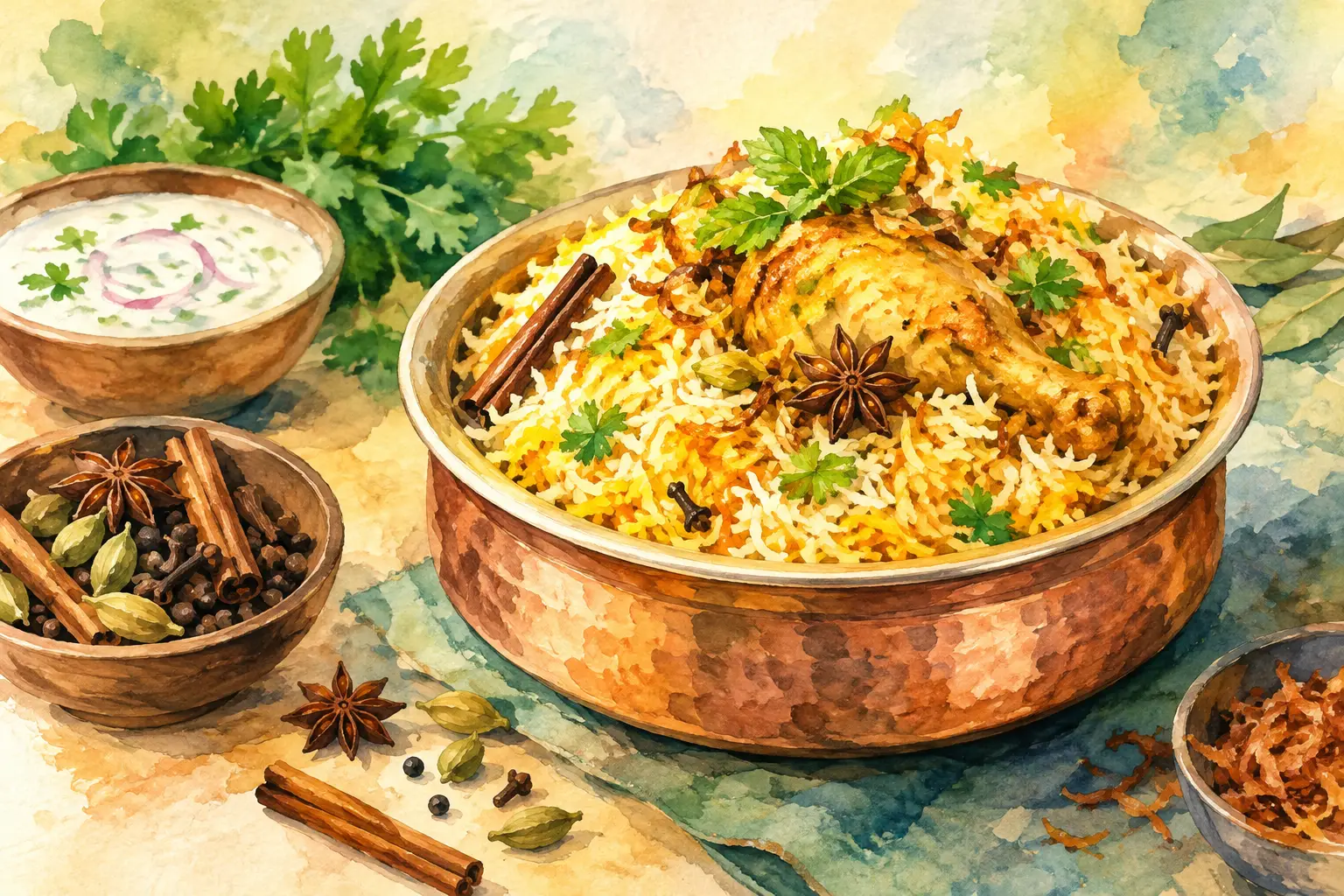
A proper whole spice basmati briyani announces itself before the first bite. You catch the warmth of cardamom, clove and cinnamon when the lid lifts. The rice is long, separate and fragrant. The meat has taken on flavour without being buried under a thick, hot gravy. That balance is not luck. It comes from starting with whole spices, treating basmati with care and cooking each layer with purpose.
At Brisket and Briyani, that is the standard behind every fresh box. We use the spelling briyani - and yes, biryani is also correct - but the important part is what is in the box: proper long-grain rice, real whole spices and flavour built from the base up.
Whole spices do the heavy lifting
Ground spice has its place, but it behaves differently. Once a spice is ground, more of its surface is exposed to air. Its sharpest aromatics can fade quickly, and when it is added heavily to a pot, it can create a dusty texture or one-note heat.
Whole spices release their character more gradually. Cumin brings a toasted, earthy edge. Green cardamom gives a clean floral lift. Cloves add dark warmth, while cinnamon rounds out the aroma with gentle sweetness. Bay leaf and star anise can add another layer, depending on the style of briyani being cooked.
The key is restraint. Whole spices should make the rice smell extraordinary and the meat taste deeper. They should not turn every mouthful into a hunt for a mouthful of clove. A cook needs to know which spices belong in the pot, how much to use and when to remove or leave them. Whole does not automatically mean better. Freshness, proportion and timing matter just as much.
Why basmati is worth the care
Basmati is not simply white rice with a more expensive label. Its long grains, light texture and distinctive perfume make it suited to briyani. When cooked well, each grain stays separate while still carrying the flavour of the stock, spices and meat beneath it.
That separation matters. Briyani should feel generous without becoming heavy. The rice needs enough moisture to be tender, but not so much that it collapses into a soft, starchy mass. Overcook it and the layers blur. Undercook it and the centre of the grain stays chalky. Neither gives you the finish a good briyani deserves.
Rinsing helps remove excess surface starch. Soaking can help the grains lengthen and cook more evenly. Then comes the part that calls for judgement: rice is often cooked until nearly done before it is layered and finished. It continues cooking as the flavours settle together. The result should be fluffy and aromatic, with enough structure to carry a spoonful of meat, raita and rice in one bite.
The flavour is built in layers
Good briyani is not a case of tossing rice and curry together at the last minute. It is built in stages. The meat needs seasoning that can stand up to the rice. The cooking juices need depth. The rice needs its own fragrance. Then the layers need time to meet without losing their individual character.
This is why shortcuts are easy to spot. If every grain tastes identical but the meat is flat, the dish has usually been forced together too quickly. If the rice is coloured but has no aroma, appearance has done more work than flavour. If the spice hits hard at the front but leaves nothing behind, the balance is off.
A well-made briyani gives you movement across the bite. First comes the scent from the rice. Then the savoury richness of the meat. Finally, the lingering warmth of spice. Cooling raita is not an afterthought here. It cuts through the richness, refreshes the palate and lets you go back for another forkful without the dish becoming too much.
Heat is not the same as flavour
Some people want their briyani hot. Fair call. Chilli can bring energy, especially when paired with rich chicken, smoky brisket or pork. But heat should support the spice profile, not cover it.
Whole spices offer warmth that is broader than chilli heat. Cardamom, clove and cinnamon create aroma. Pepper brings a sharper bite. Chilli adds fire. When these elements are balanced, the food has flavour even before the heat arrives. When chilli dominates, everything else gets pushed into the background.
It depends on the protein, too. Chicken takes on spice quickly and works beautifully with fragrant rice. Slow-smoked brisket brings its own deep, savoury character, so the rice needs to complement the smoke rather than fight it. Mexican-style pork has richness and bold seasoning, making raita and clean basmati especially useful for balance. That is the appeal of a briyani base done properly: it can work with different meats while still tasting like briyani.
What to look for in a quality briyani box
A great takeaway briyani should travel well, but it should never feel like it was designed only to survive a trip home. Start with the aroma when you open it. You should smell spice and rice, not just steam. Look for grains that are long and distinct rather than clumped together.
The meat should be generous, tender and seasoned all the way through. The rice should have flavour in its own right, not rely on the meat sitting on top. And the raita should be cool and fresh, offering contrast instead of being a token spoonful on the side.
Portion matters, but so does the way the box eats. A massive serve is only a win if the quality holds from the first forkful to the last. The best boxes have enough meat and rice for a proper meal, enough raita to balance the richness, and no need for a dozen extra sauces to make them interesting.
Whole spice basmati briyani is a fresh-food decision
Briyani rewards care, but it does not wait around forever. Rice keeps absorbing moisture after cooking. Whole spices keep developing aroma. Fresh raita is at its best when it is cold and bright. That is why food cooked in batches and served fresh has a different feel from food that has sat too long.
For weekend takeaway, this is worth remembering. If you are feeding the family, order enough to share while it is fresh. If you are chasing a fast lunch or dinner, do not mistake speed for compromise. The point is food that has been prepared properly before it reaches the counter, then served without fuss.
When we sell out, we sell out. That is not theatre. It is the reality of making fresh briyani with ingredients that deserve attention.
The bite that tells you everything
The test of whole spice basmati briyani is simple. Take a forkful with rice, meat and a little raita. You should get fragrance first, savoury depth next and warmth that lingers without taking over. The grains should stay light. The meat should feel at home in the rice. And once the box is empty, you should be thinking about the next one - not reaching for a glass of water to recover from it.
That is the value of doing the basics properly: whole spices, long-grain basmati, careful layering and food served when it is ready to be eaten.
Ready to try it? We cook fresh every week.
Chennai-style briyani and 12-hour smoked brisket. Sunnybank, every Saturday from 5 PM.
See Our Full Menu →