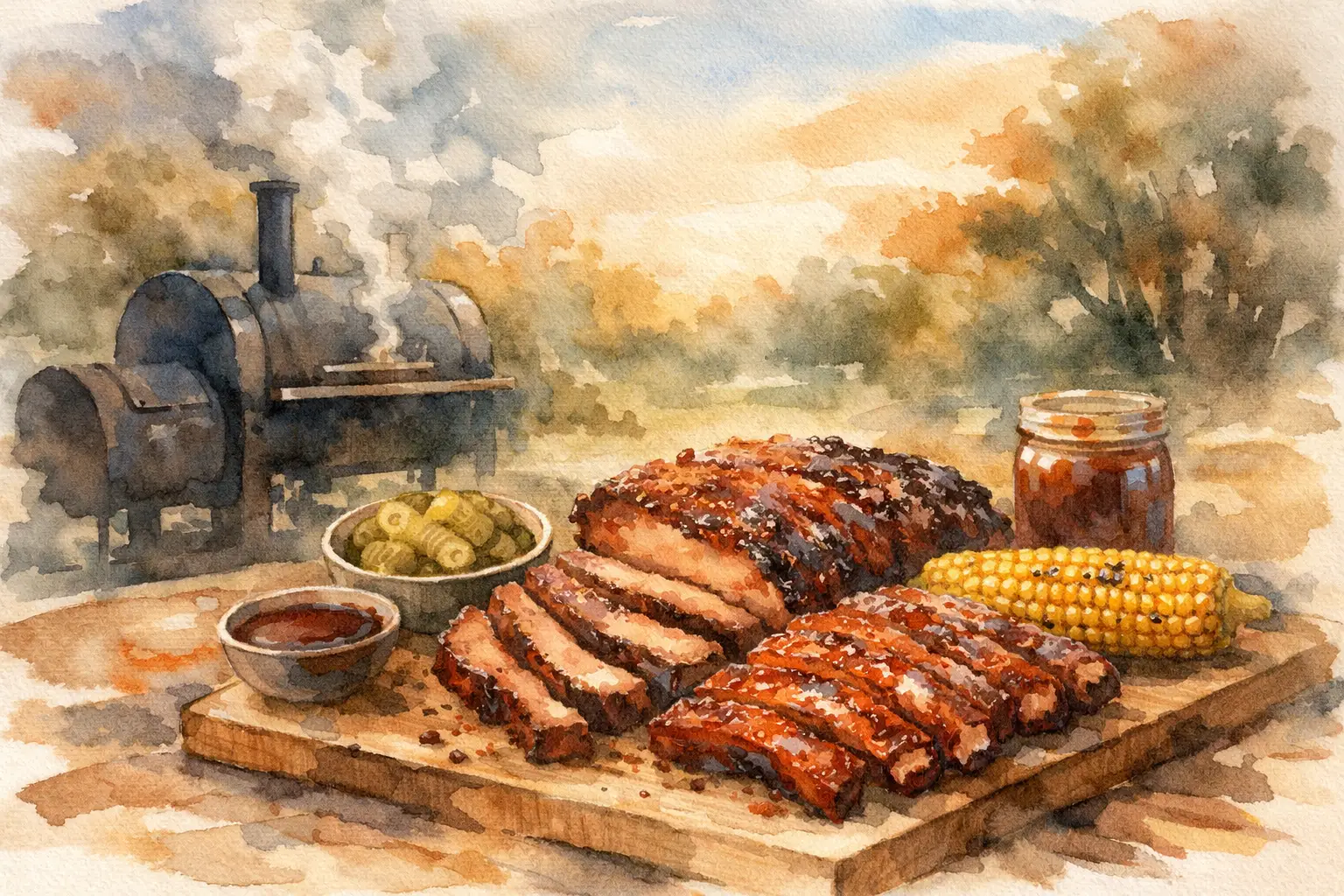
You can tell when someone’s faking it. The bark looks right in a photo, the sauce is loud, and the portion is decent, but the first bite gives it away. Proper slow smoked American BBQ doesn’t lean on shortcuts. It leans on time, fire control, meat quality and patience - the kind you can taste straight away.
That matters because a lot of people think BBQ is just grilled meat with extra smoke. It’s not. Real low-and-slow barbecue is a craft. When it’s done properly, brisket should hold together just enough before it gives way. Pulled pork should be juicy, not wet. The smoke should sit in the background and deepen the flavour, not smack you in the face like a campfire. That balance is where the good stuff lives.
What slow smoked American BBQ actually means
At its core, slow smoked American BBQ is meat cooked at low temperatures over many hours using wood smoke as part of the flavour. Not charred in ten minutes. Not blasted in an oven and finished with bottled sauce. Smoked, rested, sliced and served when it’s ready.
The low heat matters because it gives tough cuts time to change. Brisket is the clearest example. Done badly, it’s chewy and dry. Done properly, the collagen breaks down, the fat renders through the meat and the texture turns rich without falling apart like stew. You still want structure. You still want a proper slice. But you also want that soft, almost buttery finish that only comes from time.
Smoke does more than add flavour. It builds the bark on the outside, helps create that pink smoke ring people look for, and layers the meat with a depth you can’t fake. The trick is restraint. Too little smoke and the meat tastes flat. Too much and every bite gets bitter.
Why time is the main ingredient
Anyone can season meat. The hard part is holding a smoker steady for 10 to 12 hours, sometimes longer, and making the right calls along the way. That’s why the phrase low and slow gets repeated so often. It’s not just marketing. It’s the whole method.
Temperature swings change everything. Too hot and the outside hardens before the inside is ready. Too cool and the cook drags on, drying the meat out before it reaches the right texture. Then there’s the stall, when larger cuts like brisket seem to stop cooking for hours. That’s the point where impatient operators rush it, wrap too early, or force the process. Good BBQ comes from knowing when to intervene and when to leave it alone.
Resting matters too. Meat straight off the smoker might smell incredible, but if you slice it too soon, the juices run out and stay on the board instead of in the meat. A proper rest lets everything settle. It’s one of those details customers might not see, but they can definitely taste.
The cuts that define slow smoked American BBQ
Brisket gets most of the attention, and fair enough. It’s one of the hardest cuts to get right and one of the most satisfying when it lands. A good brisket has a dark bark, a visible smoke ring, rendered fat and slices that bend before they break. If it crumbles, it’s over. If it tugs like a steak, it’s under.
Pulled pork is often more forgiving, but that doesn’t mean it’s easy. The best versions are tender and juicy with enough seasoning to carry through the whole shoulder. It should taste like pork first, smoke second, spice third. Sauce can help, but it should never be there to rescue dry meat.
Ribs sit somewhere in the middle. People talk a lot about fall-off-the-bone ribs, but that’s not always the goal. Proper ribs should have bite. The meat should come away cleanly, not slide off before you even chew. Texture matters as much as flavour.
Each cut has its own sweet spot, which is why real BBQ houses often sell out. There’s only so much capacity in the smoker, and there’s no quick reset when the day gets busy. When it’s gone, it’s gone.
Smoke, seasoning and bark
Good BBQ doesn’t need a complicated rub. Salt, pepper and a few supporting spices can do a lot if the meat and technique are strong. The goal isn��t to bury the meat. It’s to build a crust that works with the smoke and fat.
That crust, or bark, is one of the best parts of the whole cook. It forms over hours as the rub, smoke, rendered fat and surface moisture all interact. Done right, it gives every bite contrast - soft meat inside, darker savoury edges outside. Done badly, it turns dry, gritty or burnt.
Wood choice also changes the final result. Different timbers throw different smoke profiles, and there’s no single right answer. Some pitmasters want a stronger hit. Others want a cleaner, sweeter finish. It depends on the cut, the style and who you’re cooking for. The main thing is consistency. If your smoke is dirty or your fire is unstable, the meat tells on you.
Why great BBQ can’t be rushed for convenience
This is where fast food logic and barbecue logic clash. Customers want food quickly, which is fair enough. But proper slow smoked American BBQ starts long before anyone walks through the door or opens a delivery app. It requires prep, trimming, seasoning, smoking, holding and resting, all timed with care.
That’s why the best operators build their service around the craft instead of forcing the craft to fit a shortcut. You cook for the rush before the rush starts. You slice to order where possible. You accept that demand can outstrip supply. It creates urgency, sure, but more importantly it protects the food.
There’s a reason people get excited when they know a place does a 12-hour brisket and serves until sold out. It signals standards. It says the kitchen would rather run out than serve yesterday’s leftovers pretending to be fresh.
Slow smoked American BBQ in a Brisbane takeaway setting
For Brisbane diners, especially on a busy weekend, the appeal is pretty simple. You want food that feels worth the trip, worth the queue and worth telling your mates about. Slow smoked American BBQ fits that when it’s handled properly. It delivers comfort, heft and proper flavour without needing a white-tablecloth setup.
That’s also why it works so well in a fast-casual format. You still get the craft, but you don’t need to carve out half a day for a sit-down meal. If the operation is sharp, you can have smoked brisket, pulled pork or fried sides packed properly and moving fast. Crafted fresh, served fast - that only works if the hard part happened hours earlier.
At Brisket & Briyani, that same thinking shapes the food. The BBQ is given the time it needs, not the time a shortcut allows. That matters when customers know the difference and come back because they can taste it.
What to look for when ordering BBQ
If you’re choosing a BBQ spot, pay attention to the signs that point to real care. The first is the meat itself. Brisket should look moist, not shiny with grease. Pulled pork should hold flavour without drowning in sauce. Ribs should show smoke and seasoning, not just sticky glaze.
The second is the menu structure. Places that do everything, all day, with no limits can be hit and miss. BBQ is a production kitchen in the best and hardest sense. Limited availability usually means the smoker capacity is real and the team is cooking with intent.
The third is consistency. One great visit is nice. Repeatedly good food is what actually matters. That comes from process, not luck.
Why people keep coming back
The best part about slow smoked American BBQ is that it feels honest. You can’t fake twelve hours of effort. You can’t hide poor fire management once the brisket is sliced. And you can’t build a loyal following on novelty alone if the meat isn’t right.
People come back for that mix of comfort and precision. Big flavour, generous portions, proper technique. It hits differently when the food tastes like someone actually cared about every stage of it.
If you’re craving BBQ, look past the hype and look at the fundamentals. Time, smoke, seasoning, texture and freshness. Get those right and the result speaks for itself. When a place takes slow seriously, the first bite usually tells you everything you need to know.
Ready to try it? We cook fresh every week.
Chennai-style briyani and 12-hour smoked brisket. Sunnybank, every Saturday from 5 PM.
See Our Full Menu →