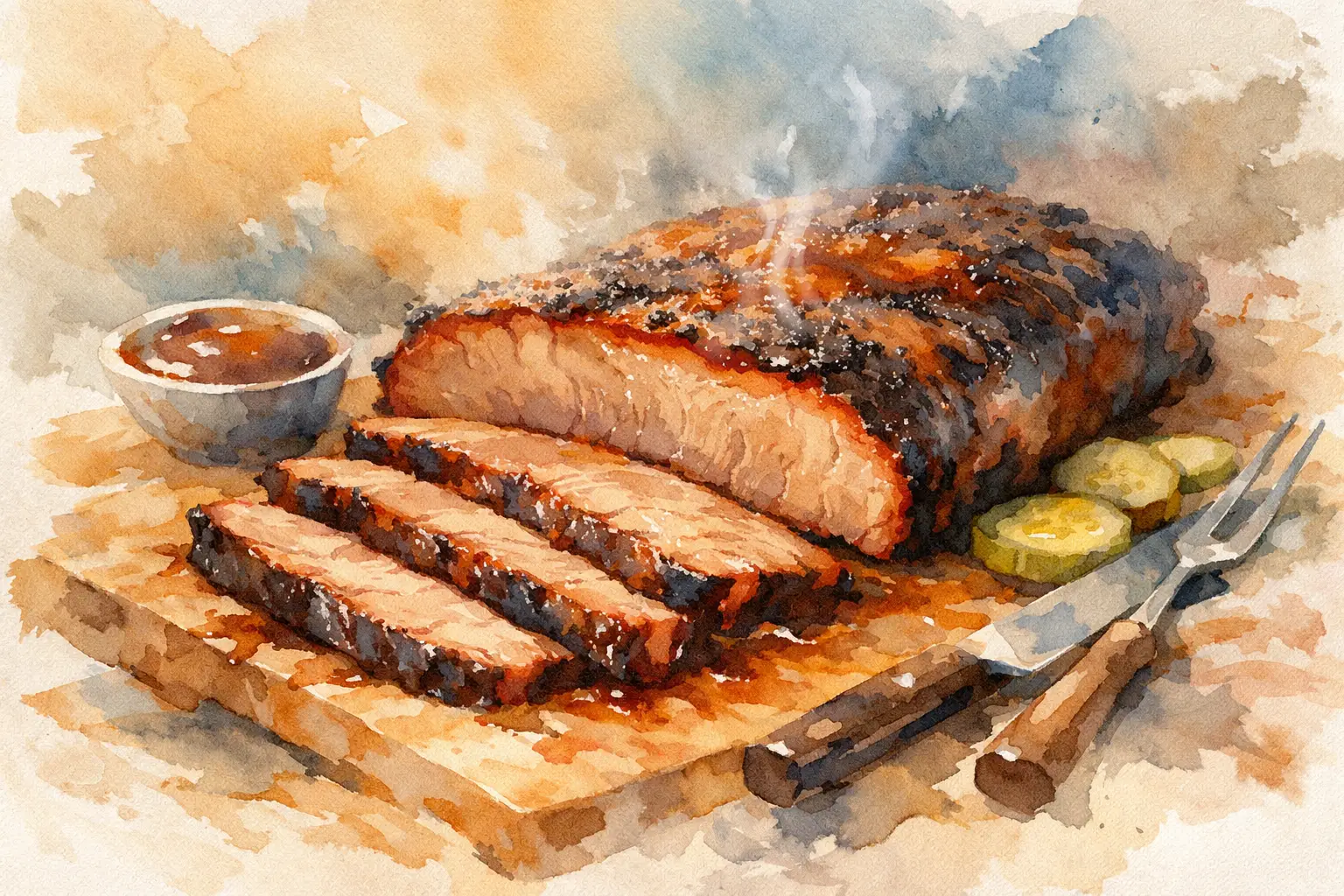
You can spot rushed brisket straight away. It looks the part, maybe even carries a decent smoke ring, but the first bite tells the truth - dry, tight, chewy, and fighting back. So what makes brisket so tender when it’s done properly? Not one trick. It’s the combination of cut, fat, collagen, temperature, smoke, and patience, all working together over hours.
Brisket is one of the toughest cuts on the animal. That is exactly why it can also be one of the best. It comes from the lower chest, a hard-working muscle loaded with connective tissue. If you cook it fast, that connective tissue stays firm and the meat eats tough. If you cook it low and slow for long enough, that same structure breaks down and turns into the soft, juicy texture people chase.
What makes brisket so tender in the first place?
The short answer is collagen. Brisket is packed with it, and collagen is the reason this cut needs time. During a long cook, collagen gradually converts into gelatine. That change gives brisket its signature softness and moisture. It is not that the meat suddenly becomes naturally delicate. It is that careful cooking transforms a tough cut into something rich and yielding.
Fat matters too, but people often overrate it. Intramuscular fat, or marbling, helps with flavour and mouthfeel, while the outer fat cap can protect the meat from drying out. But fat alone does not make brisket tender. A fatty brisket cooked badly can still end up tough. Tenderness comes when fat, collagen and moisture are all managed properly.
Then there is the grain of the meat. Brisket has long muscle fibres, and those fibres need to be softened through cooking and shortened through slicing. That is why a brisket can be cooked beautifully and still feel chewy if it is cut the wrong way.
The role of low and slow cooking
Brisket rewards restraint. High heat can cook the outside too fast before the inside has had time to break down. Low and slow cooking gives the meat a better chance to render fat gradually, retain moisture, and let collagen melt into gelatine without forcing the muscle fibres to seize.
This is where a lot of backyard cooks get caught. They think tenderness is about reaching a single number on a thermometer. Temperature matters, but brisket is not a simple on-off switch. Two briskets can hit the same internal temp and still eat differently because every piece of meat is a little different in thickness, fat content and connective tissue.
Most properly cooked brisket finishes somewhere around the low to mid 90s Celsius, but the real test is feel. When a probe slides in with little resistance, that is usually the sign the connective tissue has broken down enough. If it still feels tight, it needs more time.
Why the stall is not a problem
Anyone who has cooked brisket has met the stall. The internal temperature rises steadily, then suddenly seems stuck for hours. That happens because moisture evaporating from the surface cools the meat, almost like sweat on skin. It can feel like nothing is happening, but plenty is happening inside.
This stage is part of what makes brisket so tender. While the temperature appears to pause, fat continues to render and connective tissue continues to break down. Push too hard to rush past it and you can hurt the final texture.
Some cooks wrap the brisket during the stall, often in butcher’s paper or foil. Wrapping can help move the cook along and protect moisture. The trade-off is bark. Foil tends to soften the bark more, while paper usually preserves it better. Neither method is automatically right every time. It depends on the result you want.
The cut itself matters more than people think
Not all briskets cook the same. A whole packer brisket includes two muscles - the flat and the point. The flat is leaner and slices neatly, but it can dry out if handled poorly. The point carries more fat and usually ends up richer and softer. When people rave about brisket melting in the mouth, they are often talking about slices with enough rendered fat from the point, or from a flat that has been cooked with real precision.
Grade matters too. Better marbling generally gives you a bigger margin for error. A lean brisket can still turn out beautifully, but it demands more discipline. Trim it wrong, cook it too hot, or rest it poorly, and it will show every mistake.
That is why consistency is hard. Great brisket is not just smoked beef. It is controlled heat, steady airflow, smart trimming, and knowing how each brisket behaves on the day.
Seasoning helps, but it is not the main reason
A lot of people assume rubs or marinades are the secret. They help the outside, not the structure of the meat. Salt is the most useful part because it can improve flavour throughout and help the meat hold onto moisture. Pepper, spices and smoke build bark and character. They matter for the eating experience, but they do not replace proper cooking.
If the brisket is underdone, no seasoning blend will save it. If it is overdone, the bark might still taste great while the inside falls apart in the wrong way. Tender brisket needs both flavour and control.
Smoke and moisture
Smoke does more than add flavour. In the early stages of cooking, it helps build bark and contributes to the overall texture. A well-managed smoker also creates an environment where the brisket cooks evenly without harsh, dirty smoke coating the meat.
Clean smoke matters. Heavy smoke can leave bitterness that masks the richness of the beef. Good brisket should taste deep and balanced, not like a burnt log. Moisture in the cooking chamber can also help the surface stay receptive for longer, though it is not a magic fix. The fundamentals still do the heavy lifting.
Resting is where tenderness is protected
One of the biggest mistakes is slicing too soon. Brisket fresh off the smoker is still carrying intense internal heat, and the juices are moving fast. Cut it immediately and a lot of that moisture ends up on the board instead of in the meat.
Resting gives the brisket time to settle. The juices redistribute, the rendered gelatine thickens slightly, and the whole cut becomes easier to slice cleanly. This is not dead time. It is part of the cook.
A proper rest can be the difference between brisket that tastes loose and messy and brisket that feels plush, juicy and controlled. Some briskets benefit from a short bench rest before being held warm for longer. Again, it depends on the size of the cut and how it finished.
Slicing can make or break it
Even a well-cooked brisket can turn chewy if it is sliced with the grain. Cutting against the grain shortens the muscle fibres, making each bite easier to chew. That matters a lot with brisket because those fibres are long and obvious.
Thickness matters as well. Slice too thick and the meat can feel heavy. Slice too thin and it can lose its texture or fall apart. The sweet spot gives you enough structure to hold the slice together, but not so much that it fights back.
This is where experience shows. Proper brisket should bend without snapping and pull apart with light pressure, not crumble into mince and not stretch like rubber.
Why some brisket turns out dry or tough
Usually, dry brisket is either undercooked, overcooked, or poorly rested. Undercooked brisket still has connective tissue that has not broken down, so it feels tough and dry at the same time. Overcooked brisket has lost too much moisture and the muscle fibres have tightened beyond the point of recovery. Poor resting wastes moisture that should have stayed inside the meat.
There are other issues too. Trimming too aggressively removes protection. Running the smoker too hot creates uneven cooking. Using a lean brisket without adjusting your method narrows the margin for error. And slicing the flat the same way as the point can ruin texture because the grain direction changes.
That is why brisket has a reputation. It is simple on paper, but not forgiving.
What makes brisket so tender when experts do it consistently?
It is process. Not hype, not gadgets, not one secret ingredient. The best brisket comes from repeatable decisions - choosing a well-marbled cut, trimming with purpose, seasoning simply, cooking low and steady, respecting the stall, pulling on feel, resting properly, and slicing against the grain.
That is also why 12-hour smoked brisket stands out when it is done by specialists. Time alone is not the flex. Time used properly is. At Brisket and Briyani, that long cook matters because brisket only rewards patience when every stage around it is handled with care.
People often ask for a shortcut, but brisket is not really built for shortcuts. You can speed parts of the process up, but every shortcut comes with a trade-off - softer bark, less smoke character, patchy rendering, or a texture that misses the mark.
If you want to understand tenderness, stop thinking of brisket as just meat on heat. Think of it as a tough cut that needs to be persuaded, not forced. Get the collagen to melt, let the fat render, respect the rest, and slice it right. That is when brisket stops being just beef and starts eating the way it should.
Ready to try it? We cook fresh every week.
Chennai-style briyani and 12-hour smoked brisket. Sunnybank, every Saturday from 5 PM.
See Our Full Menu →