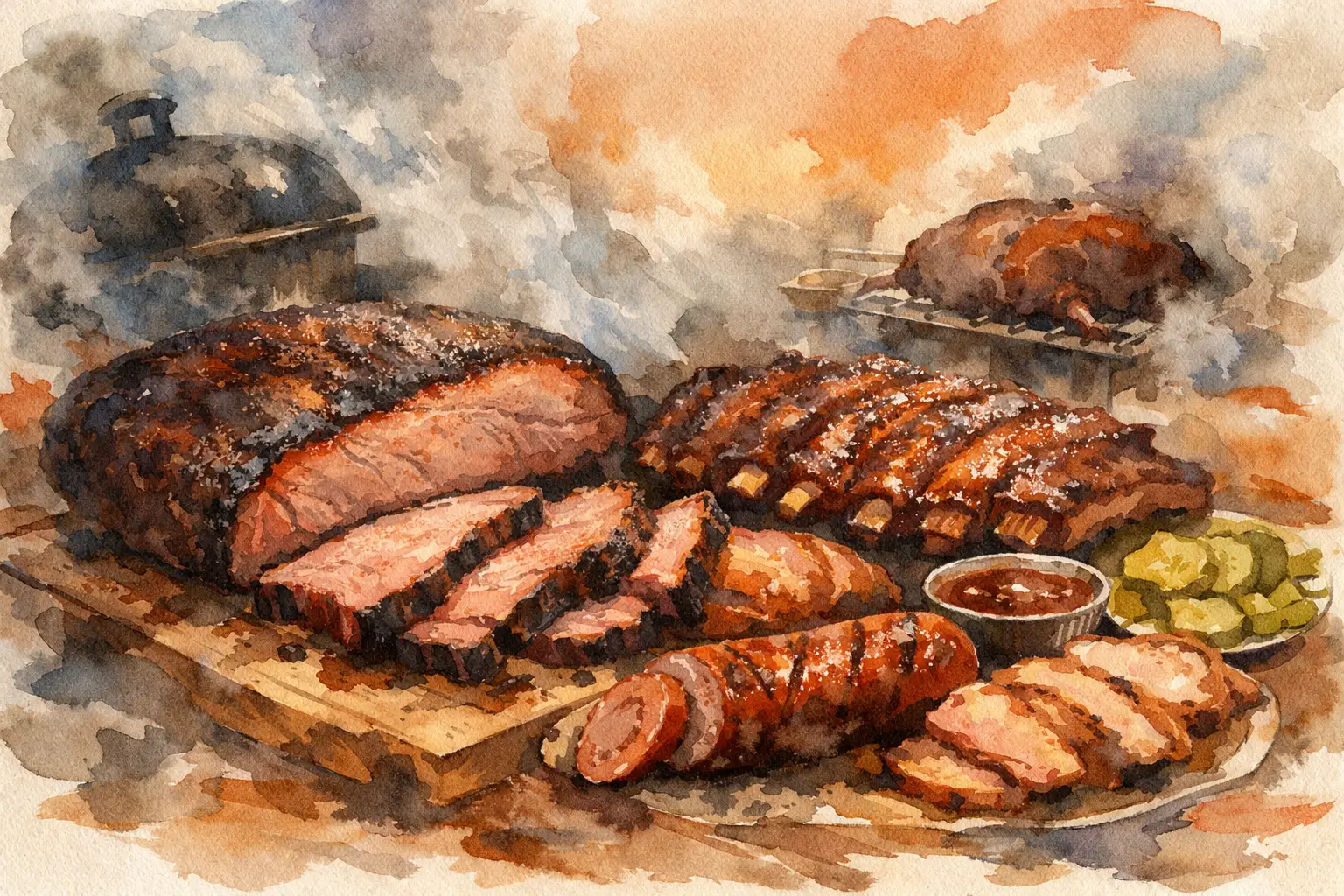
You can tell the difference before the first bite. Proper smoked meats hit with that deep, savoury aroma first - not a sugary sauce bomb, not a fake liquid smoke shortcut, but the real smell of meat, wood and time. That matters when you’re choosing takeaway in Brisbane, because plenty of places talk big on BBQ and not many put in the hours.
Smoking meat well is slow, technical and unforgiving. It asks for patience, consistency and a kitchen that respects process. If the cut is wrong, the trim is lazy, the seasoning is flat or the fire runs dirty, you taste it straight away. When it’s done properly, though, smoked meat has a depth that grilling and frying simply can’t fake.
What makes smoked meats different
At the simplest level, smoking is low-and-slow cooking over wood smoke for hours. But that short definition misses the point. Smoked meats are about transformation. Tough cuts with plenty of connective tissue become tender, juicy and rich because the heat stays controlled long enough for fat to render and collagen to break down.
That’s why cuts like brisket and pork shoulder suit smoking so well. They need time. Rush them and they stay tight. Push the heat too hard and the outside dries before the middle is ready. Go too soft on seasoning and you end up with meat that tastes flat no matter how long it sat in the smoker.
The smoke itself should support the meat, not dominate it. Good smoked BBQ has balance. You want bark on the outside, moisture inside, seasoning that holds up, and smoke flavour that lingers without turning bitter. It’s a narrow target, which is exactly why proper BBQ stands out.
Why time matters more than hype
Anyone can print “slow cooked” on a menu. The real question is how the food is handled from start to finish. Smoked meats are one of those categories where shortcuts show up fast. If a venue is trying to move too quickly, hold food too long or rely on sauce to cover dryness, customers notice.
Time matters at every stage. It starts with selecting the cut, trimming it properly and seasoning it with enough confidence to build flavour without burying the meat. Then comes the smoking itself, where temperature control is everything. Too much variation and the result gets patchy. Finally, there’s resting. That part gets ignored by plenty of people, but it’s crucial. Meat that comes straight off heat and gets sliced too soon loses juices fast.
This is why 12-hour brisket means something when it’s done properly. It’s not a marketing line. It’s a commitment to doing the hard part before the customer even places an order.
The cuts that earn their place
Not every meat benefits from the same smoking approach. Brisket is the benchmark because it’s hard to fake. It needs careful trimming, strong fire management and precise timing. When it lands, you get a dark, seasoned bark and slices that hold together while still pulling apart easily.
Pork is more forgiving, but that doesn’t mean it’s easy. Smoked pork should be succulent, not greasy, and seasoned enough to carry through rice, chips or bread without disappearing. It also takes on spice and finishing sauces differently to beef, which makes it especially good in bolder builds.
Chicken can be smoked too, but it’s a different game. It cooks faster, dries out more easily and often works best when smoke is part of the flavour rather than the whole story. That’s one reason fried chicken still holds its own on a menu beside smoked meats. The textures are completely different, and both can earn their spot.
Smoked meats need the right format
This is where a lot of venues get it wrong. Great smoked meat isn’t just about the pit. It’s about where it ends up on the plate. A cut can be beautifully smoked and still feel underwhelming if it’s paired with the wrong base, buried under too much sauce or portioned without any thought.
For takeaway, format matters. You want something that travels well, still eats properly after the drive home, and gives the meat room to do its job. That could be in a box over rice, loaded over chips or built into a family meal that actually feeds the table. The best versions don’t treat smoked meats like a novelty topping. They build the whole meal around them.
That’s part of what makes the crossover with briyani so strong. Done right, smoked brisket or smoked pork brings a completely different depth to long-grain rice, whole spices and cooling raita. It’s not fusion for the sake of being different. It works because both sides of the dish are bold enough to carry their weight.
Why smoked meats work so well with briyani
There’s a reason customers keep coming back to combinations that sound unexpected on paper. Briyani already has structure - fragrant rice, properly cooked meat, layered spice, freshness from raita. Add smoked meats to that and you introduce another layer: fire, bark, rendered fat, that deep savoury edge that only comes from hours in the smoker.
The key is restraint. If the smoke is too aggressive, it bulldozes the rice. If the briyani is too soft on spice, the meat dominates. But when the balance is right, each mouthful feels complete. You get aroma from the rice, richness from the meat and enough contrast to keep eating.
That balance is what makes a smoked brisket briyani box or a mixed meat option more than a gimmick. For Brisbane diners who want something bigger than standard takeaway, it solves a real problem. You’re getting proper smoked BBQ and proper briyani in one meal, without either side feeling watered down.
What to look for when ordering smoked meats
If you’re deciding where to spend your money, start with the basics. Look for signs that the venue respects the process. Specific cuts are a good start. So is clarity around cook time. If a place talks in vague language and leans heavily on sauce names instead of meat quality, that tells you something.
Texture is the biggest giveaway once the food arrives. Brisket should be tender but still sliceable. It shouldn’t crumble into dry shreds unless that’s the intended style. Pork should be juicy and seasoned through, not just wet on top. The bark should add flavour and texture, not taste burnt.
Portioning matters too. Smoked meats are rich, so the meal needs balance. Rice, chips, slaw, pickles, raita or sauces all play a role depending on the format. A good box eats well from first bite to last. A bad one starts strong and turns heavy fast.
Freshness matters more than people think
Smoked BBQ has a reputation for holding well, and to a point that’s true. But there’s still a big difference between meat that’s been handled carefully and meat that’s been sitting around too long. Fresh slicing, proper holding temperatures and smart service windows all affect the final result.
That’s why limited runs often make sense for smoked meats. When a kitchen is serious about quality, sell-out risk comes with the territory. It’s not always convenient, but it’s usually a better sign than a tray of tired meat hanging around all day. When we say crafted fresh, served fast, that standard has to show up in the box.
For busy diners in places like Sunnybank, Springfield and surrounding suburbs, that matters. People want food that feels worth the drive, worth the queue and worth telling their mates about after. Smoked meats can absolutely do that - but only when the work behind them is real.
The trade-off most customers are happy to make
Here’s the honest bit: proper smoked meats are not the cheapest, fastest or easiest food to produce. They take time, attention and a fair bit of risk. Some days a cut behaves differently. Some days demand runs hot and the best item sells out early. That’s the trade-off.
But for plenty of customers, that’s exactly the appeal. Food made with real limits usually tastes better than food designed to be endlessly available. If a venue has put 12 hours into brisket, built the menu around quality, and kept the format practical enough for a weeknight feed or a family spread, people notice.
That’s why smoked meat has moved beyond niche BBQ circles. It now sits comfortably in family packs, snack packs, rice boxes and destination takeaway. It can be serious food without being stiff about it.
At Brisket and Briyani, that’s the whole point - smoked low and slow, built into meals that still make sense when you’re hungry now. If you’re chasing smoked meats, look past the buzzwords and back the places that put flavour, freshness and fire first.
Ready to try it? We cook fresh every week.
Chennai-style briyani and 12-hour smoked brisket. Sunnybank, every Saturday from 5 PM.
See Our Full Menu →