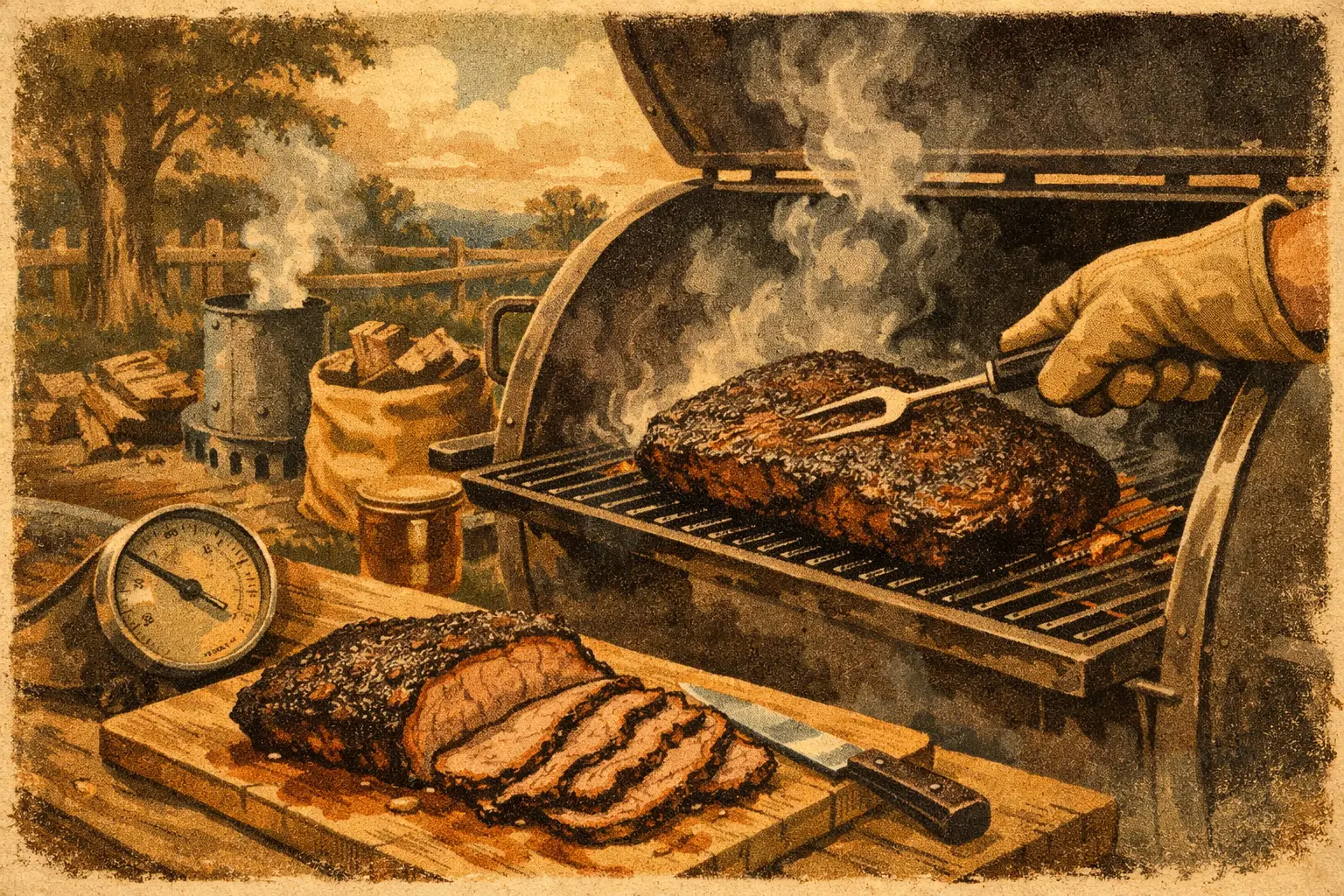
If you’re searching for smoked brisket time at 225, you’re probably after a straight answer. Fair enough. The simple version is this - most whole packer briskets take around 1 to 1.5 hours per pound at 225°F, but brisket has a habit of ignoring neat little rules. A 6 kg brisket might be done in 10 hours, or it might push well beyond 14 once the stall, fat content, airflow and rest are factored in.
That’s why experienced pitmasters don’t cook brisket by the clock alone. Time matters, but feel matters more. If you build your whole plan around a fixed number, brisket will humble you fast.
Smoked brisket time at 225 is a range, not a promise
225°F sits at roughly 107°C, which is classic low-and-slow territory. At that temperature, collagen has time to break down properly, fat renders gradually, and the meat develops bark without rushing the process. The trade-off is obvious - good brisket at 225 takes patience.
For a full packer brisket, most cooks land somewhere in these general ranges:
- 4 to 5 kg brisket - roughly 8 to 11 hours
- 5 to 6.5 kg brisket - roughly 10 to 14 hours
- 6.5 to 8 kg brisket - roughly 12 to 16+ hours
Those numbers include the cooking phase, but not always a proper rest. That matters more than plenty of people realise. A brisket that finishes at 2 pm and rests until dinner will often eat better than one rushed straight onto the board.
Why brisket time changes so much
Two briskets that weigh the same can cook very differently. Thickness is one reason. A thick, compact brisket usually takes longer than a flatter one, even if the scales say they’re equal. Fat is another factor. More internal fat can slow things down, but it also gives you a better margin for error.
Your smoker itself also changes the result. Not every pit holds a true 225 all day. Some run hot near the firebox, some swing with every lid opening, and some read one number on the gauge while the grate tells another story. If your smoker is drifting between 215 and 245, your brisket time at 225 is no longer really a 225 cook.
Humidity, wind, trimming and whether you wrap all come into it too. That’s the part plenty of quick guides leave out. Brisket is not hard because the method is secret. It’s hard because every variable stacks up.
The stall is where people lose confidence
If you’ve never cooked brisket before, the stall can feel like something’s gone wrong. The internal temperature climbs nicely, then suddenly sits there for hours around 65 to 75°C. That’s normal. Moisture is evaporating from the surface and cooling the meat at the same time the smoker is trying to heat it.
This is where people start poking, opening lids, turning temps up wildly, or deciding the brisket is cursed. Usually, none of that helps. The stall is just part of the job.
At 225, the stall can be long. Really long. If you stay unwrapped, you’ll often get a stronger bark and deeper smoke character, but you’ll need more time and more patience. If you wrap in butcher’s paper or foil once the bark is set, you can push through the stall faster. Paper tends to protect the bark better than foil, while foil cooks quicker but softens the outside more.
There’s no single right answer there. It depends whether you value bark, speed or moisture retention most.
What a realistic brisket timeline looks like
Let’s say you’re cooking a 6 kg packer brisket at 225°F. A realistic schedule might look like this.
You trim and season the brisket the night before, or early in the morning. It goes on the smoker cold or close to it. For the first few hours, not much appears to happen apart from colour building and bark starting to form. Somewhere around the 4 to 6 hour mark, the internal temperature often moves into stall territory.
If the bark looks right, this is where many cooks wrap. Then the brisket goes back on until the thickest part of the flat and point starts probing tender, usually around the low to mid 90s Celsius. That could happen at 10 hours. It could just as easily happen at 13.
Then comes the rest. Not ten minutes on the bench. A proper rest. One to three hours is common, and some cooks hold brisket longer in a warm environment. That rest allows juices to redistribute and the rendered collagen to settle. Skip it, and even a well-cooked brisket can eat tighter than it should.
So when someone asks how long smoked brisket time at 225 really is, the honest answer is often 12 to 16 hours from start to serving once the rest is included.
Don’t cook to temperature alone
Internal temperature is helpful, but it is not the finish line by itself. A brisket at 93°C can still feel tight. Another at 90°C might already be perfect. The better test is probe tenderness. When a probe or skewer slides into the flat with very little resistance, like warm butter or soft peanut butter, you’re close.
The flat matters most because it dries out first. The point has more fat and is generally more forgiving. If the point is silky but the flat still pushes back, it needs more time.
That’s why rigid brisket charts can mislead people. They make it sound as though every brisket hits the same finish line at the same internal number. Real brisket doesn’t work like that.
Should you always smoke brisket at 225?
Not necessarily. 225°F is traditional and gives you excellent control, but it’s not the only good temperature. Plenty of serious barbecue cooks run brisket at 250°F or even 275°F, especially when they want a more manageable cook window.
At 225, you get a slower render and a bit more room to build bark carefully. At 250 to 275, you shorten the cook and often still produce excellent brisket if the rest of your process is right. The risk with hotter cooks is less margin for error, especially on leaner flats.
If you’re cooking at home and trying to serve dinner to real people at a sensible hour, there’s no shame in moving above 225. The best temperature is the one your pit handles well and your schedule can support.
Common mistakes that blow out brisket time
A lot of long, frustrating cooks come back to the same handful of problems. The smoker runs cooler than the dial suggests. The brisket goes on straight from the fridge with a very heavy trim left intact. The lid gets opened too often. The wrap happens too early, before the bark has set, or too late, after too much moisture has already gone.
Another common mistake is underestimating the rest. People think only about the smoking time, then panic when lunch or dinner gets close. Good brisket rewards cooking ahead, not cutting it fine.
If you want less stress, aim to finish early. A finished brisket can hold far better than an underdone one can magically catch up.
How the pros think about time
In a serious barbecue kitchen, nobody trusts a brisket simply because the clock says it should be ready. They watch colour, bark, fat render, internal rise and tenderness together. That’s the difference between following a recipe and reading the meat.
At places built around proper smoked meats, the process is never casual. It’s planned, monitored and adjusted. That’s one reason brisket worth eating has real value. Time is part of the ingredient list.
At Brisket and Briyani, that same thinking matters because good brisket isn’t just about smoke. It’s about consistency, patience and knowing when the meat is ready, not when it would be convenient.
The best rule for smoked brisket time at 225
Build your cook around a window, not a deadline. If the rough estimate says 12 hours, give yourself 14 or 15. If it finishes early, rest it properly. If it runs late, you’ve still got room.
That one shift in mindset changes everything. Brisket gets easier when you stop asking, “How many hours exactly?” and start asking, “What does this piece of meat need today?”
That’s the real answer to smoked brisket time at 225 - long enough to go tender, and not a minute less.
Ready to try it? We cook fresh every week.
Chennai-style briyani and 12-hour smoked brisket. Sunnybank, every Saturday from 5 PM.
See Our Full Menu →