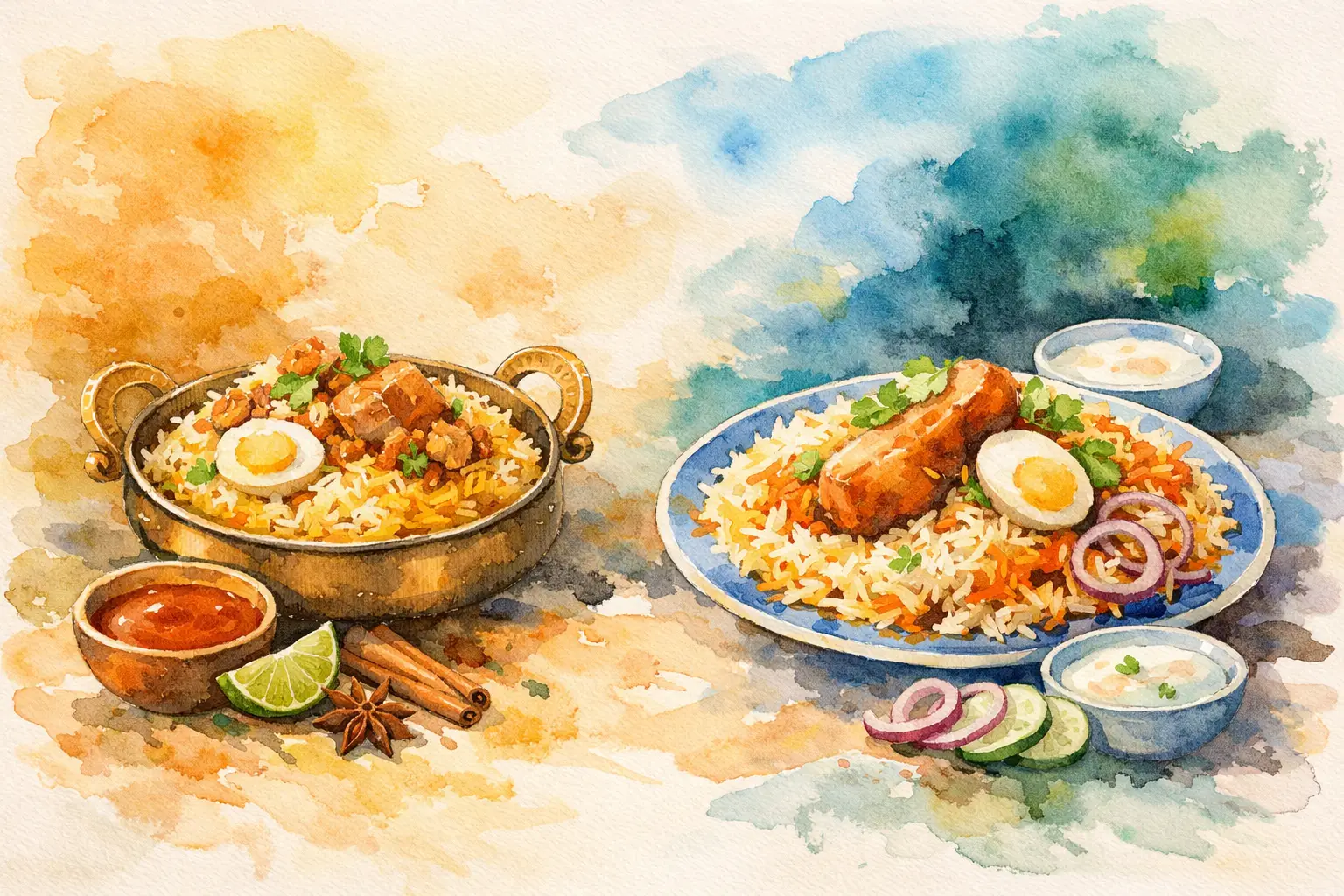
You’ve seen both spellings on menus, in reviews, and all over food posts, so it’s fair to ask: is briyani different from biryani? Short answer - usually no. In most cases, they refer to the same broad dish: spiced rice cooked with meat or vegetables, layered with flavour, and built around fragrance, heat and depth.
The confusion comes from language, pronunciation and regional habit, not from one spelling being “real” and the other being wrong. Some people write biryani. Some write briyani. Both are widely used, and both are understood. If you grew up seeing one spelling, the other can look off at first. That doesn’t make it less authentic.
Is briyani different from biryani in practice?
Most of the time, no. The spelling changes, but the dish itself still sits in the same family. Rice, whole spices, meat or veg, careful cooking, and a style that depends heavily on region - that’s the heart of it.
What does change is the version being served. A Hyderabad-style biryani won’t eat the same as a Chennai-style briyani. The rice texture can differ. The spice profile can shift. Some versions lean drier and more separate, others carry more masala through the rice. Some use stronger heat, others more aroma. So when people think there’s a hard line between briyani and biryani, they’re often noticing regional cooking differences, not a strict spelling rule.
That matters because food names travel. As dishes move across cities, states and countries, spelling follows local speech. English doesn’t always capture South Asian pronunciation neatly, so multiple spellings stick around.
Why do people spell it briyani or biryani?
This is mostly about transliteration - turning a word from one language or script into English letters. There isn’t always one perfect way to do that. The sound lands slightly differently depending on who is saying it, what language they speak at home, and which regional version they know best.
That’s why you’ll see menu boards, family recipes and shopfronts use different spellings without meaning a different dish entirely. One family might always say biryani. Another might say briyani. In spoken conversation, the difference can be subtle enough that English spelling tries to catch a sound that shifts from place to place.
For plenty of Tamil speakers and South Indian businesses, briyani feels natural because it reflects familiar pronunciation and identity. That’s not a typo. It’s a deliberate spelling choice, and for many customers it signals a particular style, especially Chennai-style cooking.
Briyani can signal a regional style
Here’s where the answer gets more interesting. While briyani and biryani are often interchangeable, the spelling briyani can sometimes hint at a South Indian or Tamil context. It may suggest a dish built in a way that locals already recognise - stronger masala integration, a certain rice finish, a certain balance of spice and meat, and a familiar way of serving it.
That doesn’t mean every place using “briyani” cooks the same way. It means the spelling can carry regional cues. The same goes for “biryani”. That word is broad. It covers many styles, from different parts of the subcontinent and beyond. So if you’re trying to work out what you’re actually getting, the spelling alone won’t tell you enough. The cooking style will.
A better question than “which spelling is correct?” is “what style is this shop making?” That’s where the real difference sits.
What matters more than spelling
If you care about quality, spelling is the least important part of the box.
What matters is how the rice is cooked. Whether the spices are handled properly. Whether the meat is tender and seasoned all the way through. Whether the rice carries flavour instead of just colour. Whether each serve tastes like it was made with intent, not just bulked out.
A proper briyani or biryani should have structure. The grains should hold. The aromatics should show up clearly. The masala should be present without turning the whole thing muddy. There should be balance between heat, fragrance and savoury depth. And the meat should feel like it belongs in the rice, not like it was thrown on top as an afterthought.
That’s also why two places can use the same spelling and serve wildly different food. One can be rich, fresh and worth the trip. The other can be dry, flat and forgettable. The word on the menu doesn’t guarantee the standard.
Is one spelling more authentic than the other?
No - not on its own.
Authenticity in food is always more specific than spelling. It lives in method, ingredients, proportion, and whether the cooking respects the style it claims to serve. A place can spell it biryani and make a brilliant dish. Another can spell it briyani and do the same. The reverse is also true.
This is where people get stuck online. They want one clean answer, one “correct” version, one spelling to settle the argument. Food rarely works like that. Regional dishes evolve. Language shifts. Communities carry names differently. The same dish can keep its soul while the English spelling changes.
For us, briyani is the spelling we use because it fits the South Indian, Chennai-style lane we stand in. It says something about the food before the lid even comes off. But the point isn’t to police other spellings. The point is to be clear about what we cook and how we cook it.
If you’re ordering in Brisbane, what should you look for?
If you’re hungry and scanning menus around Brisbane, don’t get hung up on whether the listing says briyani or biryani. Read for clues that actually matter.
Look at the style being named. If a shop says Chennai-style, Hyderabadi, or another specific regional style, that tells you more than spelling ever will. Pay attention to the protein options, whether the rice is basmati, whether the dish is made fresh daily, and whether it’s served with the usual sides like raita. Reviews can also help, especially when people talk about flavour, freshness and portion size rather than just saying “nice food”.
It’s also worth noticing whether the menu feels specialist or generic. A shop that takes briyani seriously usually says so plainly. You’ll see confidence in the way the dish is described. You’ll get a sense that it’s a centrepiece, not just another rice option tucked between chips and wraps.
That’s one reason the spelling debate stays alive. People are often trying to work out if a place is serving a version they know and trust. That instinct is fair. The better move is to chase signs of proper cooking.
So, is briyani different from biryani?
Usually, no. They are most often two spellings pointing to the same category of dish. The difference is more about language and regional usage than a strict culinary divide.
But there is a small catch, and it’s worth saying clearly. Sometimes “briyani” does signal a specific South Indian identity, especially in Tamil contexts. In that sense, the spelling can tell you something about the style, or at least the tradition the cook is speaking from. That’s not a universal rule, but it’s real enough to matter.
So if someone asks whether briyani and biryani are different, the honest answer is: not usually, but context counts. The spelling might shift with pronunciation, region or community. The dish itself can also vary a lot depending on who’s cooking it.
And if you’re standing at the counter trying to decide whether it’s worth your money, forget the spelling fight. Ask the better question - is it cooked properly, packed with flavour, and made by people who know exactly what they’re doing? That answer will always tell you more than one extra letter.
Ready to try it? We cook fresh every week.
Chennai-style briyani and 12-hour smoked brisket. Sunnybank, every Saturday from 5 PM.
See Our Full Menu →