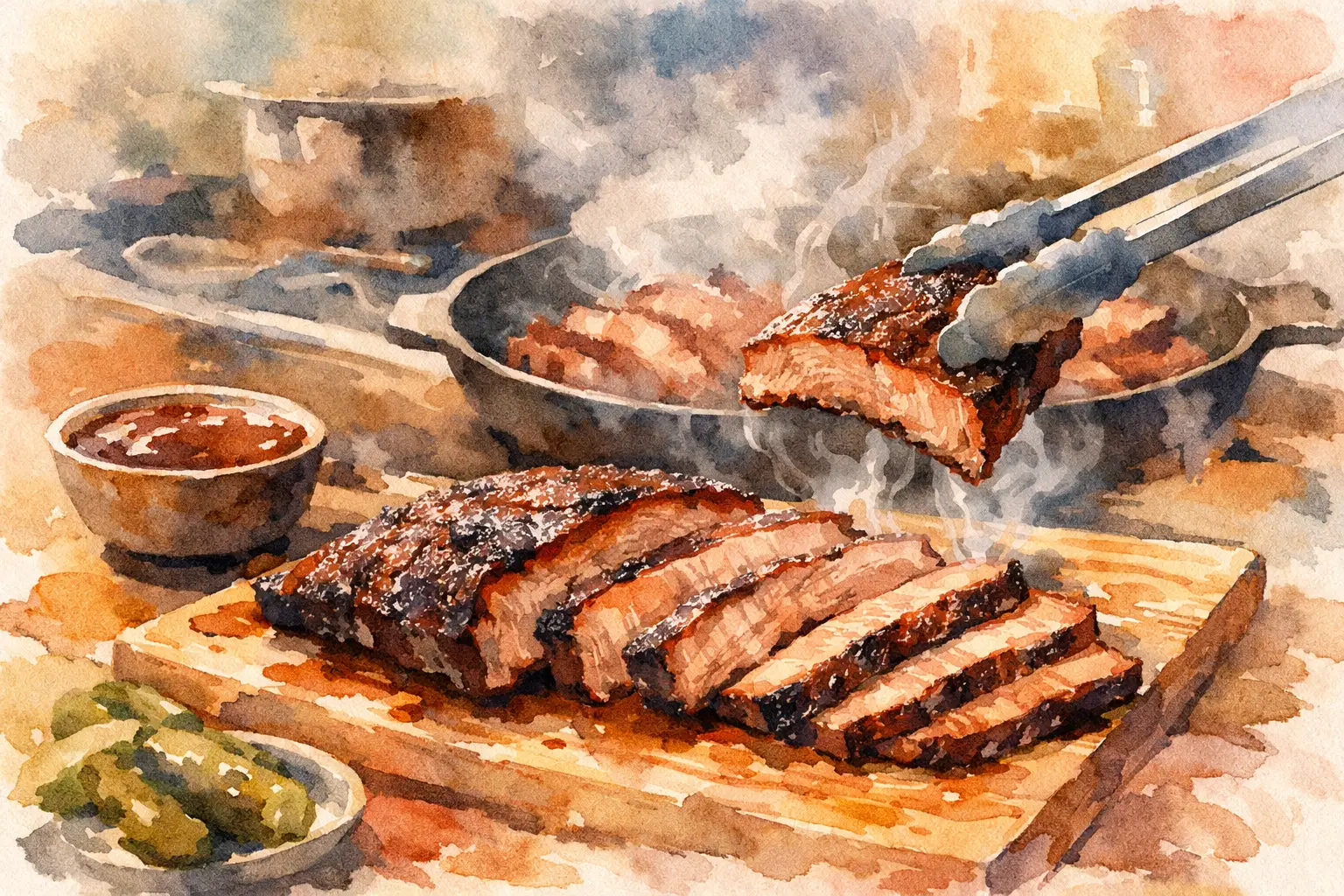
Cold brisket can still be brilliant. Dry brisket, though, is a write-off. If you want to know how to reheat smoked brisket without losing the bark, the smoke, and all that hard-earned moisture, the method matters more than people think.
Brisket is not like reheating a sausage roll or last night's chips. It was cooked low and slow for hours, with fat and connective tissue breaking down at a careful pace. Reheat it too hard and too fast, and the meat tightens up, the slices dry at the edges, and the whole thing tastes flat. Treat it properly, and it can eat almost as well as the day it was carved.
How to reheat smoked brisket without drying it out
The rule is simple: gentle heat, some moisture, and patience. That is the whole game.
For most people, the oven is the best method. It gives you control, it heats evenly, and it works whether you are warming a few slices or a larger piece. Set your oven to around 120 to 150C. If the brisket is already sliced, keep the slices together as much as possible rather than spreading them out on a tray. Put the meat in an oven-safe dish, add a small splash of beef stock, cooking juices, or even a bit of water, then cover it tightly with foil.
The foil matters. You are not trying to roast the brisket again. You are creating a gentle, steamy environment so the meat warms through without shedding all its moisture. Reheat until the centre is hot, usually around 20 to 30 minutes for sliced brisket and longer for a larger piece. If you have a thermometer, aim for an internal temperature of about 74C for serving.
Once it is hot, rest it for a few minutes before opening the foil fully. That small pause helps the juices settle instead of running everywhere the second you uncover it.
The best method depends on how your brisket is stored
There is no single answer for every leftover. It depends on whether your brisket is whole, sliced, vacuum sealed, or already a bit dry from the fridge.
If you have a whole or half piece, reheat it whole if possible. A larger piece holds moisture better than individual slices. Once hot, slice only what you need. This is the closest you will get to that fresh-cut texture.
If the brisket is already sliced, the risk goes up. Slices reheat faster, but they also dry faster. Keep them packed closely together, add a little liquid, and do not leave them in the oven any longer than needed.
If it is vacuum sealed, you are in a strong position. Reheating brisket in the bag, using hot water, is one of the safest ways to keep it juicy. Bring a pot of water to a very gentle simmer, not a rolling boil, then lower the sealed brisket in and let it warm slowly. Depending on size, this can take 20 minutes to over an hour. The benefit is that the brisket sits in its own juices and does not lose moisture to dry heat.
If your leftovers have already spent a couple of days in the fridge uncovered or loosely wrapped, they may need a bit more help. In that case, stock or reserved juices are better than plain water because they add back some flavour as well as moisture.
Oven, stovetop, microwave or hot water?
The oven is the best all-rounder, but it is not the only option.
Hot water is excellent for vacuum-sealed brisket. It is hard to overdo, and it keeps the meat soft. The downside is that you need the brisket properly sealed, and it is not ideal if you want to refresh the bark.
The stovetop can work if you are reheating chopped brisket or smaller pieces for rolls, loaded chips, or a rice box. Use a pan on low heat, add a splash of stock, and cover with a lid. This is a practical method, but it can push the bark too soft if you leave it too long.
The microwave is the last resort. It is fast, and sometimes speed wins, especially on a workday lunch. But microwave heat is uneven, and brisket can jump from cold to rubbery in a minute. If you have to use it, lower the power, cover the meat, add a spoonful of liquid, and heat in short bursts. Turn or rearrange the slices between bursts. It is not perfect, but it is better than blasting it on full power.
If you care most about texture and flavour, the oven wins. If you care most about keeping moisture in a sealed brisket, hot water is excellent. If you care most about speed, the microwave can do the job, but it comes with trade-offs.
How long to reheat smoked brisket
Time depends on thickness, volume, and starting temperature. Fridge-cold brisket takes longer than brisket that has sat out briefly to lose the chill. A whole piece takes much longer than slices.
As a rough guide, sliced brisket in the oven often needs 20 to 30 minutes at 120 to 150C. A larger piece may need 45 minutes or more. In hot water, a vacuum-sealed whole piece can take an hour or longer depending on size.
The real answer is temperature, not just time. You want the centre heated through, not just the outside edges. If you are serious about smoked meat, a thermometer removes the guesswork. Once the middle reaches serving temperature, pull it. Every extra minute is another chance to dry it out.
What to add when reheating
A little moisture helps. Too much turns brisket into stew.
The best liquid is reserved brisket juice if you have it. After that, beef stock does the job well. Water is acceptable in a pinch, especially if the brisket still has plenty of fat. Some people use barbecue sauce, but go easy. Sauce can cover dryness, but it can also mask the smoke and bark that made the brisket worth eating in the first place.
If the brisket is especially fatty, you may need less added liquid than you think. If it is leaner flat meat, a touch more helps. This is where reheating becomes less about rules and more about reading what is in front of you.
Common mistakes that ruin good brisket
Most reheating mistakes come down to rushing.
High heat is the biggest one. People think hotter means faster and better. With brisket, hotter usually means tighter, drier meat. Another common mistake is reheating uncovered. That lets moisture escape fast, especially with sliced brisket.
Over-slicing is another problem. If you know you will not eat the full portion at once, do not slice the whole lot before storing it. Keep larger sections intact. They reheat better and hold their juices longer.
Then there is reheating it more than once. Try not to. Heat only what you plan to eat. Every cycle knocks a bit more life out of the meat.
Can you crisp the bark again?
Yes, but only after the brisket is warmed through.
If you want a firmer exterior, unwrap the brisket for the last few minutes in the oven or give it a quick hit in a hot pan. Keep it brief. The goal is to wake the bark up, not cook the meat further. This works best on thicker pieces rather than delicate slices.
That said, there is always a trade-off. Restoring bark usually means exposing the brisket to drier heat, which can cost you a bit of moisture. If your brisket is already on the lean side, prioritise juiciness first.
Fridge, freezer and food safety
Good reheating starts with good storage. Let brisket cool slightly, then refrigerate it promptly in a sealed container or wrapped tightly. If you are not eating it within a few days, freeze it. Vacuum sealing is ideal, but even a well-wrapped portion in a freezer-safe bag is far better than leaving it exposed.
When reheating from frozen, thawing in the fridge first gives the best result. You can reheat from frozen in some cases, especially in hot water if it is sealed, but the timing gets less predictable and the outside can overheat before the middle catches up.
Do not leave reheated brisket sitting around for ages on the bench. Get it hot, serve it, and if there are leftovers again, be realistic about quality. Brisket can handle one good reheat. After that, you are usually better off folding it into rice, chips, or a saucy dish where texture matters less.
Proper smoked meat deserves a bit of respect the next day. Reheat it low and slow, keep the moisture in, and let the brisket do what it does best - stay tender, rich and worth every bite.
Ready to try it? We cook fresh every week.
Chennai-style briyani and 12-hour smoked brisket. Sunnybank, every Saturday from 5 PM.
See Our Full Menu →