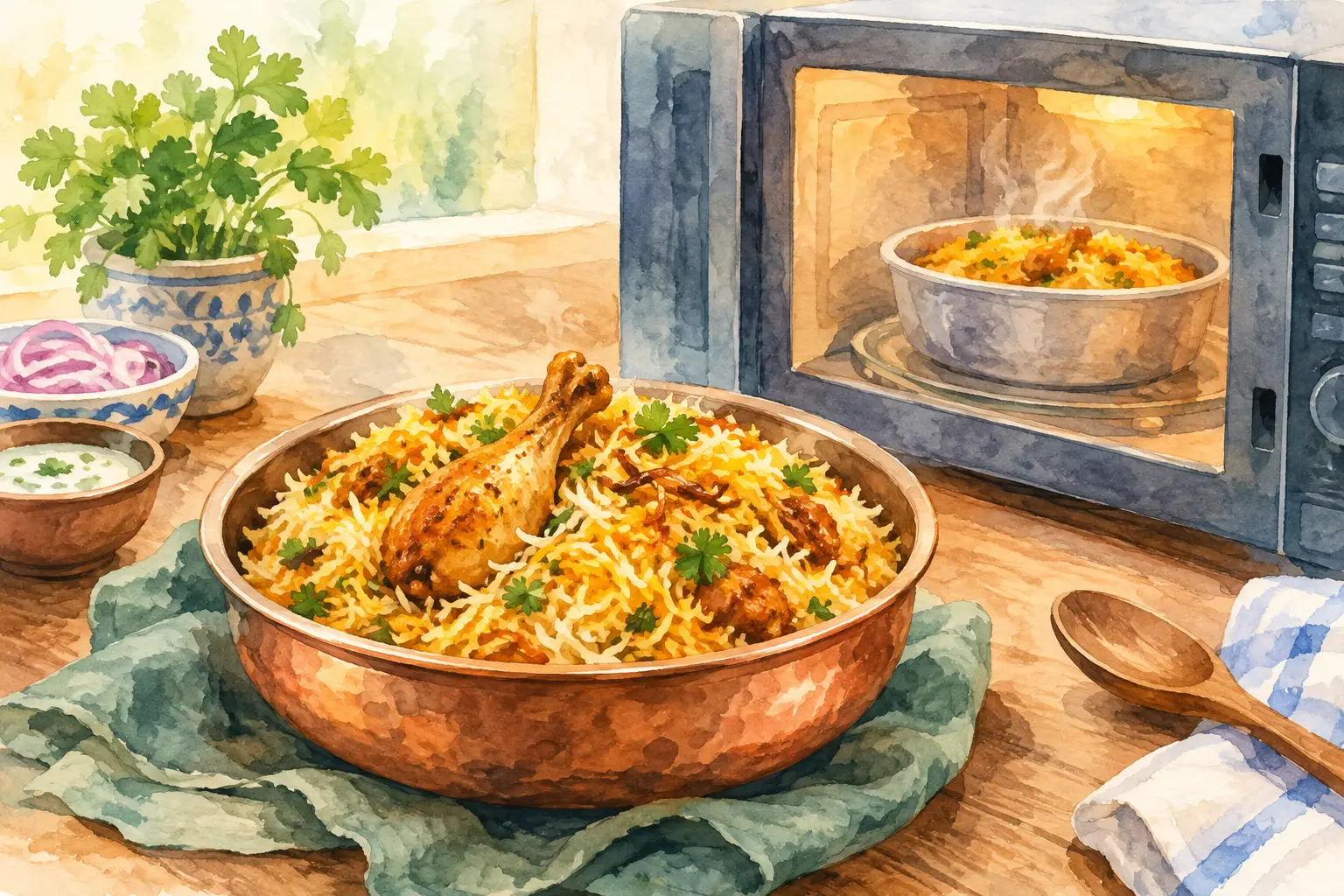
That leftover briyani box is too good to waste, but rice and slow-cooked meats need more care than a quick blast in the microwave. Knowing how to reheat briyani safely means you keep the basmati fluffy, the meat tender and the whole meal properly hot - without taking chances on food that has sat out too long.
The winning move is simple: chill it quickly, reheat only what you plan to eat, add a little moisture, and heat it until it is steaming hot through the centre. Your raita is a different story. Keep it cold and serve it fresh alongside the hot briyani.
Start with safe storage, not reheating
Safe reheating starts the moment you finish eating. Briyani contains cooked rice, meat and often a rich gravy or masala. All are best kept out of the temperature danger zone - between 5°C and 60°C - where bacteria can multiply quickly.
If you are saving a leftover box, get it into the fridge as soon as practical. Ideally, refrigerate it within two hours of receiving or serving it. In a Brisbane summer, do not leave it on the bench while you settle in for the night, and do not forget it in the car after a long delivery run home.
Your fridge should be running at 5°C or colder. Transfer a large family-size portion into shallow containers if you can. It cools faster than one deep, tightly packed container, which matters when there is a generous layer of rice and smoked or fried meat involved.
The Australian two-hour/four-hour rule is useful when you are not sure how long the food has been out:
- If briyani has been between 5°C and 60°C for less than two hours, you can eat it or put it back in the fridge.
- If it has been out for two to four hours, eat it straight away but do not refrigerate it again.
- If it has been out for more than four hours, bin it. Do not rely on smell, taste or another round of heating to make it safe.
Count the total time at room temperature, not just the time sitting on your kitchen bench. That includes the trip home, time spent serving dinner and any time the container was left open at a gathering.
How to reheat briyani safely in the microwave
For most leftover single serves, the microwave is the quickest and most reliable option. The key is steam. Basmati dries out when it is heated uncovered, especially if you are reheating a portion with plenty of rice and only a little masala.
Spoon the amount you want into a microwave-safe bowl. Break up any cold, compacted clumps with a fork, then sprinkle over one or two tablespoons of water. If your portion includes a saucy meat section, move a little of that masala through the rice instead. Cover the bowl with a microwave-safe lid or plate, leaving a small gap for steam to escape.
Heat on high for one to two minutes, then stir the rice well. Turn larger pieces of chicken, pork or brisket over so the cold middle is exposed. Cover again and continue in short bursts until the entire serving is steaming hot. Let it stand for one minute before eating, because the heat keeps travelling through the food during that rest.
Microwaves heat unevenly, so the centre matters more than the edges. If you have a food thermometer, check that the thickest part reaches at least 75°C. Without one, check carefully for obvious cold patches, especially around dense meat, the bottom of the bowl and compacted rice. It should be piping hot throughout, not merely warm.
Avoid reheating raita in the same bowl. Its job is to be cool, creamy and refreshing beside the spice. Take it from the fridge only when the briyani is ready to serve, and return any untouched raita promptly.
For a crisp element, reheat it separately
Chicken 43 and other fried toppings will go soft under a wet rice cover. That is not a safety issue if they are heated thoroughly, but it is a quality issue. Reheat the briyani covered in the microwave, then warm fried chicken separately in an oven or air fryer until hot through and crisp on the outside.
If crispy chips are part of a Humdinger Snack Pack, expect a trade-off. They are best eaten fresh. You can reheat them, but they may not return to their just-served crunch. Keep cold sauces separate where possible, then add them after reheating.
Reheating briyani on the stovetop
The stovetop is excellent for two or more serves when you want softer, steam-fluffed rice. Use a wide frying pan or saucepan with a fitted lid. Add the briyani, splash in a few tablespoons of water, and gently separate the rice with a fork.
Cover and warm over low to medium-low heat for several minutes. Stir every couple of minutes, scraping from the bottom so nothing catches. Add another small splash of water if the rice looks dry, but do not drown it. Too much water can turn the lower layer stodgy while the top is still cold.
Once it is steaming throughout, check the meat pieces in the centre of the pan. Give them extra time if needed. Slow-smoked brisket and larger bone-in chicken pieces can take longer than the rice around them. Serve straight away once everything is properly hot.
Use the oven for family-size portions
For a leftover family pack, the oven gives you more even heat than trying to force a large pile through the microwave. Place the briyani in an oven-safe dish, scatter a few tablespoons of water over the rice, and cover tightly with foil or a lid. Heat it at around 160°C to 170°C until steaming hot all the way through.
The timing depends on the depth and size of the dish, but a full cold tray may take 20 to 30 minutes. Stir once halfway through if practical, particularly if the food is in a deep dish. Check the centre before serving. If it is not piping hot, cover it again and keep heating.
Do not leave the tray sitting in a switched-off oven for ages after it is ready. Portion it up and eat. Hot food needs to stay hot, not drift back into the danger zone while everyone decides whether they want seconds.
Do not reheat the same briyani twice
This is where good leftovers become risky leftovers. Reheat only the amount you are about to eat. Once a portion has been reheated, it should be eaten then and there rather than cooled and reheated again tomorrow.
It is also worth being honest about the condition of the food before you start. If the briyani was left out too long, has been stored in the fridge for several days, or you cannot remember when it went in, do not gamble on it. Strong spice can mask off smells, and rice can look completely normal even when it is no longer a safe choice.
For best quality, eat refrigerated leftovers within one to two days. You can freeze briyani if you need longer, preferably in meal-sized portions. Defrost it in the fridge overnight, then reheat it once until steaming hot. Do not thaw it on the bench.
The simple rule: steam, check, serve
A proper briyani deserves better than dry rice around cold meat. Add a little water, keep it covered, stir or turn it midway, and make sure the middle is piping hot before you dig in. That is how you protect the flavour, the texture and your household.
Fresh is always the benchmark at Brisket and Briyani, where the food is crafted fresh and served fast. But when you save a portion for tomorrow, treat it right: keep it cold, heat it once, and let that first spoonful still hit properly.
Ready to try it? We cook fresh every week.
Chennai-style briyani and 12-hour smoked brisket. Sunnybank, every Saturday from 5 PM.
See Our Full Menu →