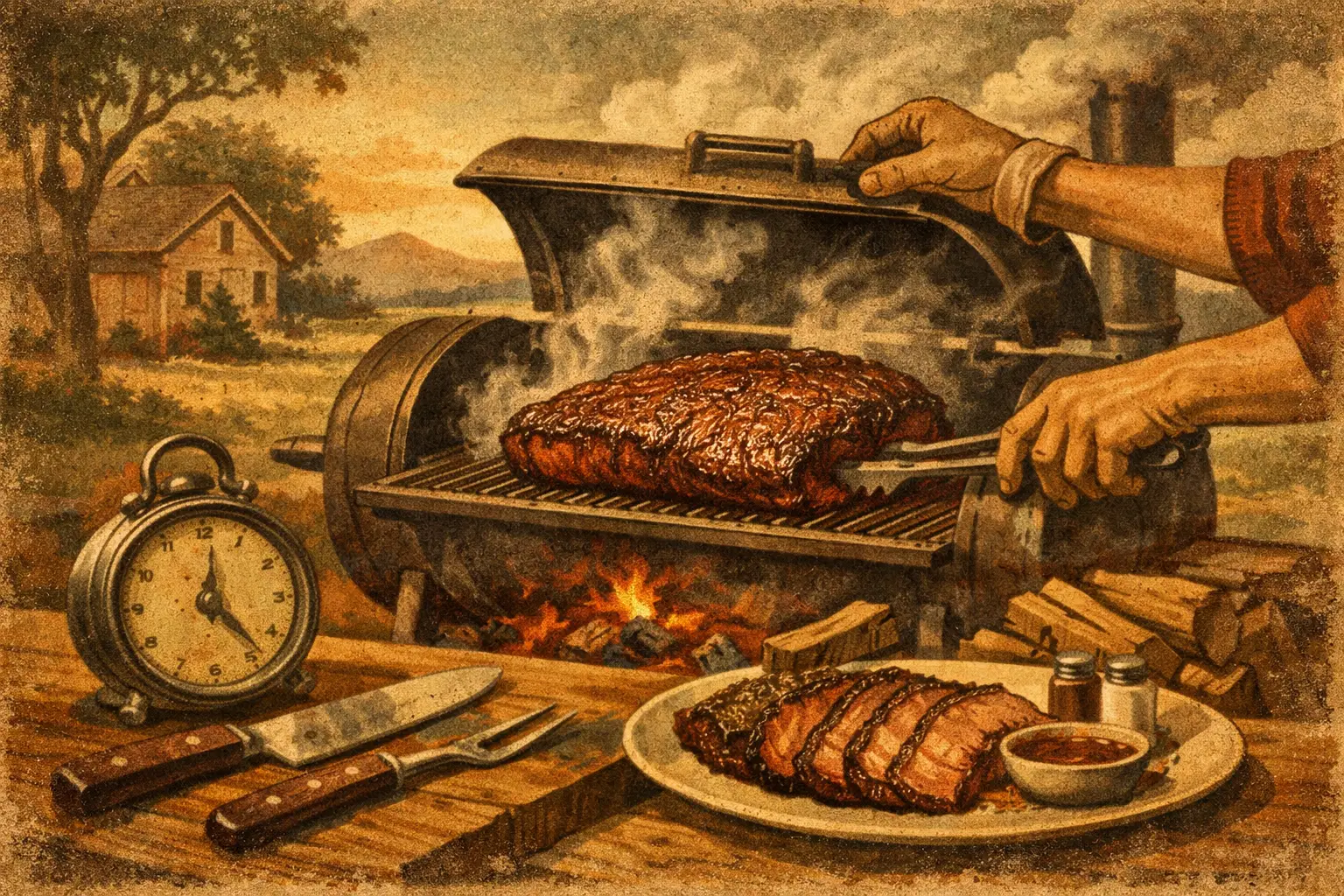
Brisket punishes guesswork. Put it on too hot, rush the wrap, or slice it too early and you end up with dry beef that looks better than it eats. If you are asking how long to smoke brisket, the honest answer is this: longer than most first-time cooks expect, and not always by the clock alone.
A full brisket can take anywhere from 8 to 16 hours in the smoker, then another 1 to 4 hours to rest properly. That is a wide range, but brisket is not a neat, one-size-fits-all cut. Size matters. So does the thickness of the flat, the amount of marbling, your smoker temperature, weather, airflow and whether you wrap. If you want brisket that bends before it breaks and slices clean without crumbling, time and temperature need to work together.
How long to smoke brisket at common temperatures
For most backyard cooks, 225 to 250°C sounds right until reality hits. That temperature is far too hot for traditional brisket. The usual smoking range is 107 to 135°C, which is 225 to 275°F if you are using a US recipe or imported smoker guide.
At 107°C, brisket cooks low and slow and can take roughly 1.5 to 2 hours per pound, or around 3.3 to 4.4 hours per kilo. At 120°C, you are usually closer to 1.25 to 1.5 hours per pound. At 135°C, some briskets move faster, but the margin for error gets tighter, especially with leaner flats.
A 5 kg whole brisket at 120°C might take 10 to 14 hours in the smoker, depending on the shape and how steadily your cooker holds temp. A larger 7 to 8 kg packer brisket can push into the 14 to 16 hour range without doing anything unusual. Then it still needs a proper rest.
That is why experienced pit cooks never promise guests a sharp serving time based only on maths. They cook to tenderness, then hold the brisket until it is ready to carve.
The real answer to how long to smoke brisket
If you want the simple version, plan for 12 to 16 hours total from lighting the smoker to slicing. That includes the cook and the rest. If it finishes early, you can hold it warm. If it finishes late, dinner gets pushed back and nobody is happy.
Brisket is done when the probe slides in with very little resistance, especially through the flat. That usually happens around an internal temperature of 90 to 96°C, but not always at the exact same number. One brisket might feel ready at 91°C. Another might need to go to 95°C before the collagen has broken down enough.
This is where people get caught. They cook to a target number, pull it as soon as they see it, and wonder why it still chews tough. Temperature is a guide. Feel is the finish line.
Why brisket timing changes so much
Brisket is made up of two muscles, the point and the flat, and they do not behave exactly the same way. The point has more fat and connective tissue, so it is more forgiving. The flat is leaner and easier to dry out. A thick, well-marbled brisket can sit in the smoker for ages and still come good. A thinner one can overcook while you wait for the middle to soften.
The stall also throws off timing. This is the stage where internal temperature seems stuck, usually somewhere around 65 to 75°C. It happens because moisture evaporating from the meat cools the surface, slowing the rise in internal temp. The brisket is still cooking, but it feels like nothing is happening.
Some cooks wait it out. Some wrap in butcher paper or foil to push through faster. Both approaches can work. Going unwrapped can build stronger bark, but it adds time. Wrapping can save hours and protect the flat, but if you do it too early or too tightly, you can soften the bark.
A practical brisket timeline
A steady plan beats panic every time. If you are smoking a whole brisket for lunch the next day, an overnight cook often makes more sense than waking before dawn and hoping for the best.
Trim and season the brisket first. Get the hard fat off, leave enough soft fat to protect the meat, and keep the shape even so it cooks more consistently. Then put it into a smoker running around 120°C.
For the first 4 to 6 hours, leave it alone apart from checking your fire and airflow. You are building bark and laying down smoke. Once the brisket reaches the stall, usually around 70°C internal, decide whether it needs wrapping. If the colour is right and the bark is set, wrap it and keep cooking until it reaches the low 90s.
From there, start probing. Do not stab it every 10 minutes from the start of the cook. Wait until it is close. When the probe slides into the flat and point with little resistance, pull it from the smoker and rest it.
Resting is not optional. A minimum of 1 hour is workable, but 2 to 4 hours is better for most full briskets. Resting lets juices settle and carryover heat finish the job gently. A brisket that seemed average straight off the smoker can eat beautifully after a proper hold.
Should you smoke brisket at 225 or 250?
Both can work. At 107°C, you usually get a little more forgiveness and a slightly longer cook. At 120°C, you save time without sacrificing much if your brisket is well trimmed and your pit runs clean. For many home cooks, 120°C is the sweet spot.
Going hotter than that can still produce good brisket, especially if time is tight, but your process needs to be sharper. The flat is less forgiving, and small mistakes show up quickly. If you are learning, lower and steadier is the safer path.
Fat side up or down?
This matters less than people think. The better choice depends on where the heat in your smoker comes from. If the heat source is mainly below the meat, fat side down can help shield the flat. If heat rolls across the top, fat side up may make more sense.
What matters more is avoiding direct harsh heat and cooking the brisket evenly. Orientation will not fix a poorly managed fire or a rushed cook.
When wrapping helps and when it hurts
Wrapping is a tool, not a rule. Butcher paper is a popular middle ground because it protects the brisket while still letting some moisture escape, which helps preserve bark. Foil cooks faster and holds more moisture, but it can soften the outside.
If your brisket colour is still pale and the bark wipes off when touched, wrapping too early can leave you with a pot-roast texture instead of proper smoked brisket. If the bark is dark, set and dry to the touch, wrapping can be the right move.
For home cooks who want solid results without dragging the cook deep into the night, wrapping at the stall is often worth it.
Common mistakes that stretch the cook or ruin the result
The first mistake is chasing cooker temperature all day. Constantly opening vents, lifting the lid and fussing with the fire creates swings that slow the cook and mess with bark formation. Set your smoker up properly and make calm adjustments.
The second is underestimating the rest. People account for smoking time, then forget that brisket needs to settle. If you want to eat at 6 pm, do not aim for the brisket to finish at 5:45.
The third is buying by weight alone. Two briskets can weigh the same and cook very differently if one is thick and evenly shaped while the other is thin and floppy. Pick for shape and flexibility, not just kilos.
The fourth is slicing wrong. Always cut across the grain. The point and flat run in different directions, so pay attention when separating or turning the brisket for slicing.
How to know brisket is actually ready
Forget perfect internet photos for a second. Good brisket should slice clean, hold together when picked up, then yield with very little effort when you bite it. It should not crumble like pulled beef, and it should not fight back like roast.
If the slice stretches and tears slightly before giving way, you are close. If it breaks apart immediately, it may be overdone. If it stays stiff and chewy, it likely needed more time.
This is what separates decent brisket from the real thing. Not just smoke. Not just seasoning. Patience, control and knowing when to stop.
At Brisket and Briyani, we respect long cooks because there is no shortcut around texture. That is true whether brisket lands on its own or next to a proper box of briyani. Crafted fresh, served fast only works when the prep was done right long before service began.
If you are planning your own cook, give brisket more time than you think it needs, trust tenderness over the clock, and let the rest do its job. That is how you end up with slices worth waiting for.
Ready to try it? We cook fresh every week.
Chennai-style briyani and 12-hour smoked brisket. Sunnybank, every Saturday from 5 PM.
See Our Full Menu →