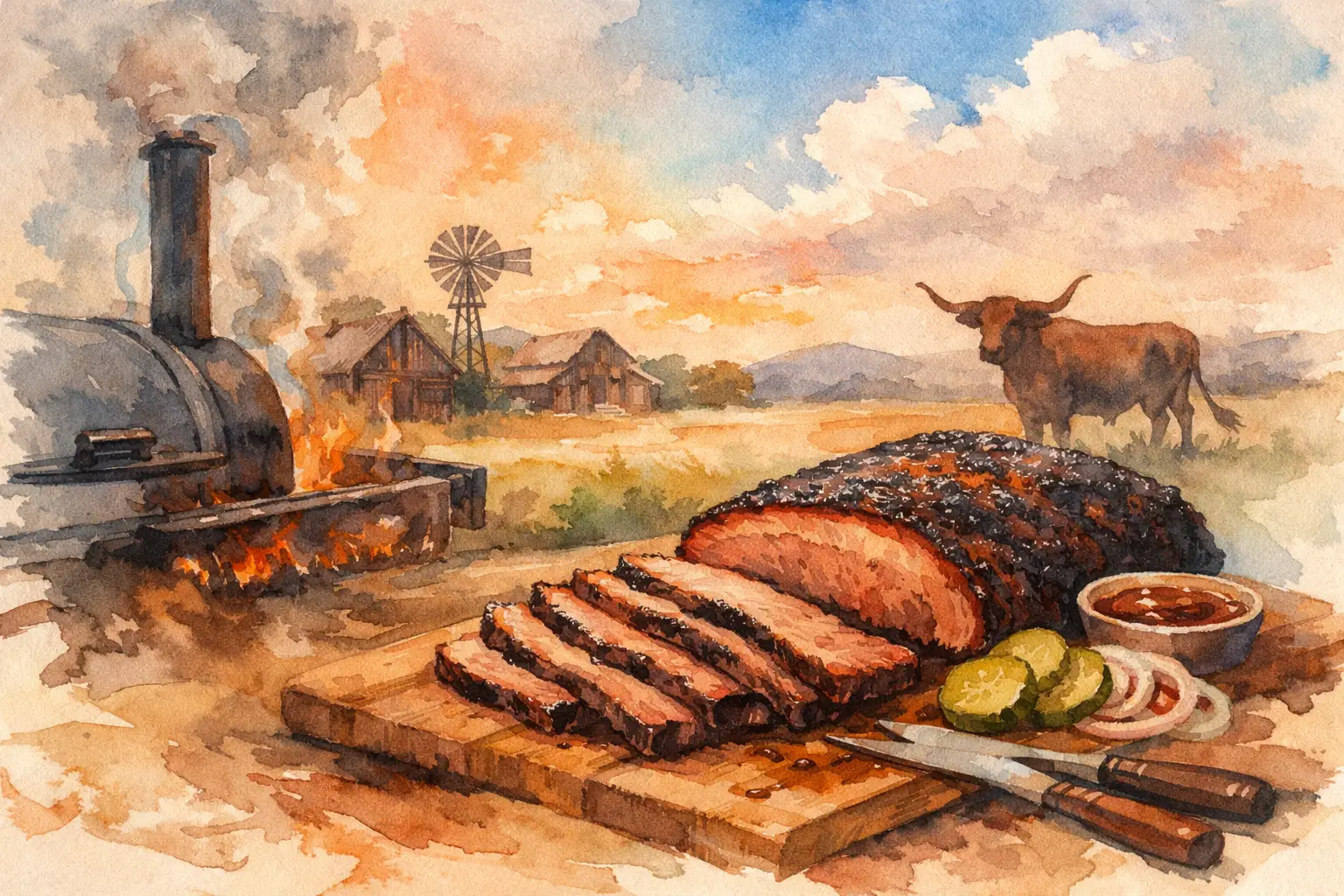
A proper guide to Texas style brisket starts with one hard truth: brisket is not ready because the thermometer says so. It is ready when a probe slides through the flat with barely any resistance, the bark is set, and the fat has rendered into something rich rather than chewy. That takes patience, steady fire and a good piece of beef.
Texas-style brisket is proudly simple. The flavour should come from the beef, smoke, salt, pepper and time. There is nowhere for poor trimming, rushing or dry meat to hide. Get those fundamentals right and you earn a brisket worth lining up for.
What makes Texas style brisket different?
Texas barbecue has regional variations, but the style most people mean is Central Texas brisket: a whole beef brisket cooked low and slow over wood smoke, usually with a straightforward salt-and-black-pepper rub. Sauce is optional, not compulsory. The bark, rendered fat and beefy smoke flavour do the talking.
This is different from sticky, heavily sauced barbecue. It is also different from brisket cooked in liquid until falling apart. Texas-style brisket should be tender enough to pull apart with a gentle squeeze, but still slice cleanly. The flat should be juicy. The point should be soft, rich and full of rendered intramuscular fat.
At Brisket and Briyani, that same respect for long cooks matters. Our brisket is smoked for 12 hours because good food does not come from cutting corners. Whether you are eating it with briyani or building a feed at home, the goal is the same: smoke with purpose and serve it while it is at its best.
Choosing brisket for the cook
Buy a whole packer brisket where possible. It includes two muscles: the leaner flat and the fattier point. Cooking them together gives you better protection from heat and a more forgiving result than a flat alone.
Look for a brisket with even thickness through the flat and visible marbling in the meat. A very lean brisket can still taste good, but it gives you less room for error. The fat is not there simply for appearance. It helps protect the meat during a long cook and contributes to that soft, silky finish people expect.
In Australia, brisket sizes and trimming can vary between butchers. Ask for an untrimmed whole brisket if you can. If you only have access to a flat, reduce your expectations around cooking time and watch it closely. A flat can dry out quickly, especially in a smaller smoker that runs hot.
Trim for even cooking, not perfection
Cold brisket is easier to trim. Remove hard, waxy fat that will not render, then shape away thin dangling edges that will burn before the centre is tender. Leave roughly 6 to 10 mm of softer fat over the fat cap.
The aim is an even, aerodynamic shape. Smoke and heat should move across the brisket without catching on ragged bits. Do not over-trim trying to make it look like a competition entry. Take too much fat away and you remove a valuable layer of protection.
The rub: keep it honest
For classic Texas style brisket, use equal parts kosher salt and coarse black pepper. The coarse pepper matters because it helps form the bold, craggy bark that makes brisket look as good as it tastes.
Apply the rub generously across every surface. You want coverage, not a thick paste. Let the brisket sit while you stabilise the smoker, or season it the night before if that suits your prep. Overnight seasoning gives the salt more time to work into the outer layer, but a same-day rub can still produce an excellent result.
Garlic powder is common in many barbecue kitchens and works well if you like it. Just do not let a long list of spices bury the beef. Texas brisket does not need to shout. It needs to be cooked properly.
Running the smoker
Set your smoker for roughly 110 to 135°C. A consistent fire matters more than chasing one exact number. If your cooker holds 120°C cleanly all day, leave it there. Repeatedly opening vents, lifting the lid and reacting to every small temperature movement usually makes the cook harder.
Post oak is the traditional choice in much of Texas, but it can be difficult to find locally. Ironbark, pecan, hickory and oak all work well when used with restraint. The smoke should smell clean and light, not thick and acrid. Dirty smoke leaves bitterness on the bark and can turn good beef into a harsh feed.
Place the brisket with the fat facing the main heat source. In an offset smoker, that may mean fat side down to shield the meat from the hotter firebox side. In another cooker, it may be different. This is one area where the best answer depends on your setup. Learn where your smoker runs hottest and protect the flat accordingly.
Avoid opening the lid every half hour. Each look costs heat, extends the cook and interrupts bark development. Check your fire, watch your temperatures and trust the process.
Bark, spritzing and the stall
After several hours, the outside will darken and the rub will begin to set into bark. This is where brisket starts looking serious. If the surface is drying too quickly, a light spritz of water, diluted apple cider vinegar or beef stock can help. Do not spray so often that you wash the rub away or cool the meat every 20 minutes.
Most briskets hit a stall somewhere around 65 to 75°C internal temperature. Moisture evaporating from the surface cools the meat, slowing the temperature rise. It can feel like the cook has stopped. It has not. It is simply doing what brisket does.
You can wait it out unwrapped for maximum bark, but that can take longer and risks drying the flat if your smoker is running hard. Wrapping in butcher paper once the bark is dark, dry and firmly set is a strong middle ground. Foil speeds the cook further and retains more moisture, though it can soften the bark. Neither choice is wrong. Choose based on the result you value most and the time you have.
How to know when brisket is done
Start checking for tenderness when the brisket reaches about 90°C internal. Many cooks finish somewhere between 93 and 98°C, but temperature is only a guide. Every brisket is different, and one may feel tender at 92°C while another needs more time.
Use a thermometer probe, skewer or the pointed end of a temperature probe. Test several spots in the flat and point. When it slides in with the feel of softened butter, it is ready. If the flat still feels tight, keep cooking. A brisket that is technically at temperature but still firm needs time, not slicing.
This is the moment where patience separates tender brisket from an expensive disappointment.
Resting is part of the cook
Do not pull brisket from the smoker and carve it straight away. Rest it, still wrapped, for at least one hour. Two to four hours is even better if you can hold it safely in an insulated cooler or low oven.
Resting gives the rendered fat and juices time to settle back through the meat. Slice too early and those juices end up on the board instead of in each bite. If you are holding it in an oven, keep the temperature low enough that the brisket stays warm without continuing to cook aggressively.
A long rest also makes service easier. That is useful when feeding a family, mates watching the footy, or anyone who has smelled the smoker all day and is now hovering near the chopping board.
Slice it the right way
Separate the point from the flat by following the natural fat seam between them. Slice the flat across the grain into pencil-thick slices. Once you reach the point, rotate it because the grain changes direction, then slice across that grain too.
If slices crumble, the brisket may be overdone or cut too thin. If they are chewy and pull apart in long strands, it may need more cooking time or may have been sliced with the grain. A good slice bends over your finger, holds together, and gives way with a clean bite.
Serve it simply with pickles, onions, bread, chips or a fresh salad. Or take the richer route and pair smoky slices with fragrant briyani and cooling raita. The smoke, beef and spice belong on the same plate when each part is made with care.
The next time your brisket seems to be taking too long, resist the urge to force it. Keep the fire clean, let the meat become tender on its own schedule, and slice only when it has earned it. That is how a long cook turns into a proper feed.
Ready to try it? We cook fresh every week.
Chennai-style briyani and 12-hour smoked brisket. Sunnybank, every Saturday from 5 PM.
See Our Full Menu →