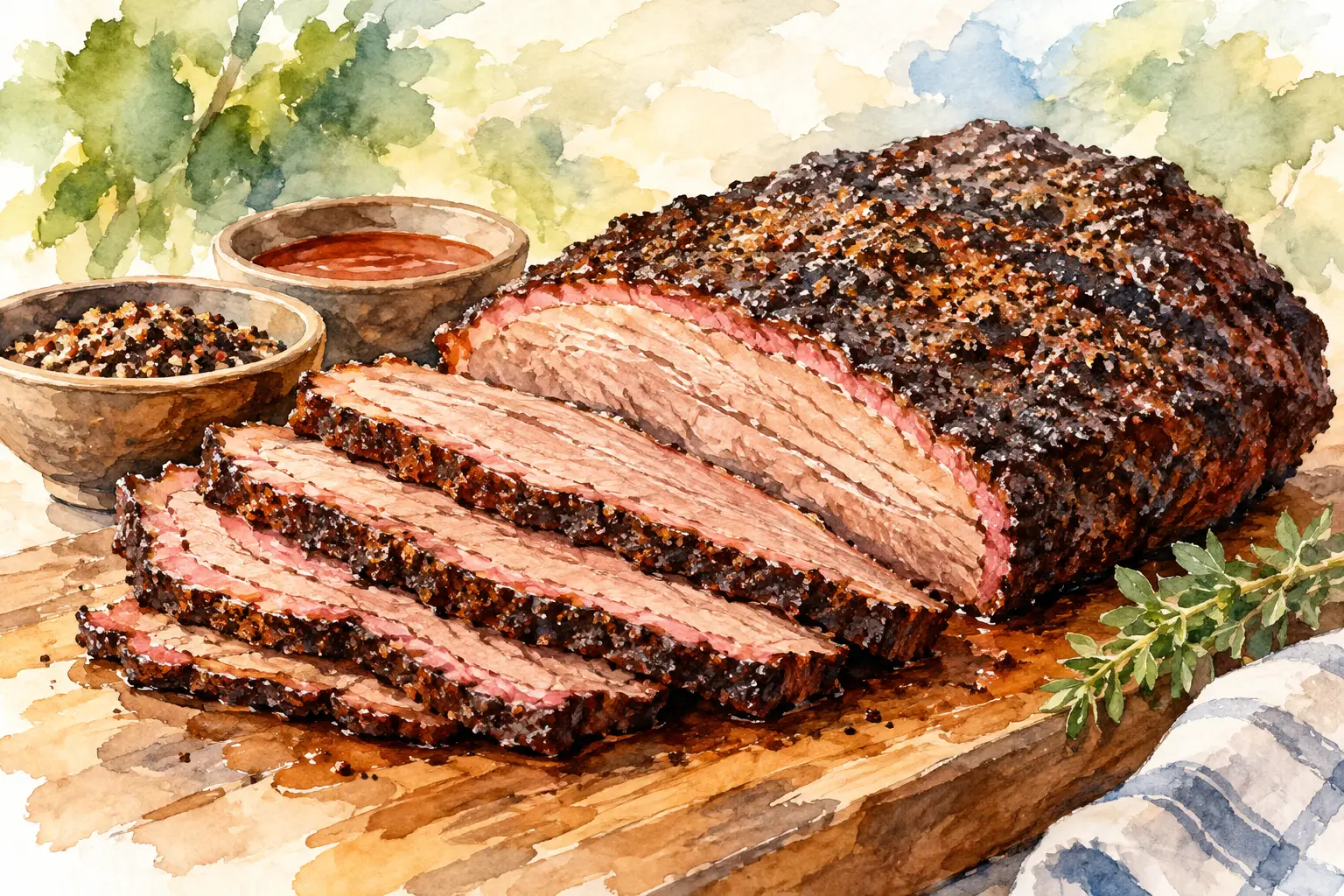
A great brisket bark is not burnt seasoning stuck to the outside. It is a dark, savoury crust built slowly from smoke, rendered beef fat, salt, spice and steady heat. This guide to brisket bark is for anyone chasing that proper smoked finish: firm enough to hold its own when sliced, packed with flavour, and never dry or bitter.
The trick is not one magic rub or a fancy smoker. Bark is the result of several small decisions going right over a long cook. Start with good meat, give the surface room to dry, manage your fire, and do not rush to wrap before the bark has earned it.
What brisket bark actually is
Bark forms when the brisket’s exterior dries and darkens as it cooks. The meat’s proteins brown, the rub cooks onto the surface, smoke particles settle, and rendered fat helps everything bind together. It looks almost black on a finished brisket, but it should taste rich, peppery and beefy rather than charred.
A dark bark does not automatically mean a burnt bark. That is where plenty of cooks get caught out. The colour comes from time, smoke and the Maillard reaction, not from blasting the brisket with high heat. If the crust tastes harsh, acrid or dusty, the problem is usually dirty smoke, too much sugar, or a fire running too hot.
For a business built around 12-hour smoked brisket, this is non-negotiable. The bark needs to stand up beside fragrant biryani without hiding the quality of the beef. It should bring depth and peppery edge to every bite.
Start with a dry, well-trimmed brisket
Bark starts before the brisket reaches the smoker. Take the meat out of its packaging, pat it dry thoroughly, then trim with purpose. Leave a thin, even fat layer on the fat cap - roughly 5 to 6 mm is a useful guide - while removing hard, waxy fat that will not render.
Too much surface fat can stop the rub from bonding to the meat. Too little can expose the flat and make it vulnerable during a long cook. There is no identical answer for every brisket because each cut carries fat differently. The goal is an even shape that cooks predictably and gives the seasoning plenty of meat to cling to.
Once trimmed, season the brisket while its surface is dry. A wet brisket can still cook well, but excess moisture delays bark formation. Some pitmasters let the seasoned brisket sit uncovered in the fridge for several hours or overnight. This dry-brining approach gives salt time to work into the meat and helps dry the exterior. If time is tight, season it and get it straight on the smoker. Good bark is still possible.
Keep the rub simple enough to let beef lead
Salt and coarse black pepper are a serious bark foundation for good reason. They give brisket a bold crust without turning it into a spice rack. Garlic powder, onion powder and a little paprika can add warmth and colour, but they should support the beef, not bury it.
Avoid loading your brisket rub with sugar if you are cooking low and slow for 10 to 14 hours. Sugar can darken quickly and become bitter, especially if your cooker runs hotter than expected. A touch can work on certain barbecue styles, but it is a trade-off: sweeter colour and flavour, with less room for error.
Apply the rub evenly, including the sides. Press it on gently rather than rubbing it hard into the meat. You want an even coating that can absorb moisture and set during the cook. Thick clumps do not make better bark. They often fall away when slicing.
Smoke quality matters more than smoke quantity
Brisket needs clean smoke. That means a light, almost transparent blue smoke rather than thick white clouds rolling from the cooker. Heavy smoke deposits can turn the bark bitter before the meat has had time to soften.
Use well-seasoned hardwood suited to beef. Post oak is a classic choice for a mild, clean profile, while ironbark, hickory or pecan can bring more weight. In Australia, availability varies, so focus less on chasing a specific wood name and more on using dry, clean fuel that burns steadily. Never use treated timber, painted offcuts or unknown wood.
Keep airflow moving through the smoker. A starved fire produces dirty smoke, and dirty smoke gives brisket a rough, ashy flavour that no sauce can rescue. If you are using a charcoal cooker, add wood in measured pieces rather than smothering the fire with too much at once.
The guide to brisket bark: manage heat and moisture
A steady cooking temperature around 110 to 135°C is a reliable zone for brisket. Lower temperatures can extend the cook and build bark gradually. Higher temperatures can finish the job faster but demand tighter control, particularly on the flat.
The brisket will sweat during the early stages of the cook. That moisture is normal. As it evaporates, the rub sets and the bark begins to firm up. Resist the urge to keep opening the lid and spraying the meat every half hour. Every look drops cooker temperature, adds time, and can wash seasoning from the surface.
A light spritz can help if the edges look dry or the rub appears patchy. Water, diluted apple cider vinegar or beef stock are common choices. Keep it minimal - a fine mist, not a shower. If the surface is already tacky and darkening well, leave it alone.
Humidity inside the smoker also changes the result. A water pan can help stabilise temperatures and prevent the brisket from drying too quickly, especially in a dry cooker. But too much moisture can slow the bark’s development. If your bark remains soft late into the cook, reduce spritzing and check whether your cooker is running overly humid.
Do not wrap too early
Wrapping brisket is one of the biggest bark decisions you will make. Butcher’s paper and foil both speed the cook by limiting evaporative cooling during the stall. Foil holds more moisture and pushes the brisket through faster, but it can soften bark. Butcher’s paper is more breathable and usually protects the crust better.
The right time to wrap is based on bark, not a fixed internal temperature. Many briskets are ready somewhere around 65 to 75°C internal, but use your eyes and touch first. The bark should look dark, dry and firmly attached. Run a gloved finger across it gently. If rub comes away easily, it is not ready.
If the bark is exactly where you want it and the brisket is still powering through the stall, wrap it. If the bark needs more time, leave it unwrapped. The flat can dry out if you wait too long, so this is a judgement call, not a rule written in stone.
Finish by feel, then protect the rest
Brisket is done when it probes tender, usually somewhere in the low-to-mid 90s°C. A thermometer probe should slide into the flat and point with little resistance, like pushing into softened butter. Temperature gets you close; tenderness gives the final answer.
Then rest it properly. Resting allows the juices to settle and the connective tissue to relax. Hold the wrapped brisket in a warm insulated box or low oven for at least one to two hours. Longer holds can be excellent when managed safely, but avoid trapping a scorching-hot brisket tightly for too long without checking it. Steam can soften the bark.
For firmer bark, vent the brisket briefly after cooking before rewrapping for its rest. Letting excess steam escape for 10 to 15 minutes can preserve the crust while the meat continues to settle. Do not leave it exposed until it goes cold.
Common brisket bark problems
If your bark is pale, the smoker may be running too cool, the meat may have been too wet, or you wrapped before the crust set. If it is soft, you may have spritzed too often, used foil too early, or held the brisket in too much steam after cooking.
If it tastes bitter, look at your smoke first. Thick white smoke, old grease burning in the cooker, too much wood, or a rub heavy with sugar are the usual culprits. If the bark flakes off when sliced, the rub may have been applied to a wet surface, or the brisket was handled too much before the bark had time to bind.
The best brisket bark has presence, not aggression. Build it slowly, trust the look and feel of the meat, and give every stage the time it asks for. When the crust cracks lightly under the knife and the slice beneath stays juicy, dinner is sorted.
Ready to try it? We cook fresh every week.
Chennai-style briyani and 12-hour smoked brisket. Sunnybank, every Saturday from 5 PM.
See Our Full Menu →