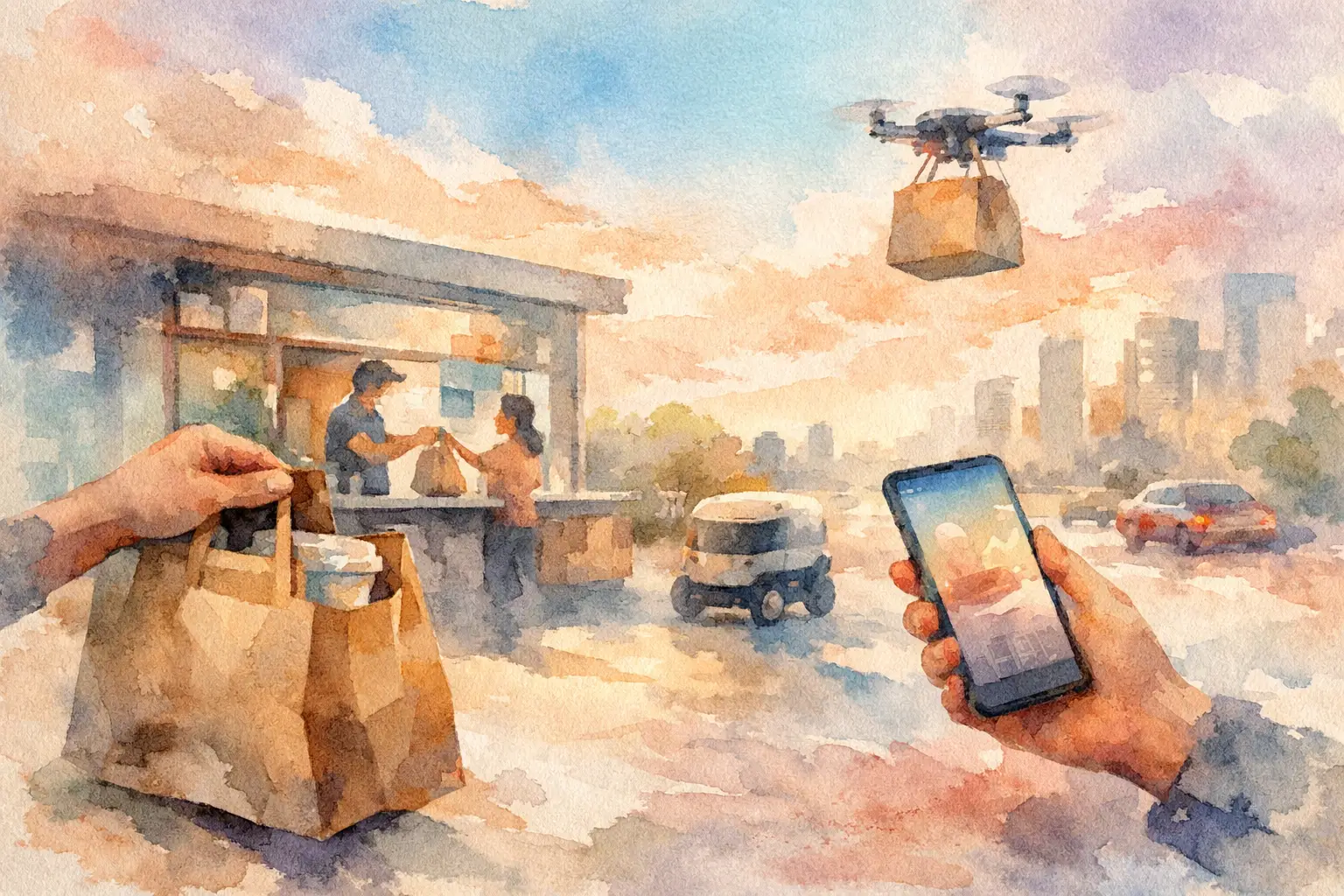
Friday night at 7:15 is where the future of fast casual takeaway gets tested. Not in trend reports. Not in slick fit-outs. In the real moment when families want dinner without compromise, late-night cravings hit hard, and customers decide in seconds whether a place is worth the drive, the queue or the delivery fee.
That future belongs to operators who can do two things at once - serve food fast and make it feel like it was worth waiting for. Cheap and convenient is no longer enough on its own. People still want speed, but they also want proper cooking, clear flavour, generous portions and something with a point of view. If a venue cannot give them that, they move on.
What the future of fast casual takeaway really looks like
The old model was simple: broad menu, average quality, quick handover. The new model is tighter and more demanding. Customers expect food that tastes deliberate. They want a signature, not a food court copy. That means the future of fast casual takeaway is heading towards specialist menus, stronger operational discipline and a more obvious reason to choose one place over another.
This shift is easy to spot across Brisbane. Customers are more review-conscious, more visual and more selective than they were a few years ago. They scroll first, compare portions, read comments and pay attention to whether a business actually cooks with care or just talks a big game. If the food looks rushed, they can tell. If the menu feels generic, they can tell that too.
The winners will not be the places trying to be everything for everyone. They will be the places that do a few things properly and repeat them with consistency. A scratch-made briyani, a 12-hour smoked brisket, fried chicken that stays juicy under a crisp coating, drinks people will leave home for - that is stronger than a menu with forty forgettable options.
Speed still matters, but not at the cost of standards
Fast casual has always leaned on convenience. That part will not change. What changes is the standard customers expect while still getting that convenience. They want food served fast, but they also want to know the rice was cooked properly, the meat was handled with care, the portions make sense and the flavour has some backbone.
This creates real pressure behind the counter. Long-cook items like smoked meats and proper briyani do not work if the operation is sloppy. Timing has to be sharp. Batch control matters. Holding times matter. Staff need to know the difference between moving quickly and rushing the product.
That trade-off will define a lot of the future. Some operators will chase speed so aggressively that the food gets flattened into sameness. Others will protect quality but miss the mark on service time. The sweet spot is operational clarity: a menu designed for high demand, prep that supports service, and enough confidence to keep the offer focused.
Customers notice when that balance is right. They may not see the work, but they taste it.
Smaller menus will get stronger
A lot of takeaway businesses still think more choice equals more sales. In practice, bigger menus often create slower service, uneven quality and decision fatigue. The future is moving in the opposite direction. Smaller menus, built around proven heroes, give customers confidence and make kitchens sharper.
That does not mean boring. It means intentional. A strong fast casual menu should have anchors - the dishes people come back for - and then a few smart extensions around them. Family packs make sense because they serve real households. Loaded snack packs make sense because they hit a different appetite and occasion. Handcrafted hot and iced drinks make sense when they pull in another kind of customer and lift average spend without feeling forced.
The key is that every category has to earn its place. If it slows the line, confuses the customer or weakens the brand, it probably does not belong.
The future of fast casual takeaway is drink-led too
One of the biggest blind spots in takeaway is drinks. Too many venues treat them as an afterthought - a fridge of standard soft drinks and not much else. That leaves money on the table and misses a major reason people choose one venue over another.
A proper drink offer changes behaviour. It gives people a reason to visit outside the main meal rush. It broadens the customer base beyond just dinner buyers. It also helps a takeaway business stand out in a crowded local market where plenty of food looks good on a screen.
This matters even more in fast casual, where margins and repeat visits are everything. A drink range with identity - strong chai, iced matcha, turmeric chai, a solid hot chocolate - does more than pad the order. It builds habit. Some customers come for the food and add a drink. Others come for the drink and become regulars for both.
That crossover is valuable. It creates resilience, especially during shorter trading windows or between meal peaks.
Delivery will stay important, but it cannot be the whole game
Delivery is now built into customer behaviour. That is not news. The more useful question is how much of the business should rely on it. For fast casual takeaway, delivery expands reach, but it also changes the product experience. Fried food softens. Rice can carry well, but only if it is packed right. Chips lose heat quickly. Portion perception shifts when the customer opens the bag at home rather than seeing the meal handed over fresh.
So yes, delivery matters. But the future is not just getting on the apps and hoping for volume. It is knowing which dishes travel well, which need adjustment, and how to protect quality when the last few minutes of the customer experience are out of your hands.
There is also the margin issue. Delivery platforms bring visibility, but they also take a cut. That means the smartest operators will treat delivery as one channel, not the entire business model. They will still build reasons for customers to collect, show up and buy direct through habit, trust and product strength.
Limited availability will become a strength, not a weakness
Customers have changed the way they think about scarcity. If a place is known for cooking fresh, selling through and closing when the food is gone, that no longer reads as poor planning. When it is done honestly, it signals demand and discipline.
This only works if the food backs it up. Artificial scarcity is easy to spot and quickly gets old. But genuine sell-out culture can be powerful in fast casual takeaway because it tells customers the kitchen is not sitting on tired product all day just to look fully stocked.
For specialist operators, limited trading windows can actually sharpen demand. They create rhythm. They encourage customers to plan the visit. They also protect standards by aligning production with peak appetite.
That approach will not suit every concept. If your customer base needs all-day convenience, shorter windows may hurt you. But for high-demand, destination-style takeaway, it can be part of the appeal.
Customers want proof, not promises
The language around food quality has become cheap. Everyone says fresh. Everyone says authentic. Everyone says premium. Customers have heard it all before.
What they respond to now is proof. Real portions. Visible texture. Specific cooking methods. Clear signatures. Reviews that mention the same things over and over because the experience is consistent. If a business says the brisket is smoked for 12 hours, the customer expects to taste that depth. If a briyani is made from scratch with whole spices and long-grain basmati, it should eat like it.
This is where brand credibility gets built. Not through polished slogans, but through repeatable standards. The future of fast casual takeaway will favour operators who say less and prove more.
Local loyalty will still beat broad appeal
There is always pressure to broaden the menu, soften the edges and chase everyone. But fast casual takeaway works best when it has a clear local following that genuinely rates it. That means understanding what your area actually values - big flavour, fair portions, family-friendly options, late-night worthiness, easy ordering, food that photographs well and still delivers on taste.
In places like Brisbane's outer and middle-ring suburban pockets, that matters even more. People will travel for food if it feels special enough. They will bring family, tell their mates and post it when it lands. But they do not stay loyal to hype alone. They stay loyal to places that keep delivering.
That is why specialist fusion can work when it is done with conviction. Not fusion for novelty's sake, but fusion built on genuine technique and a clear reason to exist. A business like Brisket and Briyani makes sense because it solves two cravings properly rather than blending them into a gimmick.
What operators need to get right next
The next phase is not about adding more noise. It is about sharpening the offer. Better menu discipline. Better packaging. Better demand planning. Better drinks. Better content that reflects the real food. Better understanding of what should be fast and what should never be rushed.
The takeaway venues that grow will be the ones that respect both appetite and operations. They will know that convenience gets the first order, but quality gets the second, third and tenth. They will build around food people actually talk about, not food that simply fills a gap.
If you want to read the future clearly, watch what customers do when they are hungry, busy and willing to spend. They are choosing places with standards, signatures and food that feels worth it. That is where fast casual takeaway is headed - and honestly, it is a better direction for everyone at the table.
Ready to try it? We cook fresh every week.
Chennai-style briyani and 12-hour smoked brisket. Sunnybank, every Saturday from 5 PM.
See Our Full Menu →