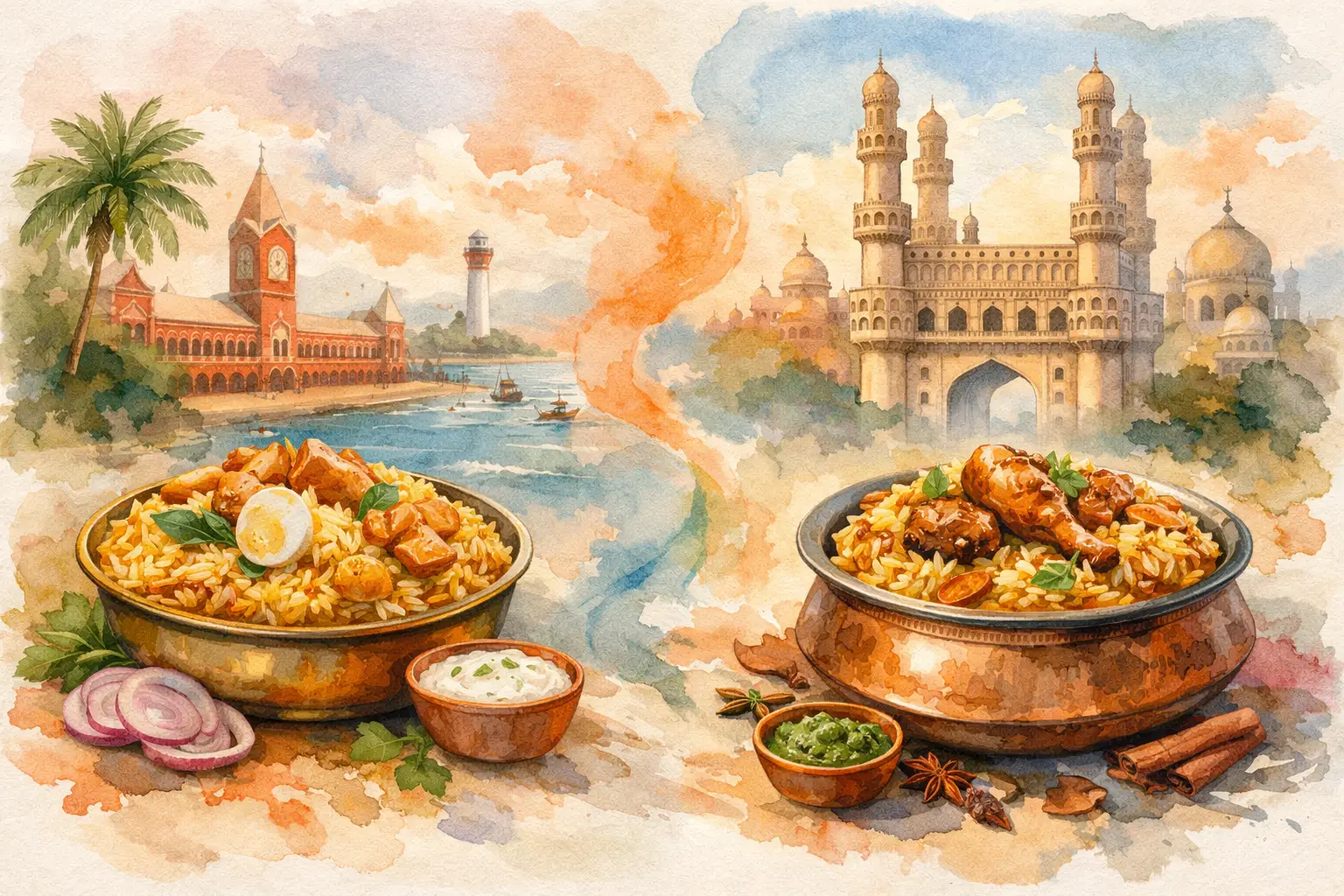
Ask for biryani in one shop and briyani in another, and you might get the same dish spelled two ways. Ask for Chennai or Hyderabadi, though, and you are talking about two clearly different styles. The difference between chennai and hyderabadi biryani comes down to more than heat or colour. It is about rice, meat, masala, cooking method, texture and what kind of bite the cook is chasing.
For anyone who loves proper takeaway food, this matters. Not because one style is better than the other, but because they deliver very different eating experiences. One is punchier, tighter and more direct. The other often leans richer, more layered and more aromatic. If you know the gap between them, you order better.
Difference between Chennai and Hyderabadi biryani at a glance
Chennai-style briyani usually puts masala front and centre. The flavour is deeper into the rice, the spice profile is firmer, and the dish often eats as a more unified whole. You are not just tasting separate rice and meat. You are tasting rice that has soaked up stock, fat and spice properly.
Hyderabadi biryani, especially in its best-known forms, is more about layers. You tend to get longer-grain rice with clearer separation, distinct aromatics, marinated meat and a cooking style built around dum, where the pot is sealed so steam finishes the dish. The result can feel lighter on the tongue even when the flavour is rich, because the rice stays more individual.
That is the big picture. The real difference shows up ingredient by ingredient.
The rice tells you a lot
Rice is one of the quickest ways to read a biryani. Chennai briyani is commonly associated with seeraga samba in traditional versions, though some kitchens use long-grain basmati depending on their house style. Seeraga samba is smaller, more fragrant in a different way, and excellent at pulling in masala. Even when basmati is used in a Chennai-style briyani, the aim is often the same - flavour carried through the grain, not just sitting around it.
Hyderabadi biryani is strongly tied to basmati. The grains are long, elegant and deliberately separate. That visual matters, but so does texture. When done well, you get fluffy rice with defined grains and pockets of aroma from saffron, fried onions, herbs and meat juices rising through the layers.
So if you want a biryani where the rice feels deeply seasoned from edge to edge, Chennai style usually leans that way. If you want long, distinct grains with a more layered lift, Hyderabad often owns that lane.
The masala is where the personality lives
Chennai briyani tends to be more assertive. The spice blend usually lands harder and more directly. You notice the savoury backbone early, and the masala often clings to both meat and rice in a way that feels fuller and more immediate. There is less distance between the pot and the palate.
Hyderabadi biryani often works with a broader aromatic spread. You may pick up mint, coriander, saffron, browned onions, yoghurt and whole spices in more obvious stages. It can still be spicy, of course, but the profile is often less blunt-force and more layered. That layering is part of the appeal.
This is where people get caught out. They assume stronger spice means hotter food. Not always. Chennai briyani can feel more intense because the masala is integrated and concentrated. Hyderabadi can have serious heat too, but the rice structure and aroma can soften how that heat arrives.
Meat handling changes the final flavour
Another major point in the difference between chennai and hyderabadi biryani is what happens to the meat before it hits the pot.
In many Hyderabadi versions, the meat is heavily marinated, often with yoghurt, spices, herbs and fried onions. In kacchi style, raw marinated meat cooks under the rice during dum, so the juices rise and season the grains. That gives Hyderabad its famous layered complexity when the timing is right.
Chennai briyani generally leans more toward meat being cooked in the masala base before the rice is finished with it, depending on the house method. That pushes flavour into the gravy first and then into the rice. The result is usually a more unified savoury hit rather than separate stages of aroma, rice and meat.
Neither method is automatically superior. Dum cooking can create beautiful delicacy but demands precision. A strong Chennai-style pot can be less showy and more direct, but when done properly it delivers serious depth in every spoonful.
Texture matters as much as flavour
People often talk about spice and forget texture. That is a mistake.
Chennai briyani often sits a little closer together. Not mushy if it is done right, but more bound by masala and moisture. That makes each mouthful feel consistent, rich and complete. It is the sort of biryani where you do not need to hunt for flavour. It is already there.
Hyderabadi biryani is usually more textural in contrast. Distinct rice grains, tender meat, crisp fried onions on top, cool raita on the side. You notice the differences between elements more clearly. That can make the dish feel more refined to some eaters, though others will prefer the all-in depth of Chennai style.
This is really about preference. If you like every bite carrying the same strong message, Chennai style speaks your language. If you like contrast and layering, Hyderabad has a strong case.
Colour, garnish and aroma are not just cosmetic
A Chennai-style briyani often looks darker or more uniformly coated because the masala is worked through the dish. The aroma comes across savoury, spiced and meaty first.
Hyderabadi biryani often shows more visual contrast. White and coloured rice, fried onions, herbs and saffron notes can all stand out. The aroma can feel more perfumed before you even take a bite.
That first impression shapes expectations. Some diners see layered rice and think premium. Others smell a deeply cooked masala and know they are about to get the sort of bold, grounded flavour they actually came for.
Why people argue about which one is better
Because they are often judging different things.
If your idea of a great biryani is long rice, aromatic lift and dramatic layering, Hyderabadi will probably win your vote. If your benchmark is deep masala, strong savoury character and rice that truly tastes cooked with the meat rather than beside it, Chennai style will make more sense.
There is also the question of consistency. Dum-style Hyderabadi biryani is brilliant when the rice, moisture and meat all line up. When they do not, you can end up with underdone rice, overcooked meat or uneven seasoning. Chennai-style briyani can be more forgiving in some kitchens because the flavour is built more directly through the masala base. That does not make it easier to master, but it does mean the style rewards cooks who know how to build depth without fuss.
Chennai briyani and Hyderabadi biryani suit different cravings
If you are chasing a hearty, flavour-packed meal that feels immediate and satisfying, Chennai-style briyani is hard to beat. It suits people who want boldness, proper spice and rice that carries the work of the kitchen.
If you are in the mood for something more aromatic and layered, with a bit more separation between rice, meat and garnish, Hyderabadi biryani fits that craving. It often feels more ceremonial, especially when served with mirchi ka salan and raita.
That is why the best answer is often, it depends on the day. Late-night hunger, cold weather or a serious appetite usually pushes people towards a richer, more integrated style. A slower sit-down meal where you want to notice every layer can lean Hyderabadi.
Where Chennai style stands out for serious biryani fans
For diners who care about flavour over theatre, Chennai-style briyani has a strong edge. It does not rely on looks alone. It asks more of the masala, more of the stock, and more of the cook’s judgement. The rice has to carry savoury depth, not just sit pretty.
That is exactly why Chennai-style briyani has such loyal fans across Brisbane. When it is crafted fresh and served properly, it lands with conviction. At Brisket and Briyani, that straight-up flavour-first approach is a big part of why Chennai-style briyani keeps people coming back.
The best way to think about it is simple. Hyderabadi biryani often impresses in layers. Chennai briyani wins by getting straight to the point and doing it well. If you are choosing between them, do not ask which is more famous. Ask which style matches the kind of meal you actually want tonight.
Ready to try it? We cook fresh every week.
Chennai-style briyani and 12-hour smoked brisket. Sunnybank, every Saturday from 5 PM.
See Our Full Menu →