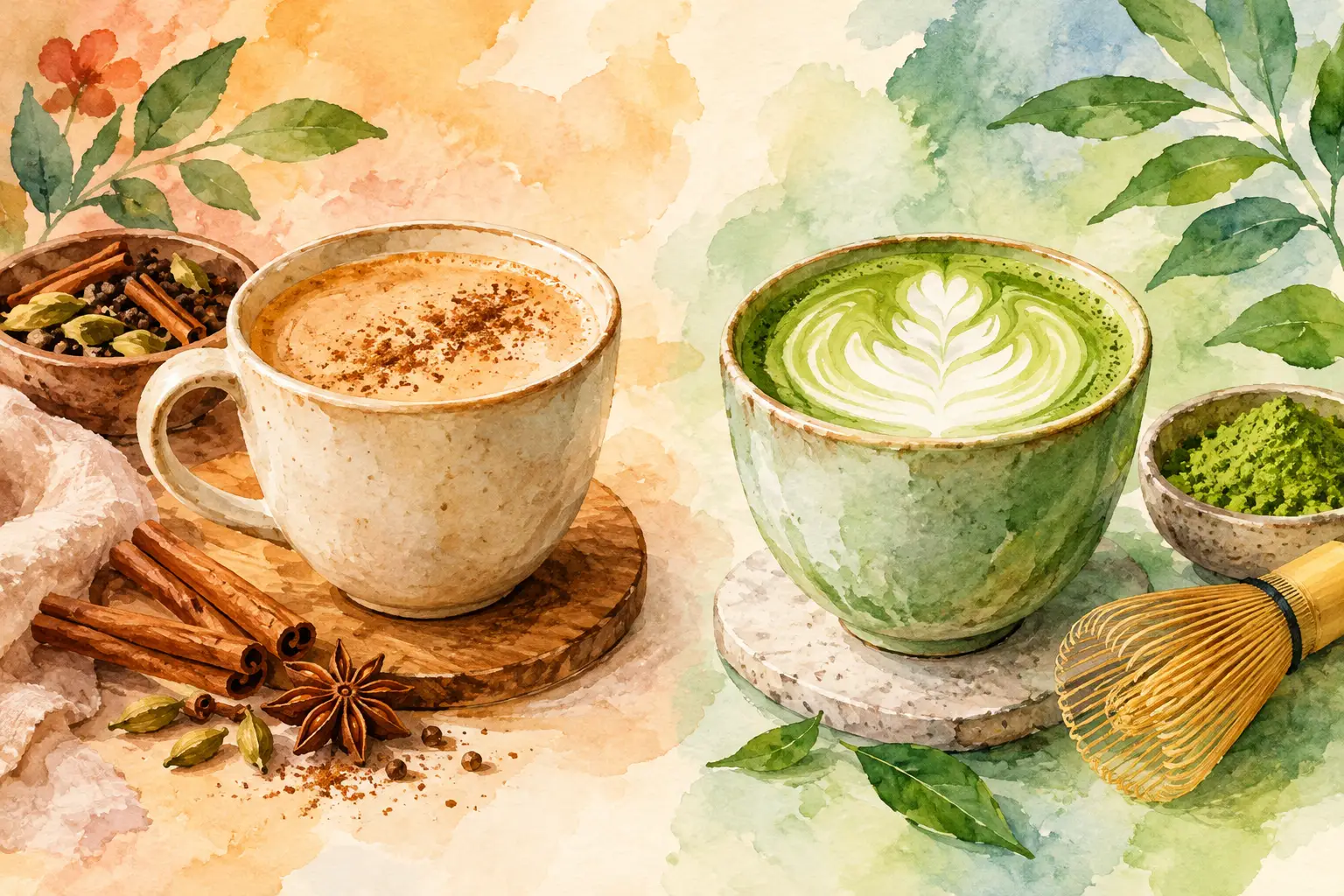
A chai versus matcha latte decision is not really about which drink is healthier or more fashionable. It is about what you want from the cup right now: deep spice and warmth, or clean green-tea lift. Both can be properly satisfying. Both can also disappoint when they are made too sweet, too weak or treated like an afterthought.
At Brisket & Briyani, drinks are made to stand up beside food with real flavour. That matters when your meal has smoky brisket, crispy Chicken 43 or a generously spiced box of briyani. Here is how to choose your side.
Chai versus matcha latte: the quick call
Choose chai when you want warmth, spice and a fuller, more comforting drink. It is the better fit for a cool night, a long catch-up, or a meal where you want the drink to carry its own flavour.
Choose matcha when you want something grassier, creamier and a little more fresh-faced. It brings an earthy green-tea character rather than spice, and it works especially well iced when Brisbane weather is doing what Brisbane weather does.
Neither is automatically the better choice. A strong chai can be energising. A sweet matcha can be dessert-like. The ingredients, milk, serving size and how it is prepared make the real difference.
What does chai actually taste like?
Good chai is built on contrast. Black tea gives it backbone, while spices bring warmth, fragrance and a gentle peppery edge. Depending on the recipe, you might taste cardamom, ginger, cinnamon, cloves or black pepper. Milk softens those edges and turns it into a proper, rounded drink.
South Indian chai has a directness that suits people who like their hot drinks to taste like something. It should not just taste like sweet milk with a vague brown colour. The tea needs to be present. The spices need to come through without becoming harsh or powdery.
Chai is usually the safer first order for someone who likes coffee-adjacent depth but does not want coffee. It has body, warmth and enough flavour to feel familiar, even if the spice profile is new to you. It also makes sense when you are after a drink that slows the pace down rather than something you knock back on the move.
What makes a matcha latte different?
Matcha is finely ground green tea powder whisked into liquid, rather than tea leaves steeped and removed. That is why its flavour can be more intense than standard green tea. You are drinking the whole leaf in powdered form, and you can taste it.
A well-made matcha latte is creamy, vegetal and slightly savoury, with a soft bitterness underneath. Some people describe it as grassy. That is not a flaw. It is part of matcha's character, just as spice is part of chai's. Milk and a touch of sweetness can round it out, but too much syrup wipes out the reason to order matcha in the first place.
If you are used to very sweet iced drinks, matcha may take a cup or two to click. Start with an iced matcha on a warm day, when its fresh edge feels more refreshing than challenging. If you already enjoy green tea, pistachio, dark chocolate or less sugary drinks, you may be on team matcha quickly.
The flavour test
Think of chai as rich, aromatic and warming. Think of matcha as earthy, creamy and clean. Chai leans into spice. Matcha leans into green tea. One is not a replacement for the other.
This is where plenty of people go wrong: ordering matcha while hoping for a chai-like sweetness, or ordering chai while expecting a mild tea. Know what each drink is trying to be and it will land much better.
Caffeine: which gives you more of a lift?
There is no single winner because recipes vary. Chai is usually made with black tea, and its caffeine level depends on the tea quantity, strength and steeping time. Matcha can feel more noticeable because the powdered tea is consumed whole, but the actual amount still changes with the scoop size and preparation.
The bigger difference for many people is how the lift feels. Chai often feels steadier and cosier, especially served hot with milk. Matcha is commonly chosen for a cleaner-feeling boost, though that does not mean it is gentle for everyone. If caffeine tends to make you jittery, a large, strong drink of either can do it.
Ordering matters too. A smaller hot drink, less sweetener and the milk that suits you can change the whole experience. If you are grabbing a drink late in the day, go by your own caffeine tolerance rather than internet rules about which one is supposedly better.
Sweetness and milk can change everything
The chai versus matcha latte debate often gets framed as a health contest. That misses the point. Plain tea and matcha have different natural qualities, but most café versions include milk and may include sugar or syrups. The finished drink is what you are actually drinking.
Chai can be naturally sweet-smelling because of cinnamon and cardamom, even when it is not loaded with sugar. Matcha can taste softer with a small amount of sweetness, but it should still taste like matcha. If you prefer a less sweet drink, ask for it that way rather than settling for something that tastes like melted ice cream.
Milk choice matters as well. Dairy gives both drinks a fuller texture. Plant-based alternatives can bring their own flavour, from oat's mild sweetness to the nuttier character of soy or almond. There is no universal best option. Choose the one that works for your taste and dietary needs, then let the tea do its job.
Which drink goes best with food?
Chai is a natural match for big, savoury flavours. Its spices sit comfortably alongside briyani, especially when you want a warm finish after a filling meal. The milk takes some heat out of the picture, while the tea and spice keep the drink from fading beside the food.
Matcha can be the better move when the meal is crisp, rich or salty. An iced matcha brings a cooler contrast to fried chicken and loaded chips, and that fresh green-tea note can stop the meal from feeling too heavy. It is not there to compete with the food. It is there to reset your palate between bites.
There are no hard rules here. If a hot chai with Chicken 43 sounds right, order it. If iced fruity matcha is your answer to a spicy briyani box on a humid afternoon, that works too. The best pairing is the one you will actually enjoy all the way to the last sip.
Hot or iced? Let the weather decide, then ignore it if you want
Hot chai has that settle-in quality. It suits a cooler evening, an early start or the moment you want food and drink to feel like a proper break. A hot matcha latte is softer and more mellow, ideal when you want matcha's flavour without the sharp refreshment of ice.
Iced turmeric chai and iced matcha have a different job. They are built for heat, speed and takeaway. Iced matcha stays bright and creamy. Iced chai keeps the spice but feels lighter, particularly when you are eating on the run or heading back into the Queensland sun.
Do not let the calendar make the call for you. Plenty of people want a hot chai in summer because it is the flavour they are craving. Plenty want iced matcha in winter because that is simply their drink. Good orders are personal.
Start with what you are actually after
Order chai when you want bold spice, deep tea flavour and comfort in a cup. Order matcha when you want creamy green-tea character and a fresher, earthier finish. If you are choosing around food, chai leans warm and savoury while matcha gives rich, crispy dishes a cooler counterpoint.
Try both properly, not just once from a watered-down or overly sweet version. Your regular order will make itself clear soon enough - and when it does, make it the drink worth leaving the house for.
Ready to try it? We cook fresh every week.
Chennai-style briyani and 12-hour smoked brisket. Sunnybank, every Saturday from 5 PM.
See Our Full Menu →