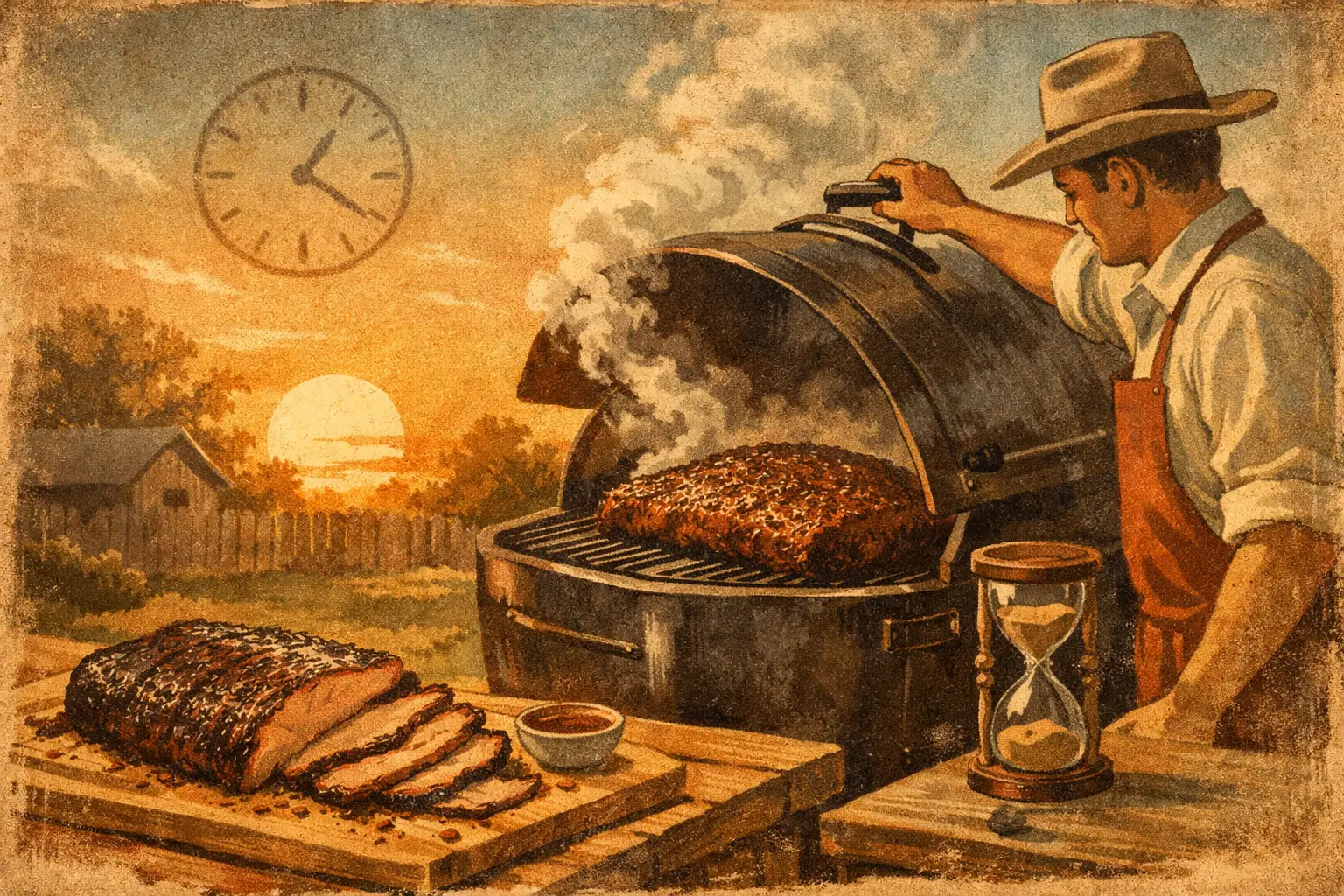
If lunch is locked in, the guests are on the way and the brisket is still sitting in the fridge, the question gets real fast - can you smoke a brisket in 12 hours? Yes, you can. But only if the cut, temperature, trim and rest all line up. Twelve hours is possible. It is not automatic.
That matters because brisket is not a stopwatch cook. It is a feel cook. You are taking a tough working muscle and turning it into something soft, juicy and sliceable without drying the edges out or rushing the middle. If you push too hard for the sake of the clock, the result can look done while still eating tight.
Can you smoke a brisket in 12 hours and still get it right?
The short answer is yes, especially for a smaller whole brisket or a brisket flat cooked hotter than traditional low-and-slow. If you are dealing with a large full packer, especially one with heavy fat and a thick point, 12 hours starts getting tight once you include trimming, smoking, wrapping and a proper rest.
A rough guide helps. A smaller brisket in the 4 to 5.5 kilo range can often be finished in about 10 to 12 hours if you run the pit around 135C to 150C. A larger brisket can easily run longer, even at those temperatures. If you are aiming for old-school low and slow at around 107C to 120C, 12 hours is often not enough for a full packer unless it is unusually small.
This is where plenty of people get caught. They ask how long brisket takes, hear a number online, and treat that number like a promise. Brisket does not work like that. Two cuts with the same weight can finish at different times because fat content, thickness and shape all change the cook.
What decides whether 12 hours works?
Size is the first thing. A massive brisket is not finishing on your schedule just because you want it to. Smaller briskets have a much better chance of landing inside 12 hours without turning the outside into bark that tastes more burnt than smoky.
Pit temperature is next. If you cook at 107C, you are chasing a different style and a longer timeline. If you cook at 135C to 150C, 12 hours becomes realistic. That hotter range is common for people who need a brisket done in a day and still want good bark, rendered fat and proper tenderness.
Then there is the stall. Brisket often hits a point where the internal temperature stops climbing for hours. Moisture evaporating from the surface cools the meat, so the cook seems to pause. If you are on a 12-hour plan, the stall is where time disappears. Wrapping in butcher paper or foil can help push through it, but wrapping changes the bark. Paper usually protects bark better. Foil speeds things up more but can soften the crust.
Resting is the part impatient cooks skip, and that is usually where the brisket loses. Even if the meat is technically done in 10 hours, slicing straight away is a bad trade. The juices are still moving, the carryover heat is still working, and the texture has not settled. A solid rest of at least one hour, and often longer, gives you a much better brisket.
The 12-hour brisket timeline that actually makes sense
If you need brisket in 12 hours, build the plan backwards. You are not planning a 12-hour smoke. You are planning trimming, seasoning, smoking, wrapping if needed, probing for tenderness and resting.
A practical timeline might look like this in real life. You trim and season early, get the smoker steady, and put on a moderate-sized brisket at a hotter pit temperature. You let it build colour and bark for the first few hours, then wrap once the bark is set and the colour is where you want it. From there, you cook until the probe slides in with very little resistance, usually around the thickest part of the flat. Then you rest it in a warm holding environment before slicing.
That is why 12 hours can work on paper but still fail in practice. If your fire runs dirty, your smoker swings all over the place, or you lose an hour opening the lid every 20 minutes, your timeline blows out. The cook needs consistency.
Best brisket size for a 12-hour cook
If your goal is speed without wrecking quality, a smaller brisket gives you the best chance. A compact whole brisket or even just the flat is easier to finish in time. The trade-off is flavour and richness. A full packer gives you the point and flat together, more fat, more variation in texture and usually a stronger final result. It just asks for more time.
Best temperature if you only have 12 hours
For a 12-hour window, 135C to 150C is the useful range for most backyard setups. Lower than that, and you are gambling on a fast finish. Much higher than that, and you risk overcooking the outer layers before the connective tissue fully breaks down inside.
This is where people confuse hot and fast with careless cooking. It is not the same thing. Hotter brisket can still be excellent if the pit is steady, the bark is managed properly and the rest is taken seriously.
What can go wrong when you rush brisket?
The biggest problem is under-rendered brisket. That means the meat may hit a target temperature, but the collagen has not fully broken down and the fat has not properly softened. You slice it, and it looks decent enough. Then you chew it and realise it is still tight.
The second problem is dry edges. If you push a brisket too hard to beat the clock, the thin parts can dry out before the middle is ready. That usually happens with flats because they are leaner and less forgiving.
The third problem is poor resting. A brisket that comes off late often gets sliced early because service time is fixed. That is one of the fastest ways to waste a decent cook. Rest is not optional padding. It is part of the cook.
Can you smoke a brisket in 12 hours on a home smoker?
Yes, but your equipment matters. A pellet smoker can make timing easier because the temperature holds steadier with less babysitting. An offset can produce beautiful flavour, but if you are still learning fire management, 12 hours can get messy fast. Kettle setups and bullet smokers can absolutely do the job too, but they reward cooks who already know their airflow and fuel.
This is the honest answer people need. If your smoker runs like a dream, 12 hours is realistic for the right brisket. If your setup fights you every cook, 12 hours is optimistic.
The texture test matters more than the clock
A brisket is done when it feels done. That sounds blunt because it is. Internal temperature is useful, but tenderness tells the truth. When a probe goes into the flat with almost no resistance, like soft butter with a little structure, you are close. If it still grabs the probe, keep going.
That is why experienced pitmasters stop obsessing over a single number. They watch bark, colour, fat render and feel. Time helps plan the day. It does not decide the finish.
So, is 12 hours enough or not?
If you have a smaller brisket, run a sensible hotter cook, manage the stall properly and leave room for a proper rest, 12 hours can absolutely be enough. If you are cooking a big packer low and slow and expecting textbook results with no stress, probably not.
For most people, the smartest move is simple. If service really matters, give yourself more time than you think you need. Finished brisket can hold well when handled properly. Late brisket cannot magically catch up. That is one reason serious smoked meat shops plan with discipline. At Brisket and Briyani, the whole point is the same as it is in any good pit - crafted fresh, served fast, but never by pretending brisket runs on wishful thinking.
If you are cooking one at home this weekend, trust the meat more than the timer, and give yourself enough breathing room to let the brisket finish properly.
Ready to try it? We cook fresh every week.
Chennai-style briyani and 12-hour smoked brisket. Sunnybank, every Saturday from 5 PM.
See Our Full Menu →