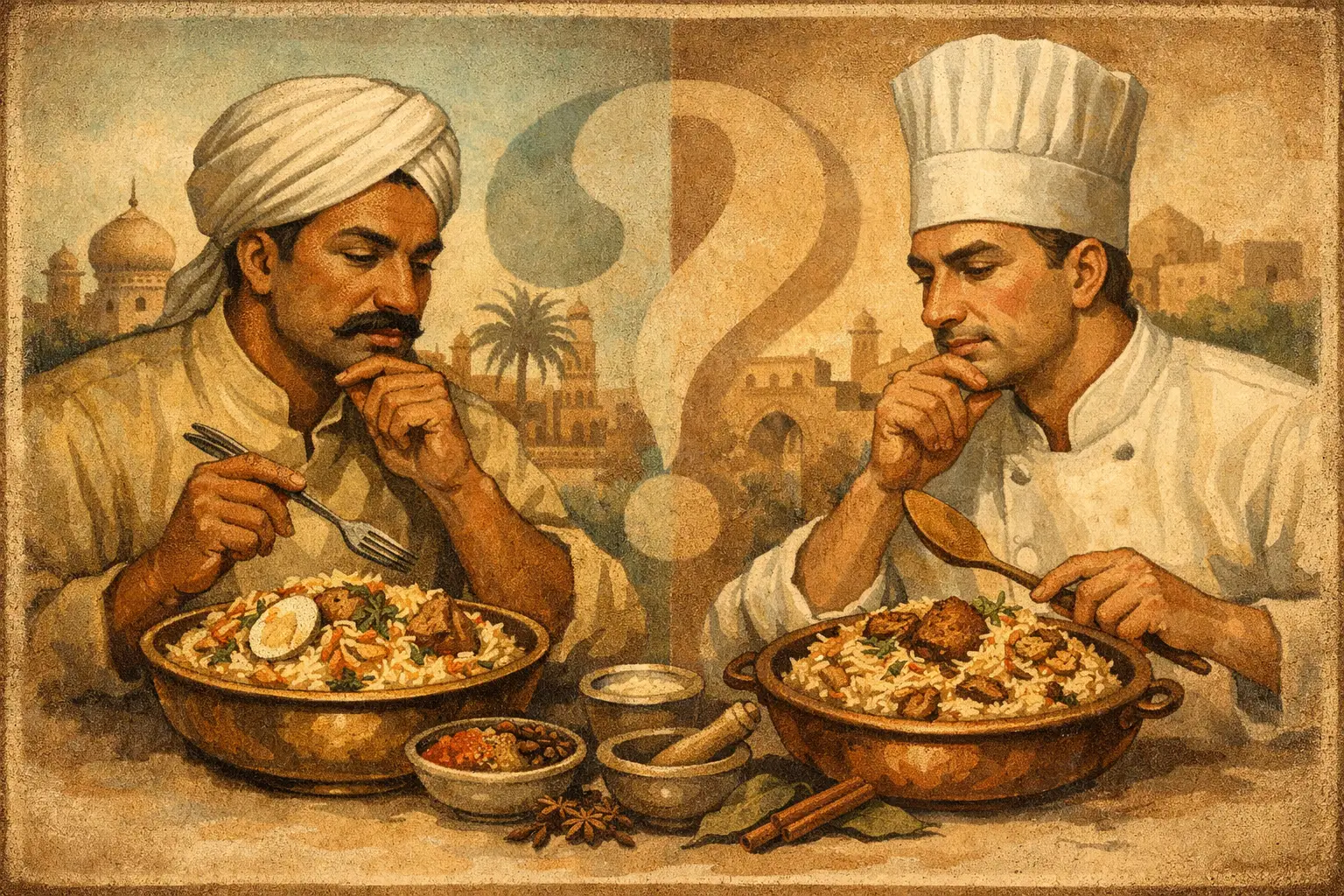
You have probably seen it both ways on menus, delivery apps and social posts, and wondered if one of them is just wrong. When it comes to briyani or biryani spelling, the short answer is simple - both are used, both are recognised, and the difference usually comes down to regional language, pronunciation and preference rather than a hard rule.
That matters more than people think. Spelling is not just a technical detail on a signboard. For a dish this well known and this personal, spelling can signal where the style comes from, how people pronounce it at home, and what kind of food you should expect when the lid comes off the box.
Briyani or biryani spelling - the short answer
If you are looking for one universal English spelling, you will not really find one. Biryani is the more widely seen version in mainstream English, especially on large food platforms, cookbooks and general searches. Briyani is also correct, and in many South Indian and Tamil contexts it feels closer to how people actually say it.
So if someone writes biryani, they are not making a mistake. If someone writes briyani, they are not misspelling it either. The word has travelled across languages, regions and communities, and English has ended up carrying more than one accepted version.
That is common with food words. Once a dish moves through different scripts, accents and local habits, spelling starts doing more than one job. It tries to represent sound, identity and familiarity at the same time. That is exactly why this particular word keeps showing up in two forms.
Why both spellings exist
The reason is not confusion for the sake of confusion. It comes from transliteration - turning a word spoken and written in one language into English letters. There is rarely a perfect one-to-one match.
In everyday use, people often spell food names the way they hear them. Depending on region and language background, the middle sound can lean more toward bir-yani or bri-yani. When that spoken difference gets written in English, you get two common spellings instead of one fixed version.
This is also why arguing that only one version is authentic misses the point. Authenticity in food is not always about standardised English spelling. It is more often about method, flavour, ingredients and lineage. A properly made plate does not become less real because one venue uses an extra letter in the middle.
Is briyani or biryani spelling more correct in Australia?
In Australia, biryani is probably the version more people recognise first. It is common on menus across a broad mix of restaurants, from suburban takeaway shops to larger dining rooms. If you are thinking purely about search familiarity, biryani has the wider public edge.
But that does not make briyani less correct. In fact, for businesses serving a specific regional style, briyani can be the more honest spelling because it reflects the way their community says it and knows it. For South Indian and Tamil audiences especially, that spelling can feel more natural and more precise.
So the better question is not which one wins. The better question is what the spelling is trying to communicate. If the goal is broad recognisability, biryani often does the job faster. If the goal is to stay true to a regional voice and pronunciation, briyani can be the stronger choice.
What the spelling can tell you about the food
This is where the conversation gets useful for actual diners. Sometimes the spelling is just a stylistic choice. Other times it hints at the style of briyani being served.
A venue using briyani may be signalling a South Indian or Chennai-style influence. That does not guarantee a specific recipe on its own, but it can suggest a closer tie to Tamil usage and pronunciation. If that matters to you, the spelling becomes a clue rather than just a branding decision.
A venue using biryani may still be serving excellent South Indian food, or it may be using the more familiar spelling for a wider audience. Again, it depends. Spelling can point you in a direction, but the real test is still in the rice, the spice balance, the meat, and whether the dish has been cooked with care rather than assembled for convenience.
That is why serious food people usually read past the label. They look at whether the rice is long-grain and properly separated, whether whole spices have been used, whether the meat has depth, and whether the sides make sense. A cooling raita next to a hot, fragrant box tells you more than a spelling debate ever will.
Why some brands choose briyani on purpose
For some businesses, briyani is not a typo to be corrected by a search engine or a helpful customer in the comments. It is a deliberate choice. It reflects how the dish is spoken about in their own circles and how they want to present it publicly.
That choice can also be practical. A brand built on a specific regional style should not flatten its identity just to match the most common search term. If the food is grounded in Chennai-style preparation, using briyani can be a way of stating that clearly and confidently.
That is the approach at Brisket and Briyani. We use Briyani because it reflects the way we speak about our food and the style we stand behind. It is not a random variation. It is part of being specific about what is in the box and where the influence comes from.
Does spelling affect search, menus and delivery apps?
Yes, a bit. But not as much as people imagine.
On search engines and delivery apps, biryani usually has more volume because more people type it that way. That means businesses using briyani often need to account for both spellings in their content, listings or menu descriptions so customers can still find them easily.
From a customer point of view, that is useful to know. If you are searching on Uber Eats or Google and cannot find what you want, try both versions. A venue may specialise in briyani but still need to show up for biryani searches because that is what the broader market uses.
On menus, the trade-off is different. Search behaviour matters online, but on the menu itself, clarity and identity matter more. A venue should use the spelling that fits its food and audience, then make sure the rest of the description does the heavy lifting. If the dish is fresh, layered with whole spices and built around proper rice and meat, customers will remember the experience long after they remember the spelling.
Briyani or biryani spelling - what should you use?
If you are a diner, use whichever comes naturally. Most people reading your message or hearing your order will know exactly what you mean.
If you are writing for a broad audience, biryani is the safer default because it is more widely recognised in general English. If you are speaking from a South Indian or Tamil context, or you want to reflect that pronunciation more closely, briyani is completely valid.
If you run a food business, the answer depends on your position. Choose the spelling that matches your product, your people and your voice. Then stay consistent. Mixed spelling across signs, menu boards and social captions looks messy unless there is a clear reason for it.
Consistency matters because it builds trust. Customers do not need every food word standardised to death. They do need to feel that a brand knows exactly what it serves.
The real thing to care about
Spelling gets attention because it is visible. Quality keeps people coming back because it is tangible.
A great briyani, or biryani if that is your preferred spelling, should smell right before you even open the box fully. The rice should be fragrant, not clumpy. The spice should have depth, not just heat. The meat should taste like it belonged in the pot, not like it was added as an afterthought. And the whole thing should feel made, not merely packed.
That is the bigger point in this whole discussion. Language matters. Names matter. Regional identity matters. But a dish earns its reputation on the plate. If the food is crafted properly, served fresh and made with conviction, people will happily learn the spelling you use.
So if you have been stuck on briyani or biryani spelling, here is the clean answer: both are correct, but the choice is not meaningless. It can reflect pronunciation, region and intent. And when a venue chooses briyani on purpose, that is often a sign they know exactly what they are cooking.
Ready to try it? We cook fresh every week.
Chennai-style briyani and 12-hour smoked brisket. Sunnybank, every Saturday from 5 PM.
See Our Full Menu →