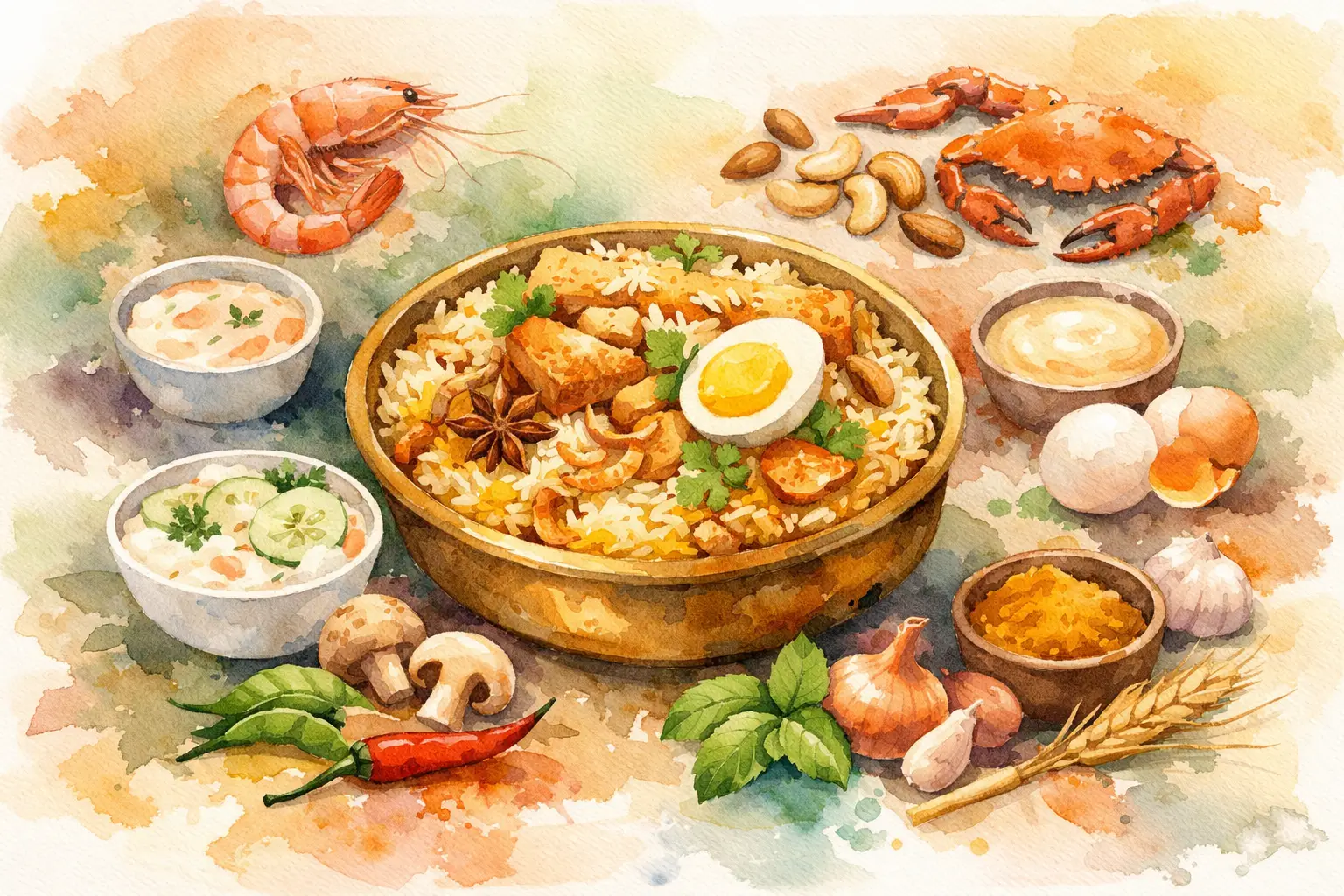
A proper box of briyani is built in layers: fragrant basmati, slow-cooked meat, whole spices and cooling raita. That is exactly why briyani allergens deserve more than a quick guess at the counter. If you have a food allergy, the rice alone is not the full story. The meat, spice mix, sauces, sides, garnish and kitchen handling all matter.
For some diners, an ingredient check is a simple preference. For someone with a serious allergy, it can decide whether the meal is safe to eat at all. Ask before you order, be clear about the allergen, and do not rely on a dish name or an assumption.
Briyani allergens start with the full box
Briyani is often naturally free from a few common allergens, but no two recipes or kitchens are identical. A traditional-style briyani may use rice, meat, onions, herbs and spices, yet the finished serve can include dairy-rich raita, ghee, fried toppings, sauces or a garnish containing nuts. A fusion briyani can introduce further ingredients through smoked meats, marinades and finishing sauces.
The most common allergens worth checking in and around briyani are milk, gluten-containing cereals, egg, sesame, soy, peanuts, tree nuts and sulphites. This does not mean every briyani contains these ingredients. It means they are the right questions to ask rather than assuming the rice dish is automatically safe.
Milk is often the first one to clarify. Raita is typically yoghurt-based, and ghee may be used in rice or meat preparation. A dairy allergy and lactose intolerance are not the same thing, so describe your needs accurately. If dairy is your concern, ask about the briyani itself, the raita and any butter, ghee or creamy sauce used during cooking or service.
Gluten can be less obvious. Plain basmati rice is gluten-free, but gluten may appear in marinades, pre-made spice mixes, sauces, fried chicken coating, crumbed items or shared fryers. If you need to avoid gluten due to coeliac disease, ask whether the preparation and serving process can prevent cross-contact. “No bread” does not equal gluten-free.
Nuts and sesame can show up in garnishes, spice pastes, oils or desserts. Peanuts and tree nuts need to be treated separately when you speak with staff. If you have a sesame allergy, ask about sesame oil, seeds and tahini-style ingredients in sauces or dressings. They may not be visible in the final meal.
Egg and soy are also worth checking, especially with fried chicken, mystery sauces, mayonnaise-style dressings and marinades. Sulphites can be present in certain sauces, preserved ingredients and processed products. For seafood allergies, check any shared cooking equipment or sauces, even when the dish itself is meat-based.
What to ask when ordering briyani
A clear question gets a clearer answer. Instead of asking whether a dish is “allergy friendly”, name the allergen and the meal you want. For example: “I have a severe dairy allergy. Does this chicken briyani contain yoghurt, milk or ghee, and is raita packed separately?” Or: “I have coeliac disease. Are there gluten-containing ingredients in the marinade, sauce, spice mix or preparation area?”
Tell staff if your allergy is severe or if you have had anaphylaxis before. This helps them understand that you are not simply asking for an ingredient to be left off at the end. An ingredient can be removed from the top of a meal, but it cannot be removed from a marinade, cooking oil or sauce already used in preparation.
It also helps to ask these three practical questions: what is in the briyani itself, what comes with it, and what equipment or surfaces are shared? They cover most of the risk points without making ordering complicated.
For delivery, add the allergy information to your order notes where available, then contact the venue directly before ordering if your allergy is serious. Delivery platforms can pass on notes, but they are not a substitute for a direct ingredient and cross-contact conversation. Check the label when your food arrives as well, particularly when sauces and sides are packed separately.
Why sides, sauces and add-ons matter
The main briyani can be only one part of your order. Raita is a clear dairy question, but sauces deserve the same attention. They can contain milk, egg, soy, sesame, gluten or sulphites depending on the recipe. Fried chicken and snack packs may involve coatings, seasoning blends, sauces and shared fryers that do not apply to a plain briyani order.
Mixed-meat boxes can add another layer of complexity. Smoked brisket, Mexican-style pork and fried chicken each have their own preparation methods, seasoning and holding processes. A protein that works for one allergen requirement may not work for another. The safest choice depends on your specific allergy, not on which option sounds the simplest.
Drinks are part of the check too. Chai, turmeric chai, chocolate chai and hot chocolate may contain milk or milk alternatives with their own allergen profiles. If you are ordering for a child or a group, do not assume a cold drink is free from allergens either. Ask about the exact product and how it is prepared.
Cross-contact is different from ingredients
An ingredient list tells you what is deliberately used in a dish. Cross-contact is about what could transfer during storage, prep, cooking or service. It can happen through tongs, chopping boards, utensils, fryers, benches, gloves or containers. In a busy takeaway kitchen, that risk needs an honest conversation.
A venue may be able to identify that a dish has no added dairy, gluten or nuts, while still being unable to guarantee that it has had no contact with those allergens. That distinction matters most for people with severe allergies and coeliac disease. If staff cannot confidently confirm the ingredients or handling process, choose the safer option or do not eat the meal.
Never pressure staff to guarantee something they cannot guarantee. Good food businesses should take allergen questions seriously, but an honest “we cannot safely promise that” is better than false reassurance. It gives you the information needed to make a safe call.
A practical approach for families and groups
Family packs make dinner easier, but they need a little planning when allergies are involved. Order the allergen-sensitive meal separately where possible, keep sauces and raita sealed until checked, and use separate serving utensils at home. It is an easy way to stop a safe portion being mixed with a topping or sauce that is not suitable.
When ordering for children, avoid shorthand such as “no dairy” unless you know whether the issue is an allergy, lactose intolerance or another dietary need. Give the exact information you have been given by your doctor or allergy plan. For anaphylaxis, keep prescribed medication with you and follow your established emergency plan.
At Brisket and Briyani, food is crafted fresh and served fast, but allergy questions should never be rushed. Menus and suppliers can change, so the most reliable answer is always the current one from the team preparing the food that day.
A great briyani order should leave you thinking about the spice, smoke and generous serve, not wondering what was in it. Ask early, ask specifically, and only order when you have the answers you need.
Ready to try it? We cook fresh every week.
Chennai-style briyani and 12-hour smoked brisket. Sunnybank, every Saturday from 5 PM.
See Our Full Menu →