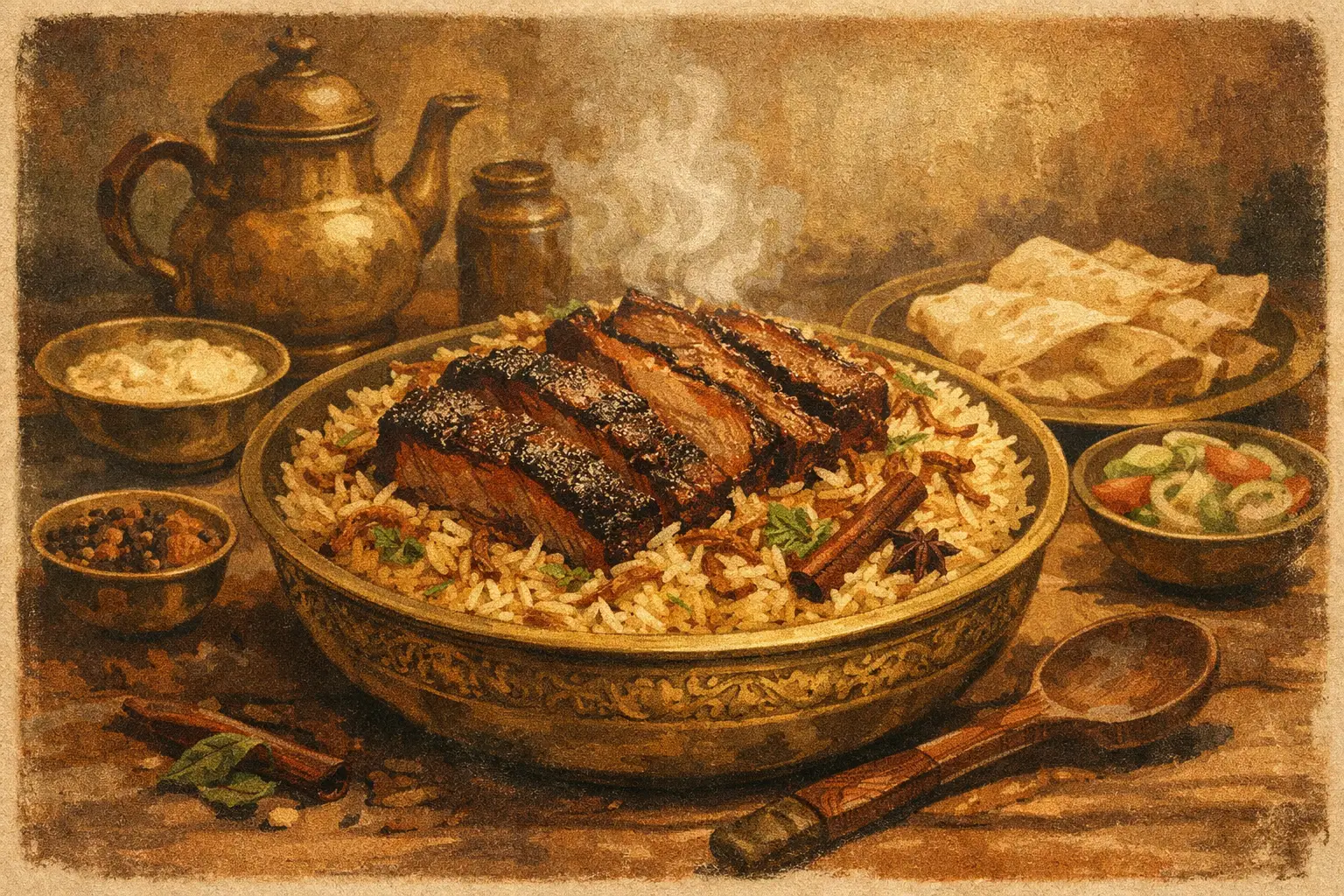
Some combos sound like a gimmick until you taste the first spoonful. Brisket briyani is not one of those mash-ups thrown together for attention. When it is done properly, you get two serious food traditions meeting in the same box - 12-hour smoked beef with deep bark and rendered fat, and Chennai-style briyani built on long-grain basmati, whole spices, and heat that carries all the way through.
That balance is where most places get it wrong. Either the brisket takes over and the rice becomes a side note, or the briyani is so heavily spiced that the smoke disappears. The point is not to make one cancel out the other. The point is to let both show up.
What makes brisket briyani worth chasing
Good brisket already has weight to it. It is rich, soft, smoky, and full of savoury depth. Good briyani has structure. The rice should stay separate, the spice should build instead of punch blindly, and the aroma should hit before the first bite. Put them together carelessly and it turns heavy fast. Put them together with intent and you get something bigger than either part on its own.
The brisket has to earn its place. That means time on the smoker, proper trimming, and enough patience to let connective tissue break down without drying the meat out. You want slices or chunks that still hold form but give way easily. If the beef is stringy, grey, or drowning in sauce, it will drag the whole box down.
The briyani has its own rules. Long-grain basmati matters because texture matters. Whole spices matter because the flavour needs layers, not just chilli and salt. The rice cannot be wet, claggy, or overloaded with oil. A proper briyani should feel generous without feeling sloppy.
Brisket briyani is only as good as both halves
This is where the fusion label can be misleading. Fusion is often used as cover for shortcuts. Real brisket briyani demands more work, not less.
The brisket side needs low-and-slow discipline. Twelve hours is not there for marketing. It is there because brisket is a hard-working cut that only turns luxurious when it is given enough time. Smoke needs to settle into the meat rather than sit on top of it. Fat needs to render properly. The bark needs flavour, not just colour.
The briyani side needs restraint. You cannot build a rice base like a generic flavoured rice and hope the brisket saves it. Chennai-style briyani has identity. It is fragrant, savoury, spiced, and direct. The rice should carry the stock, aromatics, and meat juices without collapsing into mush. That takes care with timing, moisture, and seasoning.
Then there is the handoff between the two. Smoked meat throws off fat and concentrated flavour. Briyani carries spice, herbs, and perfume. If you are not careful, one can bully the other. The best version tastes integrated. You notice the smoke first, then spice, then richness, then that cooling reset from raita that brings you straight back for another bite.
Why the rice matters more than people think
People talk about brisket because it is dramatic. Big smoker, long cook, visible bark. But in brisket briyani, the rice does the heavier lifting than most customers realise.
Rice is what turns smoked meat into a proper meal rather than a pile of protein. It spreads flavour across the box. It absorbs rendered beef fat. It catches spice and stock. It also controls the pace of each bite. When the grains stay long and separate, every mouthful feels balanced. When the rice is overcooked, everything becomes one dense mass.
This is also why raita is not an afterthought. With brisket, you are dealing with smoke, pepper, fat and heat. A cool, fresh raita cuts through that richness and gives the whole thing shape. Skip it and the last few bites can feel heavier than they should. Keep it in the mix and the box stays lively to the end.
The trade-off: bold flavour versus clean balance
Brisket briyani should be bold. It should not be timid food. But there is a fine line between bold and overloaded.
Some customers want maximum smoke, extra chilli, more sauce, more everything. That can work if you are building a one-off indulgent box. But if the goal is a briyani you would happily chase again next weekend, balance wins. Too much smoke and the spice profile flattens out. Too much chilli and the brisket becomes irrelevant. Too much moisture and the rice loses integrity.
It depends what you are after. If you want a straight BBQ hit, go for brisket on its own. If you want traditional briyani with no detours, stick to a classic chicken version. But if you want a box that gives you smoke, spice, richness and comfort in one go, brisket briyani hits a very specific sweet spot.
Why this works so well for Brisbane takeaway
Some foods are better sitting down with a white tablecloth. This is not that. Brisket briyani suits fast-casual eating because it travels well, holds heat, and still tastes complete out of a takeaway box.
For Brisbane diners, especially around Sunnybank, Springfield and the outer suburbs where a good feed has to be worth the drive, that matters. People want something substantial. They want food that feels crafted, not assembled. They want portions that satisfy and flavour that lands straight away. Brisket briyani fits that brief because it brings proper cook time and proper spice into a format that still works on a busy night.
It also suits group eating. One person goes for brisket briyani, someone else wants Chicken 43, another wants an HSP, and the table still makes sense. That kind of flexibility matters for families, late-night runs and weekend catch-ups where not everyone wants the same thing.
What to look for in a proper box
A good brisket briyani should look generous without looking messy. You should be able to see distinct grains of rice, proper pieces of brisket, and colour that comes from spices and smoke rather than artificial gloss.
The aroma should tell you plenty before you eat. You want warm spice, beef richness and clean smoke. If all you can smell is grease, that is a red flag. If the brisket is chopped too fine, it usually means texture has been sacrificed. If the rice is sticky or compressed, the kitchen has missed the mark.
Portion size matters too, but not in the lazy oversized sense. A strong box should feel satisfying because the elements are rich and balanced, not because it has been padded with plain rice. Freshness matters just as much. Briyani should taste like it was made for service, not scraped from the bottom of a tray that has been sitting around all day.
That is the difference between food made with standards and food made for convenience. One gets remembered. The other gets eaten and forgotten.
Brisket briyani and the spelling question
People search both ways - briyani and biryani. Fair enough. Both spellings are used, and most customers are just trying to find the real thing rather than argue over letters.
For us, briyani is the spelling that fits the way we speak about the dish and the style we serve. What matters more is what is in the box. Proper basmati, whole spices, fresh raita, and smoked brisket that has actually spent the time it needs.
When you should order it
Brisket briyani is not background food. It is the kind of meal you order when you are properly hungry and not interested in wasting the trip. It works for a solo feed when you want something stronger than the usual takeaway, and it works when you are feeding a group that expects more than chips and a burger.
It is also one of those meals that carries a bit of urgency. Fresh daily cooking matters here. Smoked brisket takes hours. Briyani takes planning. When a place sells through, that is usually a sign the kitchen is cooking with intention rather than stretching yesterday's leftovers. When we sell out, we sell out.
At Brisket and Briyani, that is exactly the point - crafted fresh, served fast, and built for people who know the difference. If you want a meal that brings smoke, spice and real substance into the same box, brisket briyani is worth making room for.
Ready to try it? We cook fresh every week.
Chennai-style briyani and 12-hour smoked brisket. Sunnybank, every Saturday from 5 PM.
See Our Full Menu →