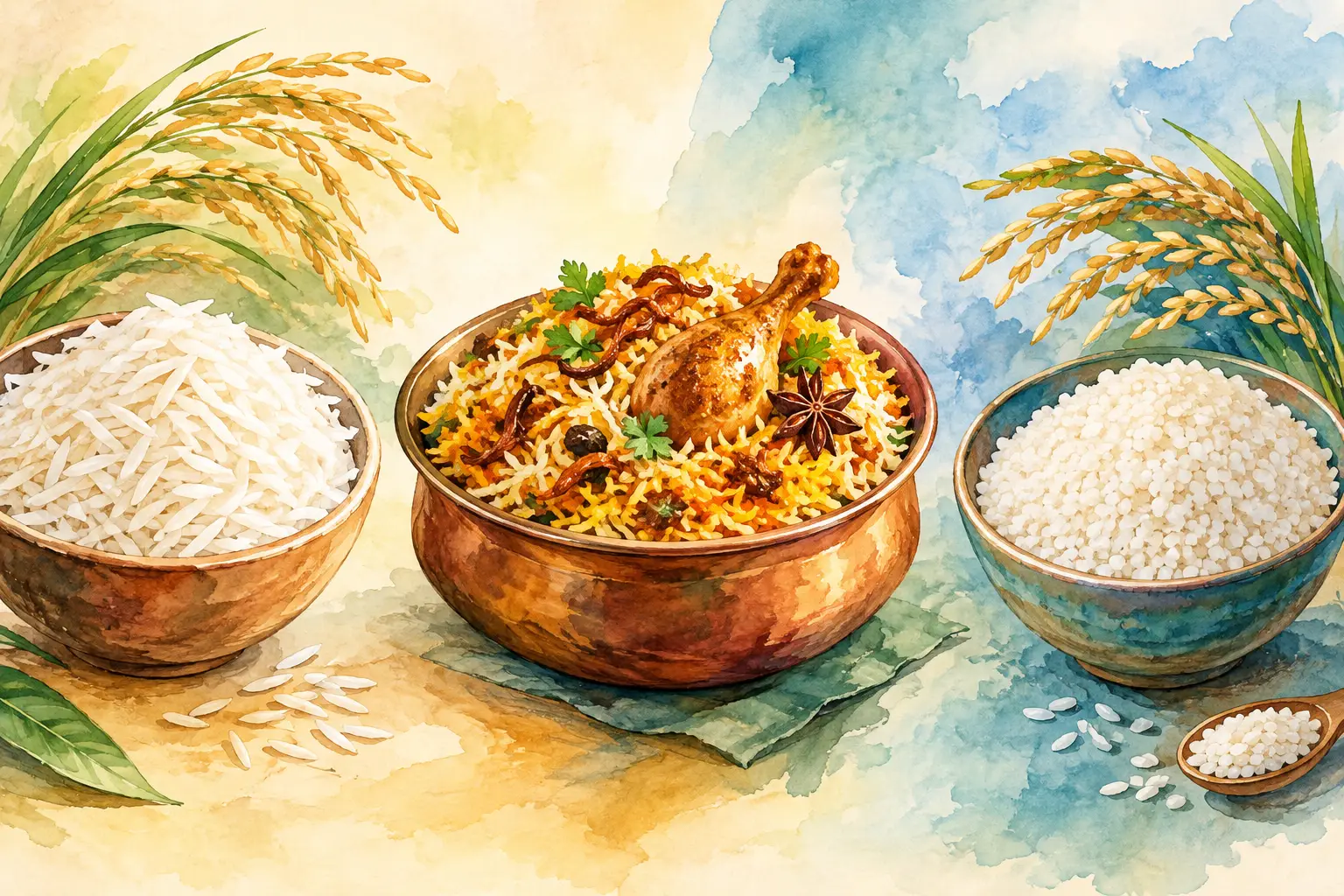
A proper briyani can look generous before you taste it. But the rice tells you whether it has been handled with care. In the basmati rice vs seeraga samba debate, neither grain is automatically better. They create two very different eating experiences, and the right choice comes down to the style of briyani on the plate.
Basmati brings long, separate grains and a light, fragrant finish. Seeraga samba is smaller, more compact and built to carry flavour through every spoonful. One makes a statement visually; the other often delivers a denser hit of spice and stock. Know the difference and ordering, cooking and serving briyani gets a whole lot clearer.
Basmati rice vs seeraga samba: the quick difference
Basmati is a long-grain aromatic rice. Once cooked well, its grains lengthen, stay distinct and feel light rather than sticky. It has a recognisable floral, nutty aroma that works beautifully with whole spices, saffron, fried onions and slow-cooked meat.
Seeraga samba, also called jeera samba, is a short, fine-grain rice. Its name refers to its cumin-seed-like shape. The grains do not stretch into long ribbons as basmati does. Instead, they cook into small, tender grains with a firmer, closer texture and a savoury aroma that readily takes on the flavour of the masala.
That physical difference changes the whole plate. Basmati gives a fluffy, layered briyani where the rice, meat and aromatics can each stand out. Seeraga samba gives a more integrated result, where every mouthful is tightly packed with seasoning, fat and cooking juices.
Why grain size matters on the plate
Long-grain basmati is the rice many Australians picture when they think of restaurant-style briyani. It is especially suited to a dum-style cook, where partially cooked rice finishes slowly with meat, gravy and whole spices. Done right, the grains remain separate and aromatic, not claggy or wet.
That separation matters with richer proteins. Brisket, chicken or spiced lamb needs enough rice around it to keep each bite balanced. A well-cooked basmati grain creates room for the meat’s juices, raita and spice blend without turning the box into one heavy mass.
Seeraga samba is smaller, so it gives a different kind of satisfaction. There are more grains in each spoonful, and they hold masala closely. It can make a briyani feel more deeply seasoned even when the spice level is not high. For people who want rice that tastes intensely of the stock and spices, rather than simply sitting alongside them, this is a major drawcard.
Neither texture should be confused with quality. Dry, broken basmati is disappointing. So is seeraga samba that has gone soft and stodgy. Great briyani rice must be cooked to the point where it is tender, fragrant and able to hold its shape.
Aroma: floral lift or savoury depth?
Basmati has a naturally perfumed character. Its aroma is part of the reason it is so widely used for celebration-style rice dishes. When it meets cardamom, clove, cinnamon, bay leaf and browned onion, the fragrance rises from the box before the first bite.
That lift is useful when a briyani has bold meat. The rice keeps the meal feeling bright. It also gives a strong visual and aromatic first impression, which is why basmati is a natural fit for a generous takeaway briyani box.
Seeraga samba smells and tastes more understated on its own, but it is exceptionally receptive to seasoning. The grain absorbs the cooking liquid and spices with real purpose. Its appeal is less about a big floral perfume and more about savoury depth. People who grew up eating this style often look for that close-grained, spice-soaked texture straight away.
There is an important trade-off here. Basmati can showcase the spice profile without becoming overwhelmed by it. Seeraga samba can make the spice profile feel more concentrated. If the masala is muddy, overly oily or poorly balanced, smaller grains will not hide it. They will carry it.
Which rice is better for Chennai-style briyani?
For Chennai-style briyani, seeraga samba has a strong and loyal following. Its small grains, savoury character and ability to absorb stock suit the punchy, integrated style many diners expect. It creates a briyani that feels compact, rich and intensely flavoured from top to bottom.
But “authentic” is not a single grain, a single recipe or a shortcut word on a menu. Briyani varies by household, cook, region and service style. The quality of the stock, the freshness of the spices, the meat cook and the timing matter just as much as the rice choice.
At Brisket and Briyani, long-grain basmati is used because it delivers the fluffy, fragrant, generous style the boxes are built around. It stands up to whole spices and slow-cooked meats while keeping the finished briyani light enough to go back for another spoonful. That is a deliberate kitchen decision, not a compromise.
If you are chasing the smaller-grain Chennai experience, seeraga samba will likely be your pick. If you love long, separate grains with a clean aromatic finish, basmati earns its place every time.
Cooking basmati for separate, fluffy grains
Basmati rewards patience. Rinsing it several times removes surface starch, which helps the grains cook separately. A short soak also supports even cooking and gives the rice room to lengthen properly.
The key is not to overcook it before the final steam. For briyani, rice is often cooked until it is nearly done, then layered or finished with the meat and aromatics. That final gentle cook lets flavour move through the rice without destroying its structure.
Too much stirring is the fast track to broken grains. Too much water can leave the pot soft and heavy. And if the rice is low quality or old, even good technique may not produce that elegant long-grain look. Good rice and careful timing work together.
Cooking seeraga samba without losing its bite
Seeraga samba needs a lighter hand than many first-time cooks expect. It absorbs flavour readily, but because the grains are short, it can turn soft quickly if the liquid level and timing are not right.
Wash it well, use a measured amount of liquid and keep an eye on it near the end of the cook. The aim is tender grains with a little definition, not a porridge-like texture. A flavourful meat stock can be particularly effective here because the rice takes it in so completely.
Do not judge doneness by comparing it with basmati. Seeraga samba will never look long and airy. Its best form is close, fragrant and moist, while still giving a small bite under the spoon.
What should you choose?
Choose basmati when you want distinct long grains, a fragrant lift and a briyani that feels fluffy alongside rich meat and cooling raita. It is also the easier visual choice for big takeaway serves, family packs and anyone who loves seeing every grain stay separate.
Choose seeraga samba when you want a compact grain that drinks up masala, stock and meat flavour. It suits diners who want each spoonful to feel deeply seasoned and connected, with less distance between the rice and the gravy.
There is no need to treat the choice like a food fight. Both can produce serious briyani when the cook respects the grain, uses fresh whole spices and gives the pot the time it needs. Start with the texture you crave, then let the aroma rising from the lid make the final call.
Ready to try it? We cook fresh every week.
Chennai-style briyani and 12-hour smoked brisket. Sunnybank, every Saturday from 5 PM.
See Our Full Menu →