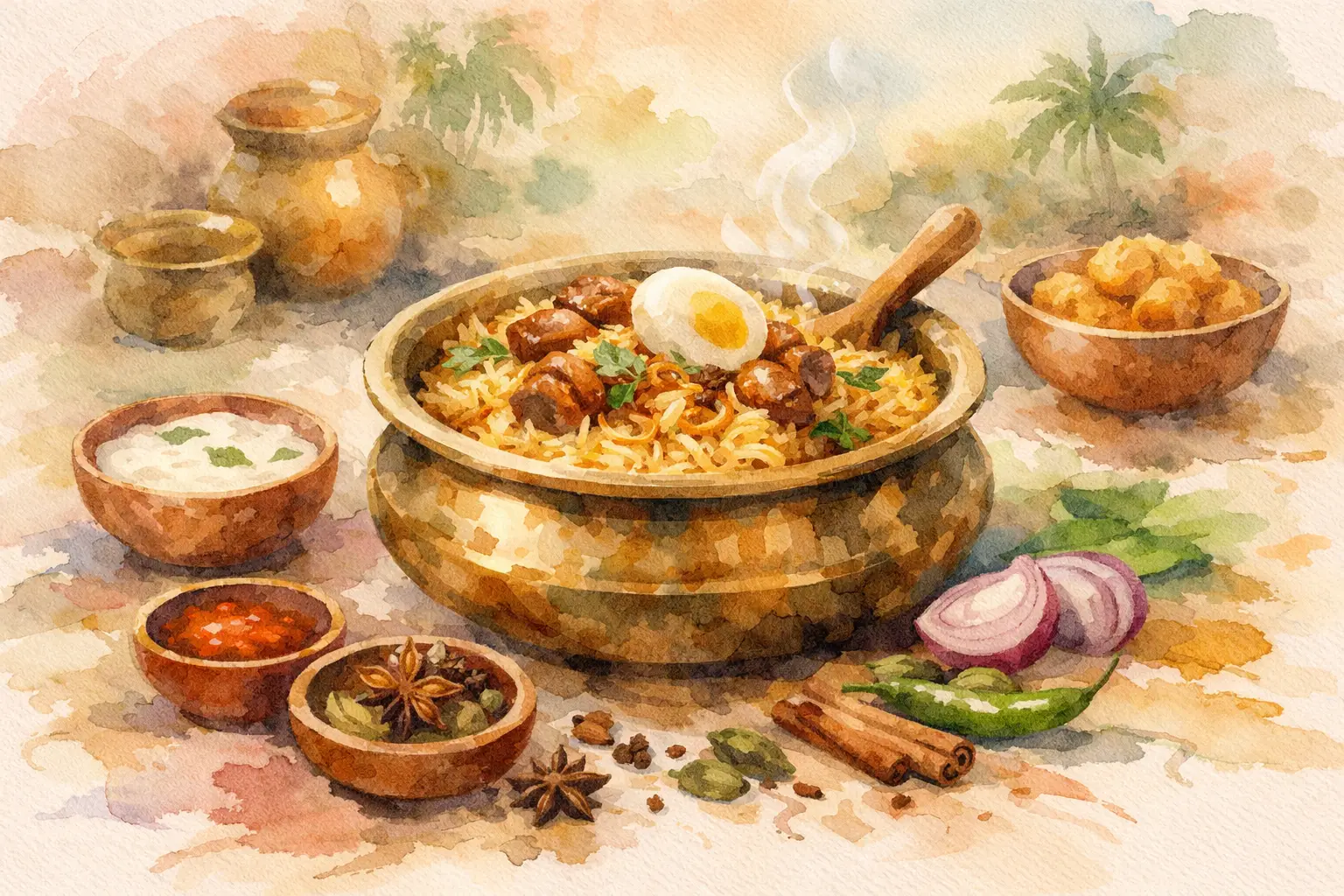
A proper authentic tamil briyani recipe does not hide behind extra heat or food colouring. You know it by the smell first - whole spices opening in hot ghee, mint and coriander hitting the pot, meat stock soaking into every grain. Then you taste it. The rice stays separate, the masala sits deep, and the finish is clean, not greasy. That is the standard.
In Tamil cooking, briyani is not just rice plus curry mixed together. The method matters. The order matters. Even the choice of rice changes the result. If you want that Chennai-style profile people actually line up for, you need to get a few fundamentals right and stop chasing shortcuts that flatten the flavour.
What makes an authentic Tamil briyani recipe taste different
Tamil-style briyani, especially the Chennai-style many people know and crave, leans on balance over showmanship. It is aromatic, savoury and full-bodied, but it should still eat clean. You want the spice to be present without burning out the palate. You want the meat to season the rice, not sit on top of it like an afterthought.
There is also more than one lane within Tamil briyani. Some cooks swear by seeraga samba rice because it absorbs flavour beautifully and gives that distinctly South Indian result. Others use long-grain basmati, especially for bigger-batch cooking, because it gives lift, length and visual appeal. Both can work. If you use basmati, you need discipline with water, stock and cooking time so it does not drift into generic biryani territory.
The backbone is always the same - whole spices, onion, green chilli, ginger-garlic paste, tomato, herbs, yoghurt, meat and a controlled rice cook. No random sweetness. No heavy cream. No thick gravy. Briyani should be bold, not muddy.
Ingredients for an authentic Tamil briyani recipe
This version serves 4 to 6 and uses chicken, which is the fastest way to get the method right at home. Mutton is brilliant too, but the timing is less forgiving.
Use 750 g chicken, bone-in if possible. You also need 500 g basmati rice, 3 large onions thinly sliced, 2 medium tomatoes chopped, 4 green chillies slit, 2 tbsp ginger-garlic paste, 1 cup plain yoghurt, 1 packed cup mint leaves, 1 packed cup coriander leaves, 1 lemon, 4 tbsp ghee, 3 tbsp neutral oil and salt.
For whole spices, use 2 bay leaves, 1 cinnamon stick, 4 green cardamom pods, 4 cloves, 1 star anise and 1 tsp fennel seeds. For powdered spices, use 1 tsp turmeric, 2 tsp red chilli powder and 2 tsp coriander powder. If you want a little extra warmth, add 1 tsp garam masala, but go easy. In Tamil-style briyani, too much finishing spice can crowd the fresher aromatics.
If you can get seeraga samba rice, use that instead of basmati and reduce the soaking and cooking time slightly. If not, good-quality aged basmati is absolutely workable.
The cooking method that gives proper flavour
Marinate the chicken first
Mix the chicken with yoghurt, half the ginger-garlic paste, turmeric, chilli powder, a squeeze of lemon and salt. Leave it for at least 30 minutes. An hour is better. This is not just for tenderness. It gives the meat a head start so it seasons from the inside.
Wash and soak the rice
Rinse the rice until the water runs mostly clear, then soak it for 20 to 30 minutes. Drain well. Skipping this step usually gives you either uneven rice or broken grains. Neither helps.
Build the masala in the right order
Heat the ghee and oil in a heavy pot. Add the whole spices and let them bloom for a few seconds. Add the onions and cook them until deeply golden. Not pale. Not burnt. This stage lays down the sweetness and body.
Add the remaining ginger-garlic paste and green chillies. Cook off the raw smell. Then add tomatoes and a pinch of salt. Let them break down properly. You are not rushing to the next step here. If the tomato is still sharp and chunky, the final briyani will taste unfinished.
Add coriander powder, a little more chilli powder if needed, then the marinated chicken. Stir hard so the meat picks up the onion and spice base. Add mint and coriander. Cook until the chicken is mostly done and the masala tightens. You want enough moisture to cook the rice, but not a watery curry.
Add rice and control the liquid
This is where home cooks often lose it. For 500 g soaked basmati, you are usually aiming for less liquid than you think, especially because the chicken masala already carries moisture. If the pot looks loose, cook it down a little before the rice goes in.
Add the drained rice and fold it through gently. If needed, add hot water so the liquid sits just above the rice by around 1 to 1.5 cm. Taste the liquid now. It should be slightly saltier than you want the finished briyani to taste. Rice will absorb that seasoning.
Bring it up, then drop to low. Cover tightly. If your lid leaks steam, place foil under it or seal the rim with a little dough. Cook on low for 15 to 20 minutes. Then turn the heat off and leave it alone for another 10 minutes. Resting is part of the cook.
Authentic Tamil briyani recipe mistakes that ruin the pot
The first mistake is overloading spices. More is not better. If every spoonful tastes only of clove, cardamom and chilli, you have buried the meat and rice.
The second is too much liquid. A wet briyani is not generous. It is just overcooked rice wearing a masala coat. The grains should hold shape and carry flavour without collapsing.
The third is undercooked onions. Raw or lightly softened onions leave a harsh edge in the masala. The fourth is weak salt control. Briyani needs confidence. If the base is underseasoned, no amount of garnish will save it.
Then there is the texture problem. Stirring aggressively after the rice goes in will break the grains and turn the pot heavy. Use a light hand. Let the steam do the work.
Basmati or seeraga samba - what should you use?
It depends on the result you want.
Seeraga samba is closer to many traditional Tamil versions. It drinks in flavour and gives a more compact, intensely seasoned briyani. If your priority is authenticity in the strictest sense, it is a strong choice.
Basmati gives a longer grain and more visual drama, which is why many modern kitchens use it, especially when serving fast and aiming for consistency across bigger batches. Done properly, it still delivers a proper Chennai-style eating experience. Done badly, it becomes fluffy spiced rice with meat on the side. The method has to carry it.
For most home cooks in Australia, quality basmati is easier to source and easier to cook consistently. There is no shame in that. The key is respecting the masala and not flooding the pot.
Serving it the right way
A proper plate does not need ten extras. Serve the briyani hot with cool raita and, if you like, a simple boiled egg or salna on the side. The raita should freshen the palate, not drown the rice.
This is also where restraint matters. A good briyani can stand on its own. The side dishes should support it, not compete with it. If you have made the pot properly, every spoonful already carries the full story.
Why this recipe still matters
A lot of online versions promise speed, shortcuts and one-pan ease. Fair enough on a busy night. But if you are chasing the real thing, the authentic Tamil briyani recipe is still about judgement - how far to brown the onions, when the tomato is ready, how wet the masala should be before the rice goes in, how long to rest the pot after the flame is off.
That is also why the best briyani places earn loyal regulars. Anyone can add spice. Not everyone can hold flavour, texture and consistency in the same box, batch after batch. At Brisket and Briyani, that standard matters because people know the difference.
If you are cooking this at home, trust your nose as much as the timer. When the masala smells rounded, when the steam carries mint, stock and spice in one hit, you are close. Hold your nerve, let the rice finish gently, and serve it while it still speaks for itself.
Ready to try it? We cook fresh every week.
Chennai-style briyani and 12-hour smoked brisket. Sunnybank, every Saturday from 5 PM.
See Our Full Menu →