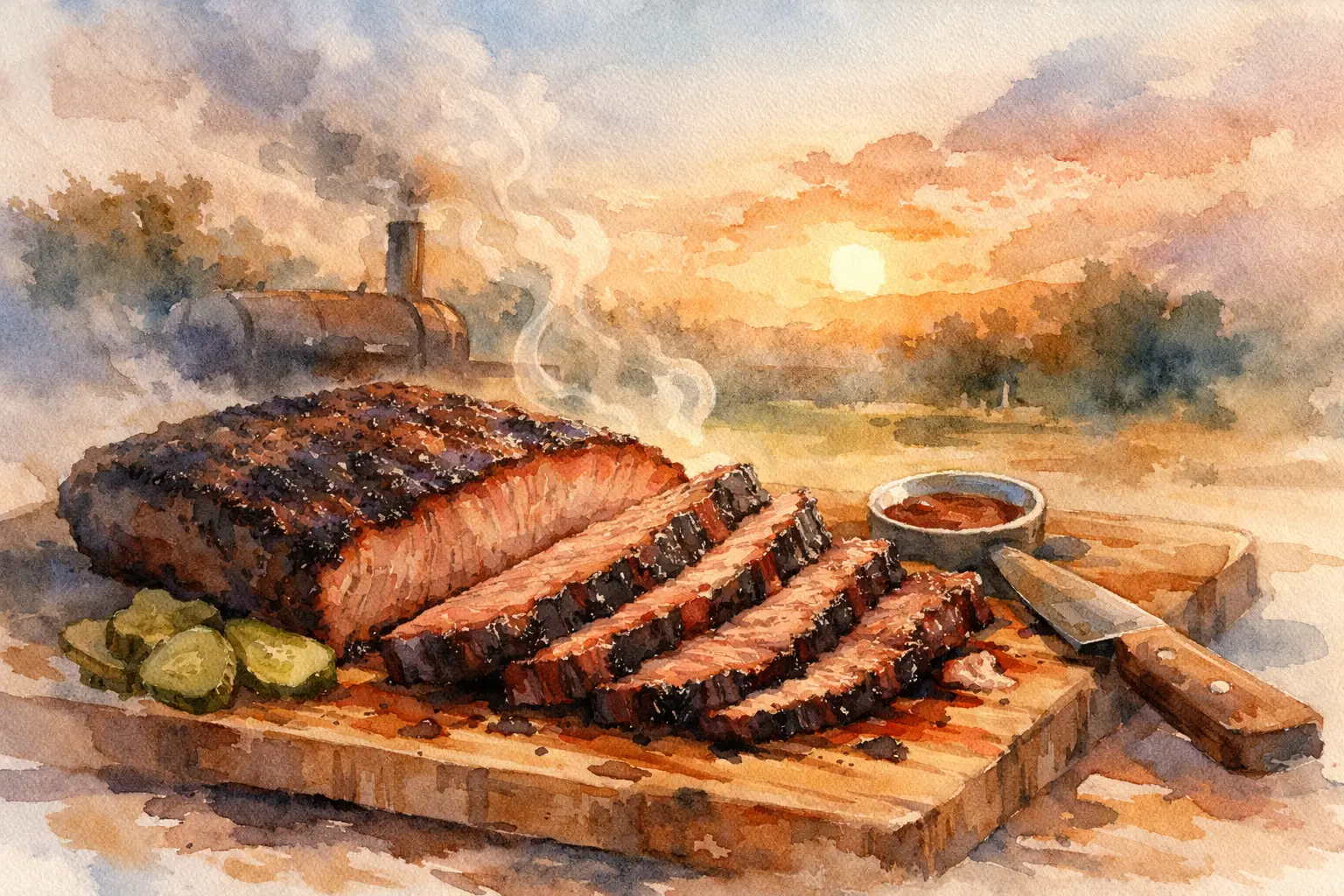
You can tell a rushed brisket before the first proper bite. The slice looks fine, but the fat hasn’t rendered right, the bark is soft, and the texture swings from dry at the edge to chewy in the middle. A 12 hour smoked brisket is different. It carries that deep smoke, a blackened bark with real bite, and meat that pulls apart just enough without turning mushy.
That kind of brisket does not happen because someone left it in a smoker and hoped for the best. It happens because time, temperature, airflow, seasoning and rest all line up. When they do, the result is simple - rich beef flavour, rendered fat, and a finish that does not need sauce to hide mistakes.
Why 12 hour smoked brisket works
Brisket is a hard-working cut. It comes from the lower chest of the animal, so it carries a lot of connective tissue and intramuscular fat. That is exactly why it can be brilliant, and exactly why it can go wrong fast. Cook it too hot or too quickly and it tightens up. Pull it before it is ready and every slice fights back.
The reason a 12 hour smoked brisket works is that low and slow gives collagen time to break down while the fat gradually renders through the meat. You are not just cooking beef. You are changing its structure. That is where the tenderness comes from, but also the juiciness. Tender without moisture is just dry meat falling apart.
There is a trade-off, though. Twelve hours is not a magic number for every brisket. A smaller piece may be ready earlier, and a heavier one may need more time, especially once you factor in resting. But as a benchmark, twelve hours makes sense because it puts you in the zone where proper bark, smoke absorption and rendering can all happen without forcing the cook.
What makes the bark worth chasing
When people talk about brisket, they usually go straight to tenderness. Fair enough. But bark is where much of the character sits. It is the outer layer formed by smoke, seasoning, rendered fat, meat proteins and time. Good bark is dark, firm and packed with savoury intensity. Bad bark is soft, patchy or burnt bitter.
A 12 hour smoked brisket gives bark a fair chance to develop properly. That longer cook lets the outside dry and set while smoke continues to build flavour. If the heat is too aggressive, the bark can harden before the inside catches up. If moisture in the pit is all over the place, it can stay soggy and never really lock in.
Seasoning matters too, but not in a complicated way. Brisket does not need a spice drawer thrown at it. Salt, pepper and a balanced hand are often enough to let the beef carry the cook. Once smoke, fat and heat do their work, simple seasoning can taste huge.
Heat control is where good brisket lives or dies
Ask anyone serious about smoked meat and they will tell you the same thing - consistency beats drama. A clean fire and stable pit temperature do more for brisket than constant fiddling ever will. You want enough heat to keep the cook moving, but not so much that the outside races ahead of the centre.
This is why 12 hour smoked brisket is really about control more than patience. Patience matters, sure, but a twelve-hour cook with wild temperature swings is just twelve hours of problems. A steady pit allows the brisket to climb gradually, hit the stall, push through, and finish without drying out.
The stall is the part that catches people out. The internal temperature stops rising for what feels like forever, mostly because moisture evaporating from the surface cools the meat. This is the moment many people panic and crank the heat. Usually, that is when quality starts slipping. Sometimes wrapping helps. Sometimes it is better to let it ride longer for firmer bark. It depends on the result you want.
Wrapping helps, but it changes the finish
There is no point pretending there is only one proper way here. Wrapping a brisket during the cook can help it move through the stall faster and hold onto moisture. It can also soften the bark if done too early or too tightly. Leaving it unwrapped longer can build a stronger bark and deeper exterior flavour, but it usually takes more time and demands cleaner fire management.
That is the trade-off. Speed and moisture retention versus bark texture and surface intensity. Neither choice is automatically right. It depends on the cut, the cooker, and the standard you are chasing.
For a lot of brisket cooks, the sweet spot is letting the bark set first, then wrapping once the colour and texture are where they should be. That keeps the exterior from turning muddy while still giving the meat help through the back half of the cook.
Resting is not optional
If there is one part people love to skip, it is the rest. The brisket comes off looking ready, everyone is hungry, and slicing immediately feels tempting. It is also one of the easiest ways to waste twelve hours of work.
Resting gives the meat time to settle. The juices redistribute, the carryover heat evens out, and the texture firms enough to slice cleanly. Cut too soon and you lose moisture onto the board instead of keeping it in the meat. Wait properly and every slice holds together better while still feeling soft.
This is why a 12 hour smoked brisket often means more than twelve hours in real life. Once you include trimming, seasoning, the cook itself and the rest, you are talking about a full process, not just a timer. That is the difference between brisket as a product and brisket as a craft.
Why brisket can still miss, even after 12 hours
Time alone does not guarantee quality. You can cook brisket for twelve hours and still end up with a disappointing result if the cut was poor, the trim was clumsy, the fire was dirty or the rest was rushed.
Fat content matters. Brisket grade matters. Shape matters. An uneven brisket with thin edges and a bulky centre can dry at one end while the thick section lags behind. Trimming matters for the same reason. Too much fat left on and seasoning never really bonds. Too much taken off and you lose protection during the cook.
Then there is slicing. Even good brisket gets butchered by bad slicing. Go with the grain and it feels tougher than it should. Slice too thick and it eats heavy. Slice too thin and it loses that satisfying structure. Proper brisket should feel generous, not clumsy.
12 hour smoked brisket in a fast-service world
Here is the thing many customers notice straight away - proper brisket does not fit neatly into a quick-fix food model. It takes planning, prep and discipline. That is why it stands out when a venue gets it right and serves it fast anyway.
For busy diners, especially around Brisbane weekends, that matters. You want food with real effort behind it, but you do not want a lecture and a three-hour wait at the table. You want quality that tastes earned. That is why the best brisket operations build around limited windows, daily prep and sell-out pressure. Freshly crafted means there is a ceiling. When it is gone, it is gone.
That approach only works if the product is worth the urgency. Proper brisket usually is. At Brisket & Briyani, that same standard is what makes slow-smoked meat sit naturally beside fresh briyani. Different traditions, same principle - do it properly, do it fresh, and do not fake the work.
What to look for when you order it
If you are buying brisket rather than smoking it yourself, there are a few signs that tell you whether the place takes it seriously. The first is consistency. The bark should look developed, not painted on. The slices should bend without falling apart like shredded beef. The fat should be soft and rendered, not rubbery.
The second is flavour balance. Smoke should be there, but it should not taste acrid. Seasoning should lift the beef, not bury it. Sauce, if served, should be an extra rather than a rescue job.
The third is confidence. Places that do proper brisket tend to be clear about their process and even clearer about availability. They know what goes into it. They also know there is no point pretending endless supply comes from careful smoking.
A good 12 hour smoked brisket is not just about cooking longer. It is about refusing shortcuts where shortcuts show. When the bark bites, the fat melts, and the slice holds its shape before giving way, you can taste the hours. That is the whole point - food this good should taste like somebody meant it.
Ready to try it? We cook fresh every week.
Chennai-style briyani and 12-hour smoked brisket. Sunnybank, every Saturday from 5 PM.
See Our Full Menu →